
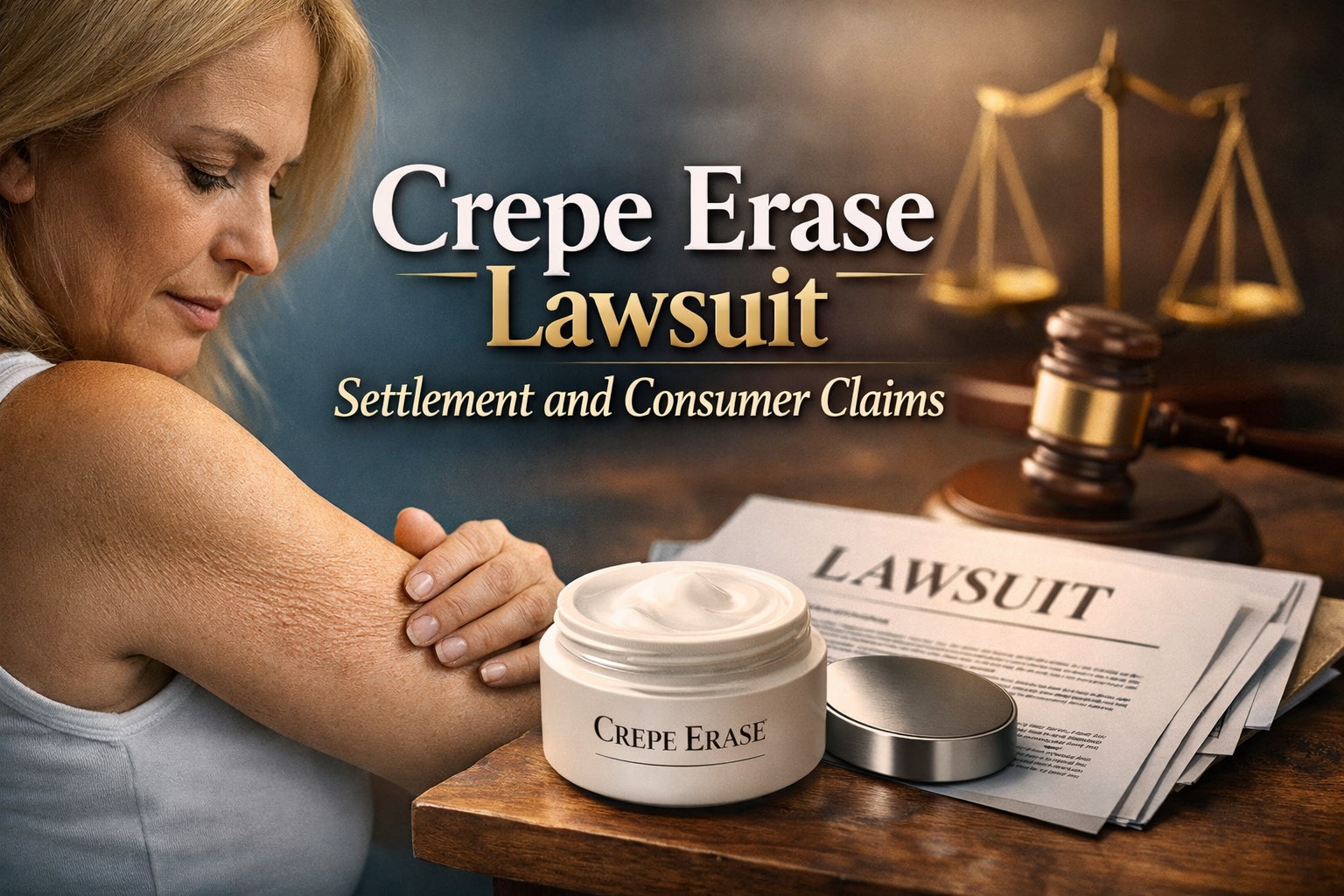
Picture this. You see an ad that promises smooth, firm skin in just weeks. The photos look dramatic. The model smiles with flawless arms and neck. Then, news breaks about a lawsuit that involves millions of dollars in claims. That shift leaves many buyers confused and upset.
Crepe Erase entered the market as a solution for thin, wrinkled skin. The lotion targets areas like the arms, neck, and chest. The brand said it could reduce the look of “crepey” skin with special ingredients. Many people over age 50 felt hope after years of trying other creams.
Reports later showed rising complaints. Some sources refer to more than 500,000 consumer complaints related to skincare marketing issues since 2020, based on public consumer protection data. Buyers began to question the bold promises. Legal action followed.
This article explains the Crepe Erase lawsuit in simple terms. You will read about the claims in court, the company’s response, and real customer stories. You will also learn how to protect yourself from similar problems in the future.
What Is Crepe Erase and Why the Buzz?
Crepe Erase launched with strong promises. Ads said it could “erase” crepey skin in a few weeks. The word “erase” caught attention fast. Many people believed the product could reverse visible aging.
Marketing focused on key ingredients. The company highlighted peptides, plant stem cells, and retinol. Ads suggested these ingredients worked together to tighten and smooth skin.
Sales grew quickly. Reports estimated revenue reached tens of millions of dollars within a few years of launch. The product appeared on TV shopping channels and online stores. The brand became a common name in anti-aging skincare.
Rise in Popularity
Influencers promoted the cream on social media. Before-and-after photos spread across Facebook and Instagram. Many posts showed dramatic results.
Market data suggested that a large share of buyers were over age 50. That group often seeks products that claim to improve skin texture. Some reports stated that millions of units were sold during peak years.
Excitement built around the brand. Then negative reviews started to rise. Customers shared concerns about results and billing. That shift led to legal complaints.
Lawsuit Breakdown: Key Allegations
A class action lawsuit filed in 2024 accused the company of false advertising. Plaintiffs claimed the brand had no solid proof to support the word “erase.” They argued that the product did not deliver the dramatic changes shown in ads.
The lawsuit stated that marketing materials overstated results. Plaintiffs said the company relied on emotional appeal rather than clear scientific data. Court filings pointed to claims that suggested near-total wrinkle removal.
Some legal documents also referenced warnings about exaggerated cosmetic claims. The core issue focused on whether the ads misled buyers.
One attorney involved in the case said the marketing targeted people who felt insecure about aging skin. That statement became widely quoted in legal news coverage.
Evidence from Plaintiffs
Plaintiffs presented lab test results during the case. According to court documents, some independent tests showed only small changes in skin texture. Reports mentioned reductions in wrinkle depth that ranged from modest levels, not dramatic improvements.
Internal company emails also appeared in filings. Plaintiffs claimed these messages showed aggressive sales strategies. Those strategies allegedly pushed strong language in ads.
One named plaintiff shared her story in court papers. She bought several jars and spent over $200. She said she saw no visible change after weeks of use. And she felt misled by the product’s promises.
The lawsuit argued that many other customers had similar experiences. Plaintiffs sought compensation for money spent on what they viewed as false hope.
Company Response and Legal Outcome
The company denied wrongdoing. It stated that results vary from person to person. Marketing materials included fine print that explained this point.
The brand also highlighted its refund policy. Some customers could request partial refunds within a set time frame. Company lawyers argued that clear return terms existed for buyers.
Dermatologists quoted in media reports gave mixed opinions. Some experts said the ingredients could improve skin moisture and texture. They also said no cream can fully erase wrinkles. That balanced view played a role in public discussion.
The company claimed it acted within legal marketing standards. It argued that customer satisfaction levels remained high overall.
Court Rulings So Far
In 2025, reports indicated that an $8 million settlement received court approval. Settlement terms included payments to eligible buyers. The agreement also limited certain advertising phrases in the future.
The court did not require the company to admit guilt. That detail often appears in consumer class action settlements. The focus shifted to compensation and clearer marketing.
As of March 2026, some appeals and related claims continued. Legal matters of this type can take years to close fully. Buyers who believe they qualify for compensation should check official court notices for updates.
Real Consumer Stories and Lessons
Not every customer reported failure. Some users said they noticed softer skin after regular use. One customer in her sixties shared that her arms felt smoother after two months. She felt satisfied with the purchase.
Other buyers shared negative experiences. A man in his mid-fifties described the cream as a waste of money in an online review. He said he expected dramatic results but saw little change.
The Better Business Bureau rating reflected mixed opinions. Some reports listed a low average score based on over a thousand reviews. Complaints often focused on billing and auto-ship programs rather than safety concerns.
The difference in experiences shows how skincare results can vary. Personal skin type, age, and routine all matter.
Common Red Flags
Several complaints mentioned automatic shipping programs. Some buyers said they did not realize they enrolled in recurring shipments. Extra charges surprised them weeks later.
Others described high-pressure sales tactics during phone calls. Upsell offers encouraged buyers to purchase larger packages at higher prices.
These warning signs appear in many consumer product cases. You can protect yourself with simple steps:
- Check the return policy before purchase.
- Read independent reviews, not only brand testimonials.
- Start with the smallest size to test results.
These steps help reduce risk when you try a new skincare product.
Actionable Steps to Avoid Similar Problems
You can take control before you spend money. Visit official consumer protection websites such as FTC.gov to review complaint trends. Public records often show patterns of disputes.
Ask brands for clear proof of claims. Reliable companies provide clinical study details in plain language. Be cautious if marketing relies only on emotional photos.
Choose products recommended by licensed dermatologists. Professional guidance reduces the chance of disappointment. Avoid subscription traps. Read every box on checkout pages. Uncheck any preselected auto-ship options if you do not want recurring orders.
Better Skin Care Choices
Many affordable creams contain proven ingredients like hyaluronic acid and retinol. Drugstore brands often cost far less than premium products. Some reports suggest consumers can save up to half the cost with similar results.
Build a simple routine. Cleanse gently. Apply moisturizer daily. Use sunscreen every morning. Sun damage often causes visible aging.
Track changes with photos taken in the same lighting. Honest comparison helps you judge results. If you see no change after a reasonable period, reconsider the product.
Consult a dermatologist if crepey skin concerns you. Medical professionals offer advice based on skin type and health history. That step reduces reliance on bold marketing claims.
Closure
The Crepe Erase lawsuit highlights a common issue in the beauty industry. Strong promises attract attention. Science often tells a more modest story. The case raised questions about how far marketing can go.
Court action led to a financial settlement and limits on certain advertising phrases. The company did not admit fault, but it agreed to compensate eligible customers. Legal review brought more clarity to product claims.
Consumer reports often show that many skincare products do not meet bold expectations. Hype can overshadow realistic outcomes. You have the power to research before you buy.
Stay informed. Read labels and policies. Question dramatic promises. Smart decisions protect both your skin and your wallet.
Frequently Asked Questions
Results depend on skin type and age. Some users report softer and smoother skin after regular use. Clinical experts say the cream may improve texture and hydration, but it does not erase deep wrinkles. Expectations should stay realistic.
No single cream can fully reverse sagging skin. Products with retinol, peptides, and hyaluronic acid often help improve firmness and moisture. A simple daily routine with sunscreen also supports better skin health.
Crepe Erase markets body firming products under different names within its product line. Brand labels may change over time, but the company still sells creams aimed at improving skin texture and firmness.
Crepe Erase is a skincare brand that sells creams and treatments designed for thin and wrinkled skin. The product targets areas such as arms, neck, and chest where skin may look loose or dry.
Marketing materials state that the product has been dermatologist tested. Dermatologist tested does not guarantee dramatic results. It usually means a skin professional reviewed the formula for safety under controlled conditions.
Healthy habits create visible change over time. Daily sunscreen protects against sun damage. Moisturizer supports smooth texture. Balanced diet, proper sleep, and regular exercise improve skin tone and glow without costly treatments.