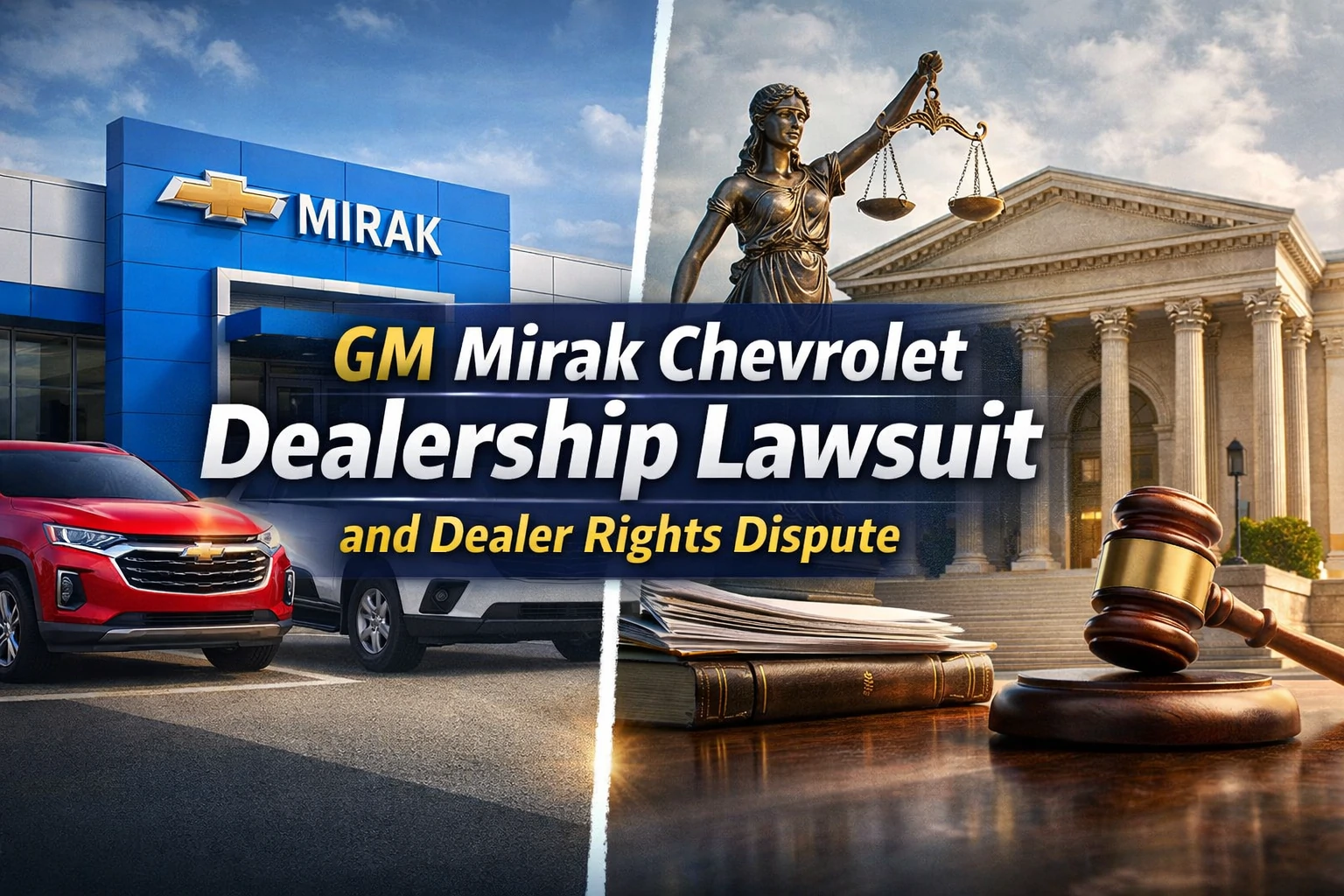
The GM Mirak Chevrolet Dealership lawsuit is a legal case that has drawn interest in the auto world and local business circles. The dispute involves Mirak Chevrolet, a long-time Chevrolet dealer in Massachusetts, and General Motors LLC, the giant automaker that owns the Chevrolet brand. This case shows how auto makers and dealers can clash over business decisions that affect local markets.
Mirak Chevrolet claims that GM plans to open a new Chevrolet sales point very close to its established shop. The dealer says this new move would hurt its customer base and revenue. GM says it needs the new location to meet market demand and boost sales. The disagreement led to a federal lawsuit that highlights complex questions about franchise rights, territory protection, and dealer-manufacturer trust.
What Is the Lawsuit About?
At its core, the case centers on territory and competition. Mirak Chevrolet alleges that GM’s proposed new dealer site is too close to its Arlington, Massachusetts, location. The dealer fears this could drain customers and sales. GM believes the market can support the new site and that competition can improve customer choice and overall sales.
Mirak filed the lawsuit in June 2025. It first appeared in state court but was moved to federal court. The formal case name is Mirak Chevrolet, Inc. v. General Motors LLC, with case number 1:25-cv-11756 in the U.S. District Court for Massachusetts. The judge assigned to the case is Indira Talwani.
GM argues that stopping its new plan would cost the company significant sales in a market it believes still has room for growth. The company insisted that expanding makes sense based on its own analysis of future demand.
Why the Case Matters to Dealers
This lawsuit matters to auto dealers across the U.S. Dealers often sign franchise agreements that give them rights and responsibilities tied to specific geographic areas. These contracts usually have clauses about territory protection and how close another franchise can open nearby. When an automaker tries to add a competitor near an existing dealer, legal conflict can follow.
Many dealers see territory rights as the backbone of their business. They invest heavily in physical space, staff training, and customer relationships. Losing territory protections can mean lost profit and weaker customer loyalty. If courts side with manufacturers too often, dealers may feel they have little security or leverage in their own markets.
GM’s defense highlights the other side of the coin. Automakers argue that market conditions change. Population growth, shifts in buying habits, and new vehicle types (like EVs) make old territory divisions less useful. They say a rigid system can slow progress and reduce new opportunities for customers.
Mirak’s Claims Against General Motors
Mirak Chevrolet claims GM broke its contractual and legal obligations. The dealer says that GM promised not to place a competing dealer too close unless certain conditions were met. Mirak argues that the new location in nearby Waltham, less than six miles away, will harm its business.
Mirak argues GM:
- Placed a new dealer too close
- Broke territory promises
- Threatened customer base
- Risked jobs and investment
- Violated franchise fairness
Mirak also asked the court for an injunction. This is a legal order that would stop GM from adding the new site until the case is resolved. An injunction can be powerful because it waits for a full court decision before any new business location opens.
The dealer claims it has a loyal local customer base built over many years. Mirak says it has made major investments in its facilities, staff, and community reputation. Losing a slice of its market could lead to layoffs and less community support. Mirak’s lawyers argue that these issues are more than simple competition. They say this is about fairness in a franchise relationship.
GM Pushes Back In Court
General Motors denies that it breached any agreement with Mirak. The company says it has the right to manage its dealer network as it sees fit. GM says its plan makes business sense and that the new point is needed to serve a broader customer base.
GM filed formal court papers saying Mirak’s requested injunction would reduce its sales in an area that still has potential for growth. The company says stopping the new site could hurt its overall market share and limit customer access to new vehicles.
In court, GM also has to show that any territory rights it grants or denies are within the terms of its franchise agreements. The company relies on its interpretation of the contract language to justify the new location plan. These types of disputes often turn on how strictly a contract is read, and how much leeway the automaker has under franchise laws.
Dealer Rights Under Franchise Law
Car dealers do not own the brand they sell. They sign franchise agreements with the manufacturer. These agreements do not give dealers full autonomy. They set rules about how car sales, service, and territories must work. Many states also have special laws that protect dealers from unfair termination or sudden competition.
In this case, Massachusetts law could play a role alongside federal contract law. Courts often look at whether the manufacturer acted in “good faith” and whether the deal with the dealer created reasonable expectations about territory. If the court finds that GM misled or unfairly harmed Mirak, it could order remedies. These remedies might include financial payments or limits on the competing site.
However, judges also balance broader economic needs. They consider whether a manufacturer has the right to grow and serve customers in a changing market. The law tries to protect dealers without strangling competition or innovation.
How This Could Affect Buyers
If you live near Arlington or Waltham, Massachusetts, this dispute might affect you in a few ways. A new dealer location could mean more choices. It could also mean more local deals and events. New competition sometimes leads to better service and pricing.
On the other hand, some customers like deep local relationships with one trusted dealer, especially when buying service or parts. If a long-time dealer struggles, customer experience could change. You might find different levels of support or community engagement depending on how this legal fight ends.
This lawsuit also highlights how car buying is changing across America. Automakers and dealers are rethinking how they sell vehicles as electric vehicles and online ordering grows. These shifts can change how dealers see their future and how customers interact with them.
The Road Ahead In Court
| Stage | What Happens |
|---|---|
| Evidence | Both sides share documents |
| Motions | Lawyers argue injunction |
| Ruling | Judge decides next steps |
| Appeal | Possible higher court review |
The case is still active in federal court. Mirak and GM continue to file legal papers. Lawyers for both sides will exchange evidence and arguments. The judge will decide whether to grant the injunction and, later, who wins the lawsuit on the merits.
If the court decides that GM must stop the new site, the automaker might have to alter its plans. If GM wins, it could move ahead and open the new location. The outcome could set a precedent for other dealers and manufacturers in similar disputes.
Legal battles like this can take months or even years to finish. Part of the delay comes from discovery — a phase where each side collects facts from the other. We may also see legal appeals if either side disagrees with the judge’s ruling.
A Simple Way To Understand Franchise Disputes
Imagine two ice cream shops in a town. One shop agrees not to allow another ice cream stand too close. But if the town lets a big chain open next door, the first owner could lose customers. Franchise laws in the car world are a bit like that. Dealers want protection. Automakers want flexibility to grow. The judge must choose what makes sense under the contract and laws.
Why This Lawsuit Matters Long Term
The GM Mirak Chevrolet Dealership lawsuit is more than a local legal fight. It highlights how tough the car business can be when big companies and local dealers clash. The case shows the tension between growth and fairness, competition and contract promises.
If you care about car buying, dealership competition, or local business rights, this case is worth watching. It may shape how auto makers manage their networks and how dealers protect their markets. The final decision could influence similar disputes across the U.S. as the auto industry changes.