Some people think they can fight in public without legal risk. That idea often leads to trouble. Laws do not treat every fight the same.
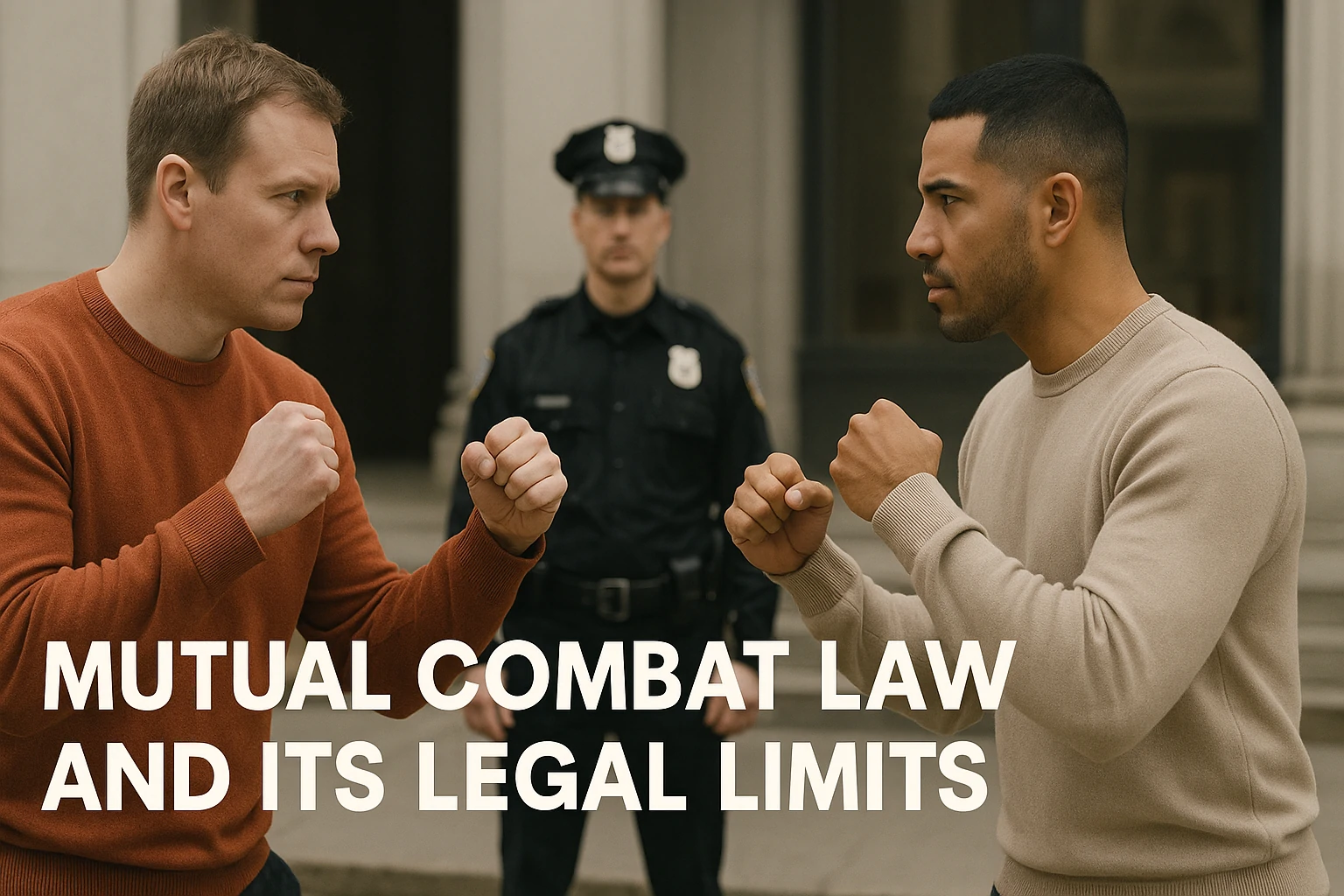
When two adults agree to fight, the law may call it mutual combat. That does not mean the law accepts it.
This guide explains mutual combat in plain terms. You will learn how the law treats these fights, where the rules change, and when this defense does not work. Each section breaks down facts about consent, fairness, and public safety.
What Is Mutual Combat?
Mutual combat happens when two people agree to fight each other. They both know what will happen. They both take the same risk.
Neither person surprises the other. That is the main idea behind mutual combat.
The law does not allow mutual combat everywhere. Some states give room for it under strict rules. The fight must not involve weapons.
The fight must not cause serious injury. The fight must not risk public safety. Even when those rules are met, legal charges may still happen.
Police may stop the fight if they see danger. Mutual combat laws do not give people a free pass. Many people learn that too late. That is why this defense is rare and hard to use.
Where Mutual Combat Is Recognized
Washington
Washington gives some legal room for mutual combat. In cities like Seattle, police may let two people fight if both agree.
No one else must get hurt. No property can suffer damage. The fight must stay under control.
The police may stand back if no laws are broken. But that depends on location and risk. If someone gets hurt or if chaos starts, arrests can follow. Mutual combat is not a right. It is a legal grey zone.
Texas
Texas law gives clearer rules. Penal Code Section 22.06 allows mutual combat as a defense in assault cases. Both people must agree. The fight must not cause serious harm. The force used must be fair.
Texas also allows implied consent. If both people act like they agreed, that may count. But weapons or serious injury will cancel that defense. Texas courts check the full story before they decide.
California
California does not have a direct mutual combat law. But courts sometimes use it to lower charges. Judges may see the fight as mutual if both sides agreed, the force was equal, and the risk was low.
This defense works best in private fights without weapons. If someone used extra force or broke the law, the court may reject the claim. California treats each case based on the facts, not the label.
Where Mutual Combat Is Not Accepted
Maryland
Maryland rejects mutual combat in public. If two people fight on a sidewalk or in a park, that becomes a crime. The state calls this an affray. Consent does not matter. Police will step in.
The law protects public order. Fights in public cause fear. They place others at risk. Even short fights can bring jail time or fines. Maryland does not excuse violence, even if it starts with agreement.
Illinois
Illinois may consider mutual combat when looking at charges. The judge may lower the punishment if both people agree. But the act still breaks the law. Mutual combat does not make the fight legal.
Courts want proof that both people entered the fight fairly. They look at who caused harm. They look at what damage happened. If someone gets hurt badly, mutual combat does not help.
New Jersey
New Jersey treats mutual combat as a rare defense. Judges may lower a sentence if both sides agreed and no one else got hurt. But the law still punishes public fights.
The defense may only work if the fight stayed private and did not cause harm. If someone got injured, or if children were nearby, the law would not accept it. New Jersey wants to keep people safe.
The Role of Consent
Consent decides if mutual combat applies. Both people must agree to the fight. That agreement must be clear. If one person stops, the other must stop too.
Courts ask for strong proof. They check text messages, video, and witness accounts. They also check for fairness. If one person used more force or cheated, consent ends.
People cannot agree on a serious injury. Courts protect health over consent. A broken nose or hospital visit may turn mutual combat into assault. Judges set the limit.
What Makes a Fight “Fair” in Law?
The law uses fairness to test mutual combat. A fair fight means equal size, no weapons, and no surprise. If one side has an edge, the court may not allow the defense.
A fair fight also ends when one person gives up. If someone keeps hitting after the other walks away, that becomes a crime. Consent has limits. The court decides when those limits are broken.
Place also matters. A fight at home may get more legal room. A fight in a parking lot or school zone will not. Risk to others changes the court’s view. Public fights are harder to defend.
Mutual Combat vs. Self-Defense
Mutual combat and self-defense do not mean the same thing. Self-defense protects people who do not want a fight. They react to danger. They stop a threat.
Mutual combat means both people wanted the fight. They chose to face harm. That takes away the self-defense claim. You cannot agree to fight and then claim you were the victim.
Still, if the other person adds a weapon or keeps going after consent ends, self-defense may return. That depends on what changed. Courts look at each step.
Public Safety Comes First
The law puts safety above consent. Even if both people want to fight, the public must stay safe. Fights near children, crowds, or traffic bring real danger. Police must act.
Fights that break windows or cause panic bring more charges. Disturbing the peace, property damage, or endangerment may follow. Mutual combat does not shield you.
Courts care more about the harm done than the plan made. If the fight shook others or caused loss, legal action will come. That is how the law works.
Capital Murder Lawyers: The Defense You Need When Life Is at Risk
Why This Law Matters
People often see videos of public fights where no one gets arrested. That makes them think mutual combat is safe. That is not true. Police have the power to step in.
Many people agree to fight and think they cannot get in trouble. Then someone gets hurt. Then someone gets sued. Then the court steps in. Mutual combat becomes a weak excuse.
Learning the truth helps people avoid risk. Talking it out is better than fighting. Walking away costs nothing. Legal trouble costs time, money, and peace.
Bottom Lines
Mutual combat law has strict limits. Only a few states allow it. Even then, rules apply. Both people must agree. The fight must stay fair. No one else can get hurt.
States like Texas or Washington may allow the defense. States like Maryland and New Jersey do not. Courts check every detail. They ask who agreed. They ask who got hurt. They ask if the public stayed safe.
Mutual combat is not a free pass. It is a narrow path. Most people fall off that path fast. One wrong move, and you face charges. That is why you must know the law.
Law exists to protect peace. It limits harm. Before you fight, ask yourself if it is worth the risk. Courts do not care if you meant well. They care if you broke the rules.
Read Trending Post: Chris Doherty Law Office New Hampshire Review and Services
Disclaimer: This article is for informational purposes only. It does not give legal advice. Always speak to a licensed lawyer before acting on legal matters.