
Land deals involve risk. That risk can turn into trouble if no one checks the site first. Smart buyers and developers know this. They look past the surface and ask hard questions. One key step is a Phase 1 Environmental Site Assessment. This helps avoid costly mistakes and legal problems.
It helps people see if the land hides pollution, buried tanks, or chemical use. It does not involve digging or lab work. Still, it gives a deep look into a site’s past. Buyers, lenders, and lawyers often treat this report as a must.
Cost becomes a concern in fast-moving deals. Some ask if it’s worth it. Others want to know how much to budget. Every buyer should understand what affects the price. They should also know what they get for their money.
This article breaks it down. It explains the costs, factors that shape those costs, and how to budget for this step. It also answers common questions people search for before starting a deal.
What Is a Phase 1 Environmental Site Assessment?
A Phase 1 ESA is a detailed check of a site’s history. It helps reveal past uses that may bring risk. A team visits the land, studies records, and interviews people who know the property. They write a report based on facts and standards.
This report follows the rules set by ASTM E1527. It looks for signs of trouble called Recognized Environmental Conditions. These may include leaks, spills, or nearby industrial activity. If the report finds signs of risk, it may lead to more tests.
Phase 1 ESAs do not involve soil tests, drilling, or sampling. Those come later in a Phase 2 ESA. The Phase 1 report focuses on paper trails, maps, and what can be seen.
It gives buyers a shield. If problems appear later, this report shows that they tried to check. It can protect them under federal rules and state laws.
Why the Cost of a Phase 1 ESA Matters
A Phase 1 ESA protects the buyer. It also helps lenders feel safe. Many banks will not fund a deal unless this report is part of the file. But cost can become a surprise. Some buyers forget to plan for it. Others choose low-cost firms and get poor results.
The wrong report can cause more harm than no report at all. It may delay the deal. It may fail to catch a problem. That leads to cleanup bills, legal issues, or lost money.
Knowing the cost ahead of time helps. It keeps deals smooth. It gives people room to plan, compare, and choose the right team.
Factors Affecting the Cost of a Phase 1 ESA
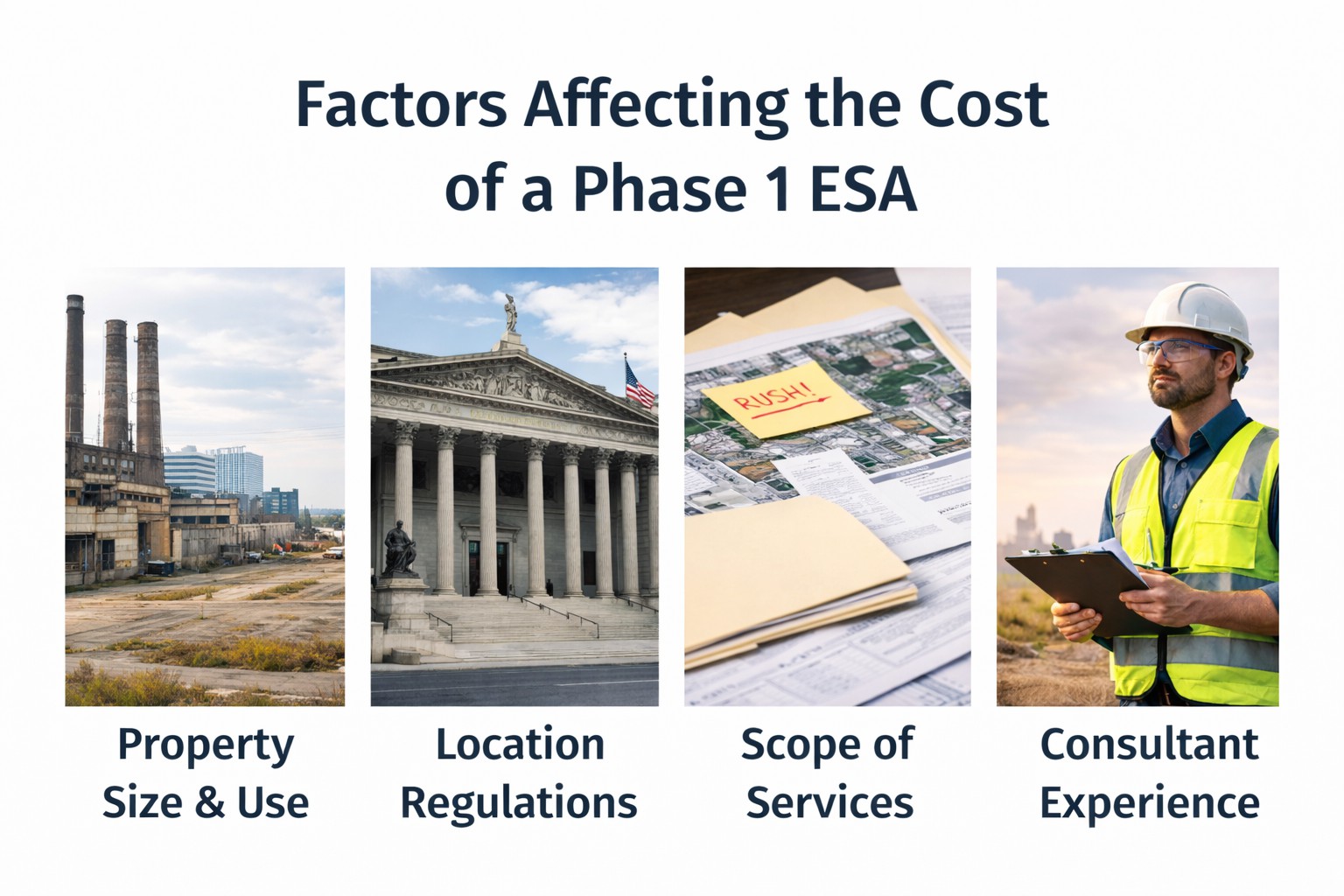
Property Size and Use
Larger sites cost more. A single lot with one building takes less time. A big area with many structures takes longer. If the site once had heavy use like fuel, waste, or chemicals, the team must dig deeper into the records.
Sites with gas pumps, repair shops, or old factories often raise red flags. The work involved grows with each added layer.
Location
The price can rise or fall based on the city or state. Big cities tend to charge more. Some states require more records. Some counties charge fees for file access. These costs pass to the client.
Sites in remote areas may cost more too. Travel time and file access can stretch the work. Every mile adds cost.
Scope of Services
Not all reports include the same details. Basic reports cover standard research. Others go beyond. They may include extra record checks, nearby land history, or fast delivery.
Some clients ask for a rush. Some ask for a review of nearby sites. These changes raise the price.
Consultant Skills
Teams with strong records charge more. They have better tools, more staff, and deep knowledge of local rules. Their reports hold up under review.
Low-cost firms may cut corners. They may skip parts or use old data. Their reports often fail to meet bank standards.
You pay more for skill, but the result offers better protection.
What Does a Phase 1 ESA Cost in 2026?
Average Price Range
In 2026, most Phase 1 ESAs cost between $1,800 and $4,800. The range depends on property type, size, location, and speed.
Here’s a simple guide:
| Property Type | Cost Estimate (USD) |
|---|---|
| Small Lot or Vacant Land | $1,800 \ $2,400 |
| Office or Retail Site | $2,300 \ $3,400 |
| Industrial Site | $3,500 \ $5,000+ |
This is only a guide. Some sites with long histories or complex layouts may exceed these numbers.
Hidden or Extra Costs
A few things can raise the total cost:
- Past land use with chemicals or waste
- Slow access to local files
- Sites in flood zones or near landfills
- Requests for extra records
- Extra maps or site drawings
Always ask what the base cost covers. Ask what could raise the price later. Clear answers protect you.
How to Budget for a Phase 1 ESA
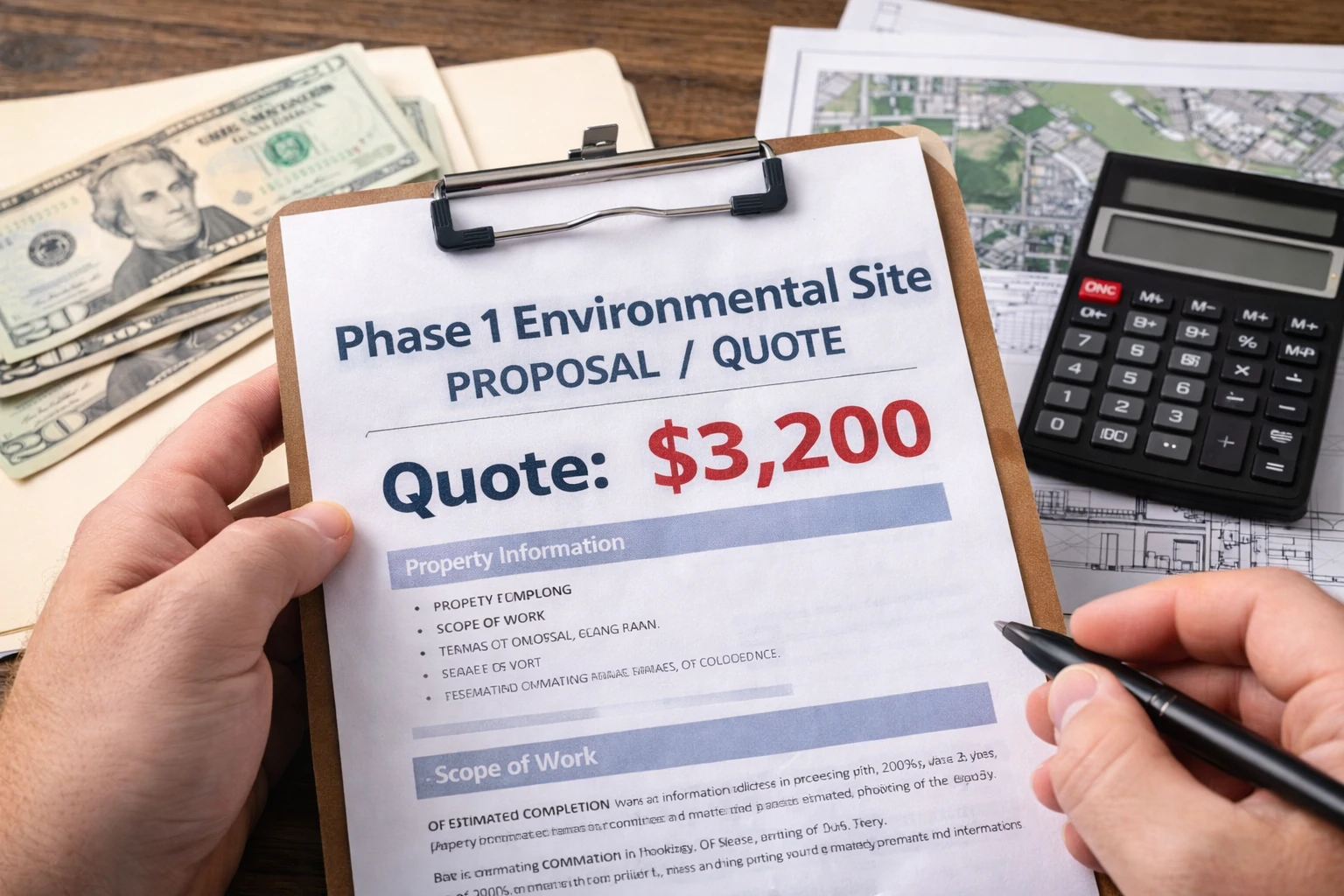
Step 1: Ask for a Written Quote
Do not guess. Get at least three quotes. Share the size, past use, and address. Ask if the quote includes travel, filing fees, and delivery time.
Compare the details. Some firms charge less but do less. Others offer full service at a fair rate.
Step 2: Add Extra Room
Set aside 15% to 25% above the base quote. This helps cover delays or added work. Some sites need more research than expected. A little extra gives you breathing room.
If the ESA leads to a Phase 2 report, costs rise. Always keep that in mind.
Step 3: Know the Timeline
Most reports take 10 to 20 business days. A rush order costs more. Plan ahead. This step can cause delays if ignored.
Conclusion
A Phase 1 Environmental Site Assessment offers more than a report. It offers peace of mind. It helps avoid hidden costs, missed risks, or broken deals. In 2026, this report remains a key tool in real estate and land development.
Costs depend on many things. Size, location, history, and firm choice all play a role. Buyers should plan ahead, ask questions, and choose their team with care. A weak report may save money today but cost much more later.
This step guards your deal. It also protects the people involved. A smart buyer knows that due diligence starts with strong research. That research begins with a clear, well-written Phase 1 ESA.
People Also Search These Questions
What does a Phase 1 ESA include?
It includes a site visit, review of public records, maps, photos, and interviews. No testing is part of this step.
How long does a Phase 1 ESA take?
Most take two to three weeks. Some firms offer faster options at a higher cost.
Do banks require a Phase 1 ESA?
Yes, most lenders ask for it. They want to limit risk before giving money.
Can a Phase 1 ESA lower land value?
It can show past issues. That may affect price talks. It also helps buyers make informed choices.
What happens after a Phase 1 ESA?
If no issues appear, the deal moves on. If problems show up, a Phase 2 ESA may follow. That includes tests and samples.
Disclaimer: This article provides general information only. Please consult a licensed environmental professional for advice before buying property or land.