Tenant rights protect renters from unsafe homes, unfair fees, illegal eviction, deposit loss, and housing discrimination. These rights start before you sign a lease and continue after you move out. A lease matters, but it does not control everything. State law, city rules, housing codes, and federal fair housing law may also apply. A landlord cannot use a lease to remove rights that the law protects.
The fastest safe move is simple. Read your lease. Save proof. Ask for repairs in writing. Do not ignore legal notices. Do not stop rent without legal advice. Call legal aid or a tenant lawyer if your home, money, or record is at risk. Tenant rights vary by state, but most renters share core protections. Cornell Law explains that many U.S. jurisdictions recognize the implied warranty of habitability, which requires landlords to keep rental homes safe and fit to live in. Before you take action, it helps to see the real legal sources behind these rights.
The Law Gives Renters Protection
Tenant rights give renters legal protection during the full rental relationship. They cover lease terms, rent notices, repairs, privacy, deposits, eviction, and fair treatment. These rights do not mean a tenant can ignore rent or damage the property. They mean both sides must follow the law. The landlord must provide a livable home. The tenant must follow the lease and pay rent unless the law allows another legal step. A renter who understands the rules can act early. That often prevents a small dispute from becoming a court case.
Your Lease Has Limits
A lease sets the basic deal, but it cannot erase tenant rights. If a lease term breaks state law, a court may refuse to enforce it. A lease usually lists rent, due dates, late fees, pet rules, guest rules, parking, repairs, and move-out terms. Tenants should read every line before they sign.
Look closely at clauses about repairs, early move-out fees, entry rights, deposit deductions, and automatic renewal. These terms can affect your money later. A landlord should not change lease terms during a fixed lease unless the lease allows it or both sides agree in writing. Month-to-month rentals may allow changes with proper notice, but state law controls the timing.
Month-to-Month Renters Still Have Rights
A month-to-month renter still has legal protection. A short rental term does not remove the right to safe housing, privacy, fair treatment, and proper notice. A landlord usually must give written notice before ending a month-to-month rental. The notice period depends on state and local law. Some places require longer notice after a tenant has lived in the home for a long time.
Rent can increase in a month-to-month rental, but the landlord must give proper notice. Some cities also limit rent hikes through rent control or local tenant rules. A month-to-month tenant should keep every notice. Do not rely on a verbal move-out date. Written proof matters if a dispute starts.
Rent Changes Need Notice
The exact notice period depends on the lease, state law, and local rules. A fixed lease usually locks the rent until the lease ends. A month-to-month lease gives more flexibility, but the landlord must still follow legal notice rules. A tenant should check three things after a rent increase notice. First, check the date the notice arrived. Second, check the date the increase starts. Third, check local rent control rules. Do not ignore an improper rent notice. Send a short written response and ask the landlord to explain the legal basis for the increase.
Repairs Start With Written Proof
A tenant should report repair problems in writing. Written proof helps show the landlord knew about the issue and had time to fix it. Serious repair issues may include no heat, no running water, bad plumbing, unsafe wiring, broken locks, roof leaks, sewage problems, pests, or structural hazards. Cosmetic flaws may not create the same legal claim.
A good repair request should list the problem, the date it started, the location, and the fix needed. Photos help. Videos help. A city inspection report can help even more. Some states allow rent withholding, repair-and-deduct, or lease termination if a landlord ignores serious repair duties after proper notice. These steps can carry risk. A tenant should check local law or speak with legal aid before taking that step.
Insight: Habitability Comes First
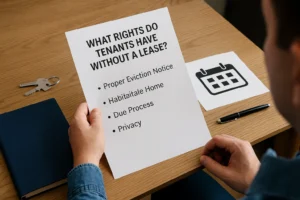
The implied warranty of habitability can protect renters even if the lease does not use those exact words. This legal concept means a rental home must stay fit for human use. A landlord cannot usually avoid basic safety duties through a lease clause. A clause that says “tenant accepts all repairs” may not defeat state habitability law.
Cornell Law notes that the implied warranty of habitability requires landlords to maintain residential rental property in safe and fit condition, even if the lease does not state that duty. This does not give tenants a free pass to skip rent without a plan. It gives tenants a legal path. That path often requires notice, proof, time for repair, and the correct local procedure.
Repair Refusal Can Become Serious
A landlord cannot ignore serious repair requests that affect health or safety. The tenant should document the issue and act in order. Imagine a renter named Daniel. His apartment has a leak near the ceiling. He texts the landlord twice. The landlord says, “I’ll handle it.” Two weeks pass. The ceiling stain grows. Daniel sees dark spots near the wall.
Daniel should not just stop paying rent. That can hurt him in court. His safer path starts with a written repair notice. He should take photos, save texts, send a dated letter, and contact the local housing office if the problem continues. If the landlord still refuses, Daniel can ask legal aid about rent escrow, repair-and-deduct, lease exit rights, or small claims court. The right option depends on state law.
Security Deposits Need Records
A landlord must have a valid reason to keep part or all of a security deposit. Common reasons include unpaid rent, unpaid fees allowed by the lease, or damage beyond normal wear. Normal wear is not the same as damage. Light carpet use, small wall marks, or faded paint may happen in a lived-in home. Broken doors, large holes, missing fixtures, heavy stains, or unpaid rent may support a deduction.
Tenants should take photos before move-in and after move-out. Landlords should keep inspection notes, receipts, and repair records. Many states set rules for deposit limits, return deadlines, and written deduction lists. Nolo notes that state security deposit laws often address how much landlords may collect and when deposits must be returned.
Privacy Does Not End At Move-In
A tenant has the right to private use of the rental home. A landlord usually needs proper notice and a valid reason before entry. Valid reasons may include repairs, inspection, emergency work, or showing the unit to a buyer or future renter. Emergency entry may apply if there is a fire, flood, danger, or urgent property risk. Tenants should not block lawful entry after proper notice. Landlords should not enter too often or use entry as pressure. If entry becomes a problem, keep a log. Write the date, time, reason, and notice given. This record can help if the dispute grows.
Fair Housing Rules Protect Renters
A landlord cannot treat renters unfairly because of protected traits under federal fair housing law. The federal Fair Housing Act protects against discrimination based on race, color, national origin, religion, sex, familial status, and disability. Examples can include refusing to rent to a family with children, denying a reasonable disability accommodation, using different rules for certain applicants, or lying about availability because of a protected trait.
Some states and cities add more protections. These may include source of income, age, marital status, sexual orientation, gender identity, or immigration status. Local law controls those extra protections. A renter who suspects bias should save ads, emails, texts, names, dates, and screenshots. A complaint may go to HUD, a state agency, a local fair housing office, or court.
Eviction Requires Legal Process
A landlord cannot remove a tenant without legal process. A lockout, utility shutoff, door removal, or forced removal can create serious legal trouble. Eviction usually starts with a written notice. The notice may demand rent, claim a lease breach, or end a tenancy. If the tenant does not fix the issue or move out, the landlord must file in court.
Only a court can order physical removal. A tenant should never ignore a court paper. USA.gov advises tenants who receive an eviction notice or lawsuit to understand their rights and seek help. A tenant may have defenses. The notice may have errors. The landlord may have skipped steps. The tenant may have proof of payment, retaliation, unsafe housing, or discrimination.
A Property Sale Does Not Erase Rights

A tenant does not lose a valid lease just because the rental property gets sold. The new owner usually steps into the old owner’s role. The rent amount, lease end date, and core lease terms often stay the same until the lease ends. Month-to-month renters may receive a lawful notice if the new owner wants changes or possession. Security deposits should transfer during the sale. Tenants should ask for written confirmation that the new owner received the deposit and lease records. A property sale can feel stressful. Stay calm. Ask for the new owner’s contact details, payment address, and written instructions.
Before You Sign, Check These
A tenant should review the lease before signing. A few minutes of care can prevent months of stress. Check these items:
- Rent amount and due date
- Grace period and late fee
- Lease start and end date
- Deposit amount and return rules
- Repair duties
- Utility payments
- Pet and guest rules
- Parking rules
- Entry notice terms
- Early move-out cost
- Renewal terms
- Sublet rules
Never assume a lease term is normal. Get any change in writing before you sign.
Rights Violation Action Plan
A tenant should act in a clear order after a landlord breaks the law. Courts respect proof, notice, and calm action.
- First, gather proof. Save texts, emails, letters, photos, videos, rent receipts, and notices. Put everything in one folder.
- Second, send a written notice. State the problem, the date it started, and the fix you need. Keep the tone simple and firm.
- Third, contact local help. A city housing office, code inspector, legal aid group, or tenant hotline may explain the next step.
- Fourth, avoid risky action. Do not stop rent, move out, change locks, or throw away notices without legal advice.
- Fifth, use court if needed. Small claims court may help with deposits or money loss. Housing court may handle eviction or repair claims.
Common Mistakes Renters Make
The biggest mistake is waiting too long. A tenant may have rights but still lose because they missed a deadline. Another mistake is using only phone calls. A landlord may deny the call later. A short follow-up text or email creates proof.
Many tenants also stop paying rent too fast. That may work in some places, but only under strict rules. In other places, it can lead to eviction. Some tenants leave without checking the lease. They may still owe rent if they move out without legal grounds. A final mistake is posting angry claims online. That can create new legal issues. It can also hurt settlement talks.
Quick Tenant Rights Checklist
Use this checklist before you fight a landlord’s decision.
- Read your full lease.
- Save every notice.
- Take move-in photos.
- Take move-out photos.
- Report repairs in writing.
- Keep rent receipts.
- Save all deposit records.
- Ask for deduction proof.
- Track entry notices.
- Do not miss court.
- Contact legal aid early.
- Confirm state rules first.
This checklist gives you a stronger record. It also helps a lawyer or legal aid worker review your case faster.
State Rules Can Change Everything
Tenant rights differ across the United States. A rule that helps a renter in one state may not work the same way in another. Many states offer stronger repair remedies. Some cities use rent control. Some states set strict security deposit deadlines. And also, some courts move eviction cases faster than others. That is why tenants should not rely only on general advice. Check your state law, city rules, lease terms, and court notice. Nolo’s state landlord-tenant law overview notes that state laws cover many parts of the rental relationship, including deposits and landlord access.
Local Help Can Save Time
A tenant should ask for local help if the problem involves eviction, unsafe housing, discrimination, deposit loss, or a large rent dispute. Legal aid may help low-income renters. A local bar association may offer referrals. A tenant union may explain local habits. A city housing office may send an inspector. USA.gov also provides tenant-rights guidance and points renters toward complaint options when they cannot resolve a landlord dispute directly. A short legal call can stop a bad choice. It can also tell you which deadline matters first.
Tenant Rights By State
These short answers give renters a fast state-by-state starting point. Each state has its own landlord-tenant rules, so renters should check local law before they withhold rent, move out, or file a claim.
What rights do tenants have in Ohio?
Ohio landlord-tenant law appears mainly in Chapter 5321 of the Ohio Revised Code. Tenants can expect landlords to follow the rental agreement and maintain the property in a lawful condition. Tenants also have duties, such as paying rent, keeping the unit clean and safe, and avoiding damage beyond normal use.
- Ohio landlords must return the security deposit or send an itemized deduction notice within 30 days after the tenancy ends and the tenant gives a forwarding address.
- Ohio tenants should report repair issues in writing and keep photos, dates, and messages.
- A landlord must use the legal eviction process and cannot remove a tenant through self-help tactics.
What rights do I have as a tenant in PA?
Pennsylvania recognizes tenant protections through state landlord-tenant law and the implied warranty of habitability. This means a landlord must provide a rental home that meets basic living standards. A landlord must also use the court process to remove a tenant.
- A Pennsylvania landlord usually must return the security deposit or send a written list of damages within 30 days after move-out if the tenant provides a forwarding address.
- A lease may include a waiver of notice to quit, so tenants should read eviction-related lease terms carefully.
- Tenants should keep repair requests, photos, rent receipts, and all landlord notices.
What rights do tenants have in Virginia?
Virginia law gives tenants clear protections through the VRLTA. A landlord must provide required lease and disclosure information. Tenants also have rights tied to move-in reports, security deposits, repair duties, and lawful eviction process.
- A Virginia landlord may require a security deposit of up to two months’ rent under the VRLTA.
- Virginia tenants may object to the move-in report within the legal time allowed.
- A landlord cannot recover possession through utility shutoff or other self-help conduct.
What rights do tenants have in Texas?
Texas law gives renters important rights, but the process can be strict. Tenants should send repair requests in writing, stay current on rent when required, and keep proof before they take major steps such as lease termination or court action.
- Texas landlords must follow rules before they can evict a tenant or change locks.
- A landlord cannot keep a security deposit without a valid reason under Texas Property Code rules.
- Repair rights usually require proper notice and may depend on whether the problem affects health or safety.
Disclaimer: This article gives general legal information only. It is not legal advice. Tenant rights vary by state, city, and lease terms. Talk to a licensed attorney or legal aid office in your area for advice about your situation.