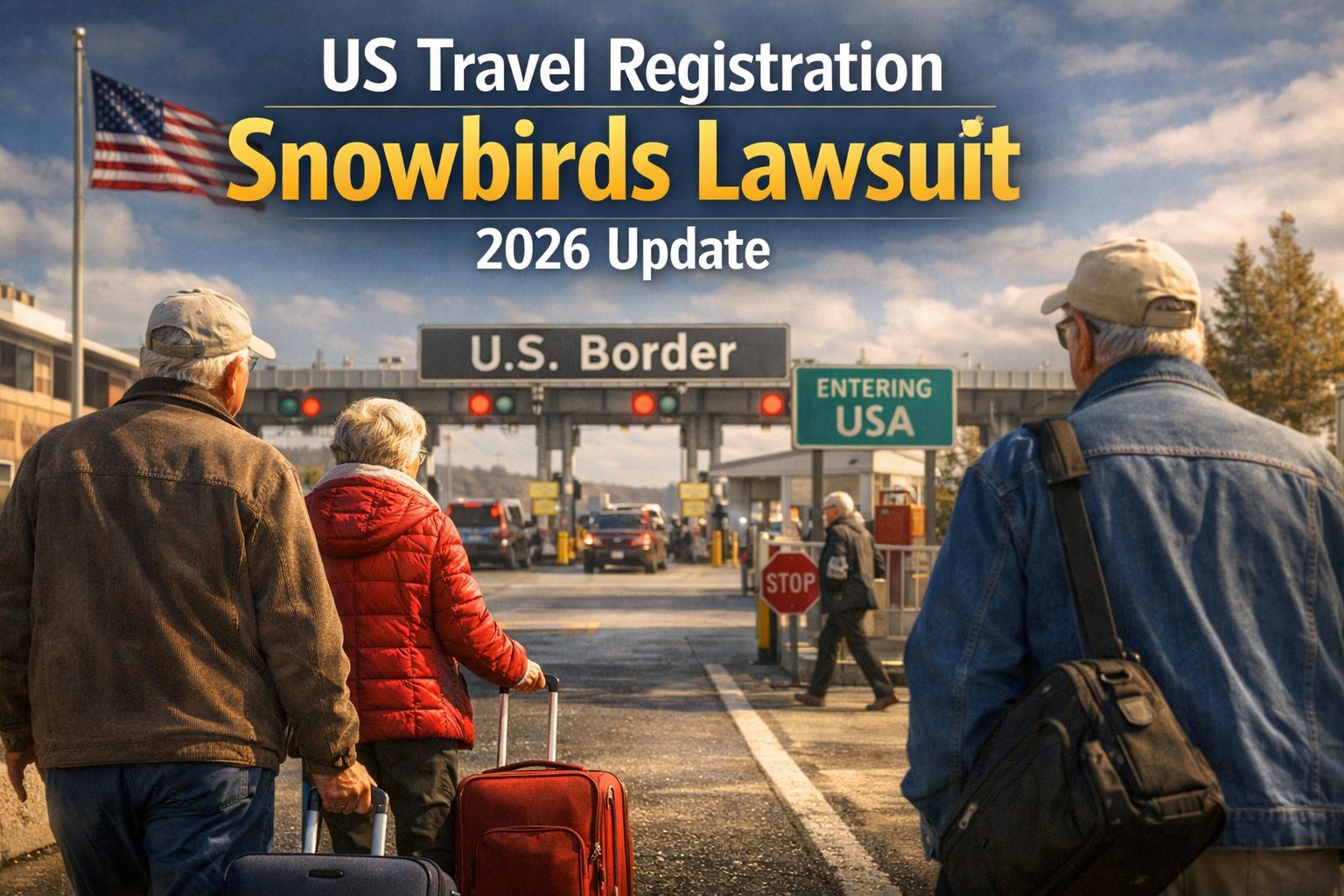
US Travel Registration Snowbirds Lawsuit has changed how thousands of Canadians plan winter trips to the United States. Every year, these snowbirds escape the cold and spend months in sunny states like Florida and Arizona. In 2025, a new rule required many to register with U.S. immigration if they stay more than 30 days.
This sudden change created confusion, long lines, and legal fears. Many travelers felt caught off guard. The rule sparked a legal battle and public outcry. Today, the lawsuit continues, and travelers want clear answers. This article explains the rule, the lawsuit, and what it means for Canadian visitors heading south in 2026.
Why Snowbirds Face New Travel Rules
The rule came from U.S. immigration departments like USCIS. It targets visitors who stay in the U.S. for more than 30 days but do not have an I‑94 entry record. Canadians often fall into that group. Many enter through land borders where I‑94 forms are not issued.
The new rule says those visitors must:
- Register their stay using a U.S. form called G‑325R
- Share fingerprints and other data
- Carry proof they followed the process
This rule started in April 2025. It applies to travelers over age 14. People who ignore the rule may face problems later. Border officers can question them, deny reentry, or flag their record. Some fear worse.
How Long Can Canadians Still Stay
Canadian snowbirds can still stay in the United States for up to 182 days in a 12‑month period. This limit has not changed in 2026. The new travel registration rule does not reduce the allowed stay time.
The key difference is paperwork. Before 2025, many Canadians could stay months without any formal registration. That option no longer exists for some travelers. If a Canadian stays more than 30 days and does not receive an I‑94 record, registration is now required.
This means the length of stay stays the same, but the process changed. Snowbirds who follow the new rule can still enjoy long winter visits. Those who ignore it may face problems during future border crossings.
Many travelers confuse this rule with a visa limit. It is not a visa change. It is a tracking and compliance rule only. Staying within the 182‑day limit remains essential.
Why Travelers Are Upset About This
Snowbirds built lives around long visits to the U.S. Some stay up to six months. Many own second homes or long-term rentals. They plan their time carefully to avoid visa trouble. This rule makes that harder. It forces them into new steps they never had to take.
Many say the U.S. never warned them properly. The forms are hard to find and harder to fill. Seniors without tech skills struggle. Some feel treated like criminals. They now worry about documents, rules, and what might happen next time they cross the border.
How the Legal Case Took Shape
Immigration advocates and civil rights groups responded quickly. They filed a lawsuit in federal court. Their message was clear: This rule is unfair.

They argued it:
- Was created too fast, without enough notice
- Targets people who pose no threat
- Breaks basic rules of fairness
- Creates fear for legal visitors
The legal team asked the court to block the rule. A judge reviewed the request. In April 2025, the judge said no. The rule went ahead. But the case continues. A full decision may come later in 2026.
Other legal disputes in different areas, such as the CP4 Fuel Pump Silverado Sierra Lawsuit, show how courts handle complex claims that affect many people.
Groups Backing the Snowbird Lawsuit
Several organizations back the legal fight. The American Immigration Council leads the charge. In Canada, the Canadian Snowbird Association (CSA) shares concerns. It helps more than 100,000 members who travel south each winter.
The CSA says the rule:
- Disrupts the freedom snowbirds had for decades
- Creates tension between two friendly countries
- Hurts older travelers the most
They post updates on their website. They also speak to lawmakers on both sides of the border.
Many Canadian travelers now follow other legal disputes tied to housing and residency rights, such as the U.S. immigration departments like USCIS, which also raises questions about fairness and compliance across borders.
What the Snowbird Association Is Doing
The Canadian Snowbird Association (CSA) plays a major role in this issue. It represents more than 100,000 Canadian snowbirds. The group actively speaks with U.S. and Canadian officials.
The CSA has taken several actions:
- Raised concerns with U.S. lawmakers
- Shared member stories with Canadian MPs
- Issued public warnings and travel updates
- Encouraged diplomatic discussions
The association cannot cancel U.S. immigration rules on its own. That power rests with U.S. courts and federal agencies. However, CSA pressure can influence policy reviews and legal outcomes.
Canadian members of Parliament have acknowledged the issue. Some raised it during cross‑border talks. No immediate reversal followed, but the issue remains active.
The CSA continues to support the lawsuit through advocacy and public awareness. Their influence helps keep snowbird concerns visible.
Stories from Travelers Affected Most
Some Canadians returned home early. Others canceled trips. In Fredericton, news stories showed snowbirds boarding return flights weeks ahead of schedule. They feared breaking rules they barely understood. The risk didn’t feel worth it.
A few got stuck in paperwork loops. They couldn’t finish the forms. They didn’t get fingerprint appointments in time. They called the consulates and waited for help. Many got no answer.
What’s Changing for Snowbird Flights
Snowbirds often fly to the U.S. using seasonal flights. These are called snowbird planes in travel news and airline ads. Airlines know when Canadians want to escape cold weather. They offer direct flights to southern states every fall and spring.
Since the new rule began, some travelers skipped these flights. Airlines noticed a drop in bookings. Travel agents say snowbirds now ask legal questions before buying tickets.
Those who still go take extra care. They check their stay length. They file forms early. They book return flights in advance to avoid crossing the 30-day mark without paperwork.
What the Canadian Snowbird Association Is Doing
The Canadian Snowbird Association helps retirees and long-stay travelers. They issue guides, contact officials, and push for better travel laws. They support freedom of movement between Canada and the U.S.
They also support something called the Canadian Snowbird Act. This law would give Canadians more time to stay in the U.S. without added red tape. People search online: When will the Canadian Snowbird Act be passed?
As of 2026, no such act has become law. Politicians discussed it in earlier years. It had support, but it stalled in Parliament. The CSA still pushes for progress. They want better border rules for seasonal travelers.
The Canadian Snowbird Act is a proposed law discussed in past years. Many snowbirds still search for updates and approval dates.
The proposal aimed to:
- Allow longer U.S. stays without tax penalties
- Protect Canadian benefits during long absences
- Support easier cross‑border retirement travel
The act did not pass. Political delays and shifting priorities stopped progress. Lawmakers moved focus to other economic and health issues.
As of 2026, no Canadian Snowbird Act exists in law. No confirmed vote date has been announced. Advocacy groups still push for revival, but success remains uncertain.
Snowbirds should not rely on this act when planning travel. Current U.S. and Canadian rules still apply. Any future change would require formal approval and public notice.
How USCIS Handles These Changes
The USCIS is the agency behind this rule. It stands for U.S. Citizenship and Immigration Services. It controls entry records, visitor programs, and immigration forms.
They created the G‑325R form. They collect traveler data. They check compliance. If travelers fail to register, USCIS may deny them access later.
People visiting the U.S. long-term must now deal with USCIS rules even if they don’t plan to stay forever. This shift causes stress for casual travelers who never needed that level of formality before.
Step‑by‑Step: How to Register Under the New Snowbird Rule
Canadian snowbirds who stay longer than 30 days must complete a simple registration process. The steps are clear but easy to miss without guidance.

Follow these steps carefully:
- Visit the official USCIS website
- Locate and complete Form G‑325R
- Submit personal and travel details
- Schedule a biometric appointment if requested
- Print proof of registration
- Keep this proof with you during travel
USCIS may not require biometrics for every traveler. Some snowbirds receive approval without an appointment. Others must attend a fingerprint session.
Registration does not grant extra stay time. It only confirms legal presence. Travelers should complete this step early to avoid delays or future entry issues.
Extra Visa Steps for Brazil Travel
Some Canadians hoped to avoid the U.S. this year. They considered Brazil instead. But Brazil added a new visa rule in 2025. Tourists from Canada and the U.S. must now apply for a visa before visiting Brazil.
That process involves:
- A form
- A fee
- Proof of a return ticket
- Proof of income or funds
This change adds another barrier. Many now ask: Is Brazil still worth the hassle? Some gave up the plan. Others switched to Caribbean destinations where the rules are simpler.
Fredericton Snowbirds Share Their Story
Fredericton in New Brunswick has a large snowbird community. Local news stations aired stories of early returns in March 2025. Travelers said they felt pushed out.
Some said border officers looked at them differently. Others worried about biometric records. A few simply didn’t want to deal with the stress. They cut trips short, even after paying for long-term rentals.
Is There a Real Risk in Not Registering?
Yes. Border officials may:
- Refuse entry next time
- Add your name to a risk list
- Take away your trusted traveler status
- Delay your travel at customs
Even honest visitors can face problems if they skip the new rule. Most lawyers now say: If you stay past 30 days, register.
Where the Legal Battle Stands Now
The lawsuit still moves through the court system. Advocates gather stories. Groups push for changes. The U.S. government defends its decision.
Canadians still visit the U.S., but with more caution. Some cut their trips short. Others file forms and hope for the best. A few explore other countries, though those, too, bring new visa barriers.
This issue won’t disappear quickly. Even if courts strike down the rule, it may return later in another form. Both sides now wait on a ruling that could shape snowbird travel for years to come.
People Asked FAQs
How many days can Canadian snowbirds stay in the US?
Canadian snowbirds can stay up to 182 days in a 12-month period under current U.S. entry rules.
Do snowbirds have to register in the US?
Snowbirds who stay longer than 30 days without an I-94 record must complete a registration form.
Do Canadians have to pay $250 to enter the US?
There is no general $250 fee to enter the U.S., but some visa or registration steps may include costs.
Do Canadians in the US have to register?
Canadians who enter without formal records and stay over 30 days must follow the new registration process.
Why Travel Feels Riskier Than Before
Snowbirds once enjoyed easy travel. That era is over. New rules, legal risks, and global visa changes now shape every trip. Canadians who once stayed five or six months must now plan carefully.
Check forms. Track dates. Read updates from USCIS and CSA. Safe travel now requires more than a plane ticket.
The lawsuit may offer hope. But until that ruling comes, snowbirds must adjust. Each year brings new questions. Only careful planning keeps problems away.