
USAA serves members of the U.S. military and their families. The company offers banking, loans, and insurance products. Over time, it also moved into digital tools that help drivers save money. One of those tools is SafePilot.
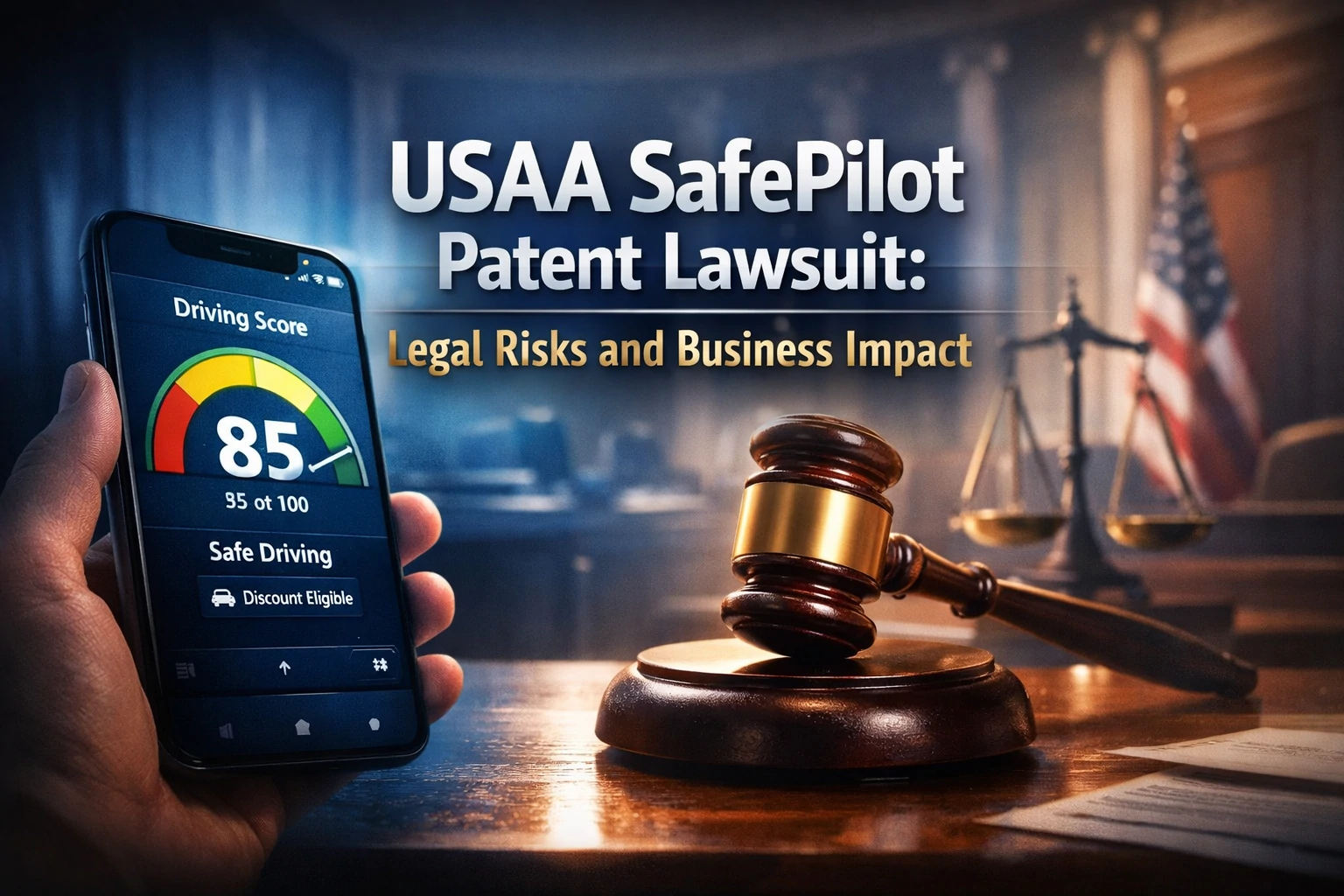
SafePilot tracks how a person drives. The app uses a smartphone to collect trip data. It studies speed, braking, and phone use during each ride. Drivers who show safe habits may receive lower insurance costs. This system reflects a major shift in how insurers price risk.
A patent lawsuit now places SafePilot in the spotlight. The dispute centers on who owns certain technology used in mobile driving analysis. The case does not focus on traffic accidents. It focuses on intellectual property rights. The result could shape how insurance companies use telematics tools in the future.
Background on USAA SafePilot
SafePilot operates through a mobile app. Customers enroll through their USAA auto policy. After enrollment, the app records trip details through smartphone sensors. The system reviews data such as sudden stops, sharp turns, and phone handling.
Each trip receives a score. The app then creates an overall driving score. A higher score may lead to a discount at policy renewal. A lower score may reduce the discount. The program aims to reward careful driving.
The app does not require extra hardware. Drivers do not need to install a device in the car. The phone handles the data collection. This design makes the program easy to join.
USAA markets SafePilot as a way to lower costs. The company also presents it as a safety tool. Feedback reports show drivers where they need improvement. That feedback may encourage better road habits over time.
Technology and Modern Insurance
Insurance once relied on broad factors such as age and location. Companies now rely more on real behavior. Telematics makes this possible. Smartphones and connected cars provide useful trip data.
Insurers analyze driving patterns to assess risk. Careful drivers often pose a lower risk. Risk-based pricing allows companies to offer personalized rates. SafePilot reflects this trend.
Many large insurers offer similar tools. Each company uses its own name and system. The idea remains the same. The app measures driving behavior and adjusts pricing based on results.
Consumers often welcome lower premiums. Yet privacy concerns exist. Some drivers worry about the long-term storage of personal data. Others question how insurers use that data beyond scoring. These concerns form part of the broader debate around telematics programs.
Overview of the Patent Lawsuit
The SafePilot patent lawsuit involves USAA and patent holders who claim ownership of certain telematics systems. In many public reports, USAA appears as the accused party. The plaintiffs argue that SafePilot uses protected technology without proper permission.
Patent owners state that they developed mobile systems that track and analyze driving behavior. They claim these inventions appear in SafePilot. The dispute focuses on technical details, not general ideas.
USAA denies wrongdoing. The company states that its system stands on independent development. It also questions the validity of the patents in question. Patent cases often involve complex comparisons between written claims and product features.
What the Patent Claims Cover
The lawsuit centers on specific patents tied to smartphone tracking and driver scoring. Plaintiffs argue that their patents protect certain methods and systems. These may include sensor data use and risk calculation models.
The claims often fall into the following areas:
- Smartphone motion detection for trip tracking
- Systems that score driver behavior
- Methods that link scores to insurance pricing
- Automated crash detection features
Patent law requires that an invention be new and not obvious. USAA may argue that similar ideas existed before the patents were filed. Courts examine prior art to test that claim.
The case proceeds under United States patent law. Federal courts handle such disputes. Judges interpret patent language first. A jury may later decide whether infringement occurred and what damages apply.
Implications of the Lawsuit
The SafePilot lawsuit may affect more than one company. Many insurers rely on telematics. A strong ruling in favor of patent holders could force firms to license technology.
Licensing fees could raise costs. Companies may pass some of those costs to consumers. Some insurers might redesign apps to avoid protected features. Others may invest more in research to build unique systems.
A court decision could set a precedent. Software patent disputes often influence future innovation. Clear guidance from courts helps companies plan with more certainty.
Industry leaders will watch this case closely. The balance between protection and competition matters to all technology-driven insurers.
Impact on USAA and Competitors
Financial risk stands as a key issue. Patent cases can result in large damage awards. Legal defense costs also place pressure on budgets.
Reputation also plays a role. Customers may question product stability during a lawsuit. Some policyholders may hesitate to enroll in SafePilot until the dispute resolves.
Competitors may see an opportunity. If SafePilot changes or faces restrictions, rival programs may attract new users. The market for usage-based insurance remains competitive.
The table below outlines possible outcomes:
| Outcome | Potential Effect |
|---|---|
| Court rules for USAA | Broader freedom to use telematics tools |
| Court rules for plaintiffs | Licensing costs or product changes |
| Settlement agreement | Private deals with limited public impact |
Each scenario carries different financial and strategic consequences.
Legal Arguments on Both Sides
USAA likely argues that SafePilot uses a distinct technical architecture. The company may claim that the patents attempt to cover general concepts rather than precise inventions.
Defense teams often challenge patent validity. They present evidence of earlier technology. If courts find prior art that mirrors the patent claims, the patent may fail.
USAA may also stress consumer benefits. The company can argue that SafePilot supports road safety and fair pricing. Courts focus on legal standards, yet broader impact often entersthe discussion.
Technical experts analyze code structure and data flow. Small differences in system design can carry major importance in patent disputes.
Patent Holders’ Arguments
Patent owners assert that they invested in research and development. They argue that SafePilot includes features described in their patent filings.
Legal teams compare product functions to patent claims line by line. They attempt to show overlap between protected methods and SafePilot features.
Experts may testify about how smartphone sensors collect and interpret motion data. Judges rely on clear explanations when reviewing technical material.
Recent court decisions show caution toward broad software patents. Higher courts have limited some abstract patent claims. That legal environment may influence how judges view this dispute.
Current Status and Future Outlook
Patent lawsuits follow a structured path. First comes the complaint. Then, both sides exchange documents during discovery. This stage may reveal technical details about SafePilot’s system.
Claim construction hearings often occur before trial. Judges define key patent terms. These definitions can shape the entire case.
If no settlement occurs, the matter may proceed to trial. A jury could determine infringement and damages. Appeals may follow, which can extend the case over several years.
Possible Outcomes
Settlement remains a strong possibility. Companies often choose negotiation over extended court battles. A license agreement may allow SafePilot to continue with certain adjustments.
A court ruling could clarify limits on telematics patents. Clear boundaries would help insurers understand what they can and cannot use.
Technology continues to evolve. Even if this case ends in favor of one side, innovation will not stop. Insurance companies will adapt to legal guidance and consumer demand.
Conclusion
The USAA SafePilot patent lawsuit stands at the intersection of technology and insurance law. SafePilot reflects the rise of data-driven pricing. Drivers who show safe habits may receive lower premiums through mobile tracking.
Patent holders claim ownership of key methods used in telematics systems. USAA denies infringement and questions patent validity. Courts must decide whether SafePilot crosses legal lines.
The result may shape how insurers develop digital tools. A clear ruling could influence licensing practices and innovation strategies across the industry. Observers should monitor updates as the case moves forward. The final decision may affect not only USAA but the broader landscape of usage-based insurance in the United States.