Many Canadian shoppers trust Costco for fair prices and clear value. That trust now faces questions due to the Costco Canada class action lawsuit. The case focuses on claims that some customers paid higher prices online than in physical warehouses for the same products.
Shoppers say these price differences were not clear at checkout. The lawsuit argues that this caused confusion and unexpected costs. It also raises wider concerns about online pricing rules in Canada. Courts have not made a final decision yet. The case remains under review.
Still, it has drawn strong public interest. Many people want simple facts, not legal noise. This article explains the issue in clear language and helps readers understand what may happen next.
How the Lawsuit Started
The case began after a shopper compared receipts. The shopper noticed repeated price gaps between online orders and store visits. Some differences reached several dollars per item. Over time, these gaps added up.
The shopper contacted legal counsel and filed a proposed class action in Quebec. The claim later gained national attention. News outlets across Canada reported on the issue. Many shoppers checked their own orders after hearing about the case.
Law firms then opened registration pages. These pages allow consumers to show interest without legal cost. Registration does not guarantee payment. It only helps lawyers track affected shoppers.
Who May Be Included in the Class
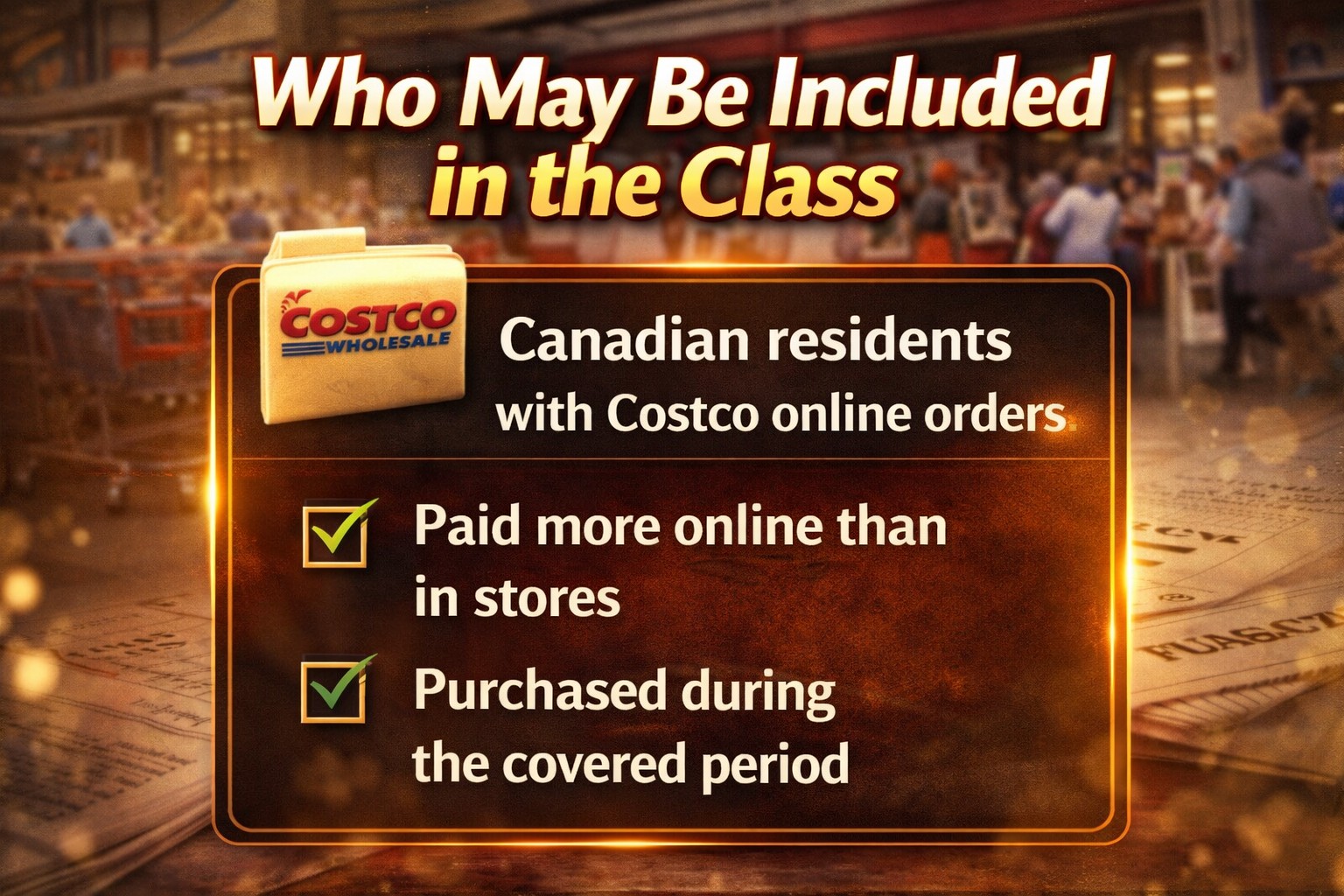
The proposed class includes Canadian residents who bought items online from Costco Canada. Purchases must fall within a set time period defined in the claim. The dates may change if the court adjusts the scope.
Most class actions include members automatically once certified. Shoppers do not need to prove loss at the start. Proof often comes later during the claims process.
Possible class members include:
- Canadian residents with Costco online orders
- Members who paid more online than in stores
- Shoppers who purchased during the covered period
This list may expand or narrow based on court rulings.
What the Lawsuit Claims Costco Did Wrong
The lawsuit focuses on pricing clarity. It does not argue that Costco charged random prices. It argues that price differences lacked a clear explanation.
According to the claim, Costco listed online prices higher than warehouse prices. The company also stated that shipping costs were included. The lawsuit says this explanation failed to meet legal standards.
Plaintiffs argue that shoppers believed shipping was free. They say higher prices acted as hidden fees. The case claims this practice caused financial harm.
Costco maintains that online prices reflect real delivery costs. The company also states that it discloses price differences on its website. The court must decide which view holds legal weight.
Costco’s Public Position on Pricing
Costco Canada states that online prices differ from warehouse prices. The company explains that delivery costs, handling, and logistics affect online pricing. These costs do not apply to in-store shopping.
The company also notes that it does not price match between platforms. This policy appears on its website. Costco argues that clear disclosure meets legal duties.
No public apology or settlement offer exists at this stage. Costco has not admitted wrongdoing. Legal teams will address these points if the case moves forward.
Current Status of the Case
The lawsuit remains at the certification stage. Certification decides whether the case can proceed as a class action. Courts review several factors at this stage.
Judges examine whether common issues exist. They also review whether a class action suits the dispute better than individual cases. This process can take months or longer.
No trial date exists yet. No settlement discussions appear public. The next major update will come from a certification ruling.
What Compensation Could Look Like
Compensation depends on many factors. Courts may order refunds, credits, or other remedies if the case succeeds. The final amount often depends on proof of loss.
Some class actions pay small amounts per shopper. Others provide store credits instead of cash. Legal fees usually come from settlement funds, not from individual members.
The court may also order changes in business practices. Such orders aim to prevent similar disputes in the future.
Key Facts at a Glance
| Topic | Details |
|---|---|
| Defendant | Costco Wholesale Canada Ltd. |
| Claim Type | Proposed class action |
| Main Issue | Online prices higher than in-store |
| Law Cited | Competition Act (Canada) |
| Current Stage | Certification pending |
| Outcome | Not decided |
This table offers a quick reference for readers who want a summary.
Why This Case Matters to Canadian Shoppers

This lawsuit goes beyond one retailer. It raises questions about modern pricing systems. Many retailers sell both online and in stores. Price gaps appear common across industries.
A court ruling could shape how companies explain prices. Clear rules help shoppers make informed choices. They also help businesses avoid legal risk.
The case also shows how consumers can challenge large corporations. Class actions give individuals a shared voice. They balance power between shoppers and major brands.
Similar pricing and disclosure issues have appeared in other consumer class action lawsuits, showing that clear information matters across many product markets.
How to Stay Informed or Take Part
Shoppers who think they qualify can monitor legal updates. Law firm websites often post news and timelines. Registration remains optional at this stage.
Consumers should keep receipts and order records. These documents help if claims open later. Shoppers should also watch official court notices.
No payment requires early action. Avoid sites that demand fees to join. Legitimate class actions do not charge upfront costs.
Shoppers who want legal guidance can also speak with a class action lawsuit lawyer to understand their rights and possible next steps if the case moves forward.
Final Thoughts
The Costco Canada class action lawsuit highlights a growing issue in modern retail. Online and in-store pricing no longer match in many cases. Courts must decide how the law applies in this new landscape.
Shoppers should stay calm and informed. The case may take time to resolve. No outcome remains certain today. Still, the lawsuit serves an important role. It pushes companies toward clearer pricing. It also reminds consumers to review receipts and policies closely.
This article aims to offer clarity, not alarm. Updates will follow as courts release decisions. Until then, informed shoppers remain the strongest voice in fair commerce. Below are common questions Canadian shoppers are asking about this case.
People Also Ask FAQs
What is the Costco class action lawsuit in Canada?
The lawsuit claims Costco Canada charged higher prices online than in stores for the same items, which shoppers say was not clearly explained.
Is there a class action lawsuit against Costco?
Yes. A proposed class action has been filed against Costco Wholesale Canada Ltd., and it is still under court review.
How to join a class action against Costco?
Most people do not need to take action now. Eligible shoppers are usually included automatically if the case gets certified, though optional registration may exist on law firm sites.
What is the average payout for a class action lawsuit?
Payouts vary widely. Many class actions result in small refunds or store credits, often ranging from a few dollars to a few hundred dollars per person.
Why are we boycotting Costco?
Some shoppers choose to boycott due to frustration over online pricing differences, but there is no official or nationwide boycott tied to this lawsuit.
Can I still join the class action lawsuit?
Yes, if the case is approved as a class action, eligible shoppers can usually join later when claims open, as long as they meet the criteria.