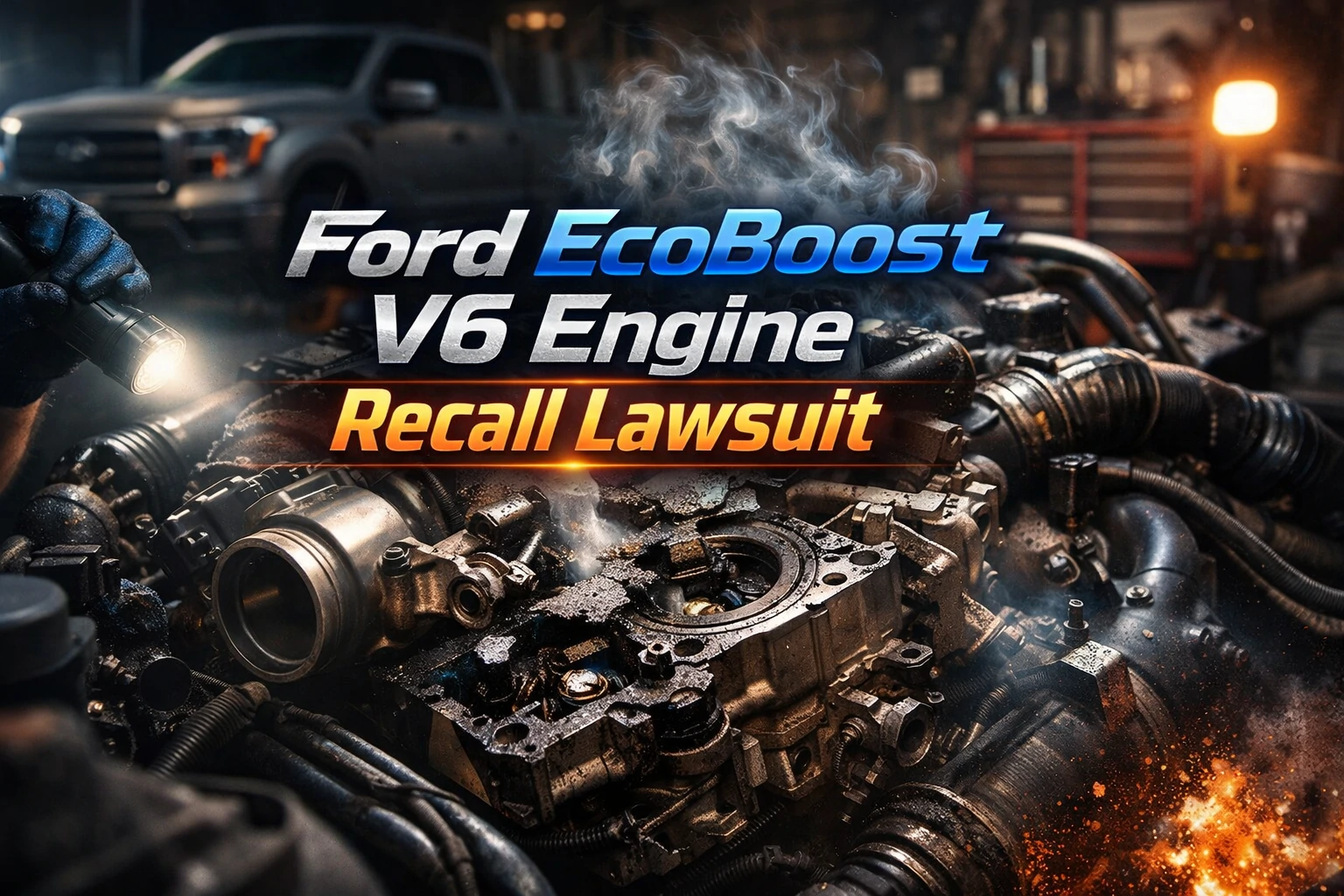
The Ford EcoBoost V6 engine recall lawsuit has become one of the most talked-about vehicle defect cases in recent years. Many drivers bought Ford vehicles with high hopes. The EcoBoost name promised strong power, better gas mileage, and modern design. Owners expected engines that would last many years without major trouble.
Over time, problems started to appear across the country. Drivers heard loud engine noises. Some felt sudden power loss on highways. Others saw warning lights flash without reason. Repair shops soon traced many failures to broken engine parts inside EcoBoost motors.
What shocked many owners was how early these failures happened. Some engines failed under 60,000 miles. Others broke just after warranty periods ended. Repair costs reached five figures in many cases. That moment changed trust into anger.
Recalls followed. Lawsuits came next. Now thousands of drivers seek justice through courts, class actions, and consumer protection laws.
Ford created EcoBoost engines to mix turbo power with a smaller size. The goal focused on strong performance with lower fuel use. These engines appeared across many models, such as trucks, SUVs, and family cars.
The lineup included smaller four-cylinder engines and larger V6 versions. The V6 models became popular in vehicles like the F-150, Explorer, and Bronco. Many buyers chose them instead of traditional V8 engines. At first, reviews praised the power and smooth driving feel. Over years of real-world use, deeper problems began to surface.
Where the Engine Problems Began
The major recall focused on recent V6 EcoBoost engines. Certain intake valves inside the engine could crack or snap. Once broken, the metal pieces dropped into the combustion chamber. This caused fast and severe damage. Drivers reported sudden stalls. Some engines seized within seconds. Many vehicles required a full engine replacement.
Ford later confirmed the defect and issued recalls across multiple models and years. Dealerships replaced parts or offered limited repairs. Many owners felt these fixes failed to address the core weakness of the engine design.
Why Drivers Filed the Lawsuits
Owners soon questioned how such a serious defect reached the market. Lawsuits claim Ford knew about early failures but continued selling vehicles without warning buyers.
Key complaints focus on:
- Hidden engine defects
- Late recall response
- High repair costs
- Loss of vehicle value
- Unsafe breakdown risks
These cases now target Ford Motor Company for selling vehicles that did not meet normal durability expectations.
Inside the V6 Recall Lawsuit
The main lawsuit centers on broken intake valves inside V6 EcoBoost engines. Plaintiffs argue that the parts suffer from poor material strength. Normal driving pressure causes fractures over time. Once valves break, engines often fail beyond repair.
Drivers claim Ford’s recall only replaces affected parts instead of fixing the full design problem. Many lawsuits request full reimbursement, free replacements, and long-term warranties. Some cases seek class action status to represent thousands of affected owners.
Recent Court Updates Across States
Courts across several states now review EcoBoost defect claims. New cases continue to appear each month. Lawyers present technical reports, recall data, and consumer complaints.
Recent developments include expanded vehicle lists, extended warranty offers in some regions, and early settlement discussions. No final nationwide settlement exists yet. Legal experts expect these cases to continue well into future years.
Problems With the 2.0 Engine
The 2.0-liter EcoBoost engine faces separate legal action. Many owners discovered that coolant leaked into the engine cylinders. This caused overheating and corrosion inside the motor. Common symptoms include rough starts, smoke from exhaust, and sudden engine failure.
Lawsuits claim poor engine block design allows cracks to form. These cracks let coolant enter combustion chambers. Many engines failed far earlier than expected. Some owners received partial warranty coverage. Others paid full repair costs themselves.
Issues Found in 1.5 Models
The 1.5-liter EcoBoost engine appears in many Ford Escape models. It shows similar coolant intrusion issues. Drivers noticed coolant loss without visible leaks. Engines misfired. Power dropped. Repair shops often confirmed cracked engine blocks.
Legal claims argue Ford knew about this flaw during production. Plaintiffs seek refunds, replacements, and compensation for reduced vehicle value.
Concerns Around the 2.3 Engine
The 2.3-liter EcoBoost engine powers several sporty and off-road vehicles. Owners report turbo failures, overheating, and engine breakdowns.
Some lawsuits connect these failures to internal cooling design flaws. Others focus on weak engine components under turbo pressure. Courts now combine some of these claims with broader EcoBoost defect cases.
Why Ford Escape Owners Filed Claims
The Ford Escape remains one of the most affected vehicles. Many use the 1.5L and 2.0L EcoBoost engines. Drivers report repeated repairs, engine replacements, and long dealership waits. Some Escapes required multiple engines over short periods. Several lawsuits now cover wide model year ranges. Settlement talks remain under review.
Steps to Join the EcoBoost Case
Owners with engine failure linked to EcoBoost defects may qualify to join legal action.
Most attorneys request:
- Vehicle purchase proof
- Repair invoices
- Service history
- Mileage at failure
- Recall notices
Law firms usually offer free case reviews. Once a class action receives court approval, official claim forms become available. Time limits apply. Acting early improves chances of recovery.
Joining Other Ford Lawsuits
The process stays similar across different engine cases. Owners submit documentation that proves the defect caused financial loss. After court certification, settlements or judgments determine compensation levels. Staying informed helps owners avoid missing deadlines.
Possible Refunds and Repairs
If lawsuits succeed, owners may receive reimbursement for repair costs, partial refunds on vehicle price, free engine replacements, extended warranties, and cash payments for loss of value. Exact amounts depend on court rulings and settlement terms.
Why These Engines Wore Out Early
Turbo engines run hotter and under higher pressure. This places more stress on internal parts. In several EcoBoost designs, cooling systems and engine materials appear unable to handle long-term stress. Over time, cracks form, and parts weaken. Short-term performance impressed buyers. Long-term durability created lawsuits.
Should Drivers Worry Now
Not every EcoBoost engine will fail. Many drivers enjoy years of smooth driving. Risk appears higher in certain engine sizes and production years. Owners should check recall status, monitor coolant levels, and document all service visits. Early repairs may prevent full engine loss.
The Recall Explained Simply
The recall addressed broken intake valves inside certain V6 engines. These broken parts caused sudden engine destruction. Ford replaced some components and offered limited coverage. Many owners feel the recall arrived too late.
Experts Weigh In on the Cases
Industry analysts note strong patterns of failure across similar engines. This strengthens consumer claims. Large numbers of complaints, repair data, and recall confirmations create solid legal evidence. Pressure continues to mount on Ford.
Conclusion
The Ford EcoBoost V6 engine recall lawsuit reveals the risks behind rushed engine innovation. Buyers trusted modern turbo technology to deliver power and savings without sacrificing durability. Instead, many faced unexpected breakdowns and massive repair bills.
Recalls confirmed serious defects. Lawsuits now push Ford to take responsibility for selling engines that failed far too soon. Cases now cover V6 models along with 1.5L, 2.0L, and 2.3L versions.
Owners who suffered EcoBoost failures should stay informed and protect their rights. The results of these lawsuits could shape how automakers design engines in the future.
Quick Answers
Why is Ford being sued over its EcoBoost V6?
Drivers claim defective engine parts caused sudden failure, and Ford failed to warn buyers early.
Are EcoBoost engines junk?
Some perform well, but certain designs show serious long-term durability flaws.
Is EcoBoost better than a V6?
EcoBoost V6 engines offer strong power with lower fuel use, yet reliability concerns remain.
What is the class action lawsuit for the Ford 3.5 EcoBoost?
The lawsuit focuses on internal engine defects, breakdowns, and a lack of proper disclosure.
Why avoid Ford EcoBoost?
Some models suffer coolant leaks, broken valves, and costly failures earlier than expected.