
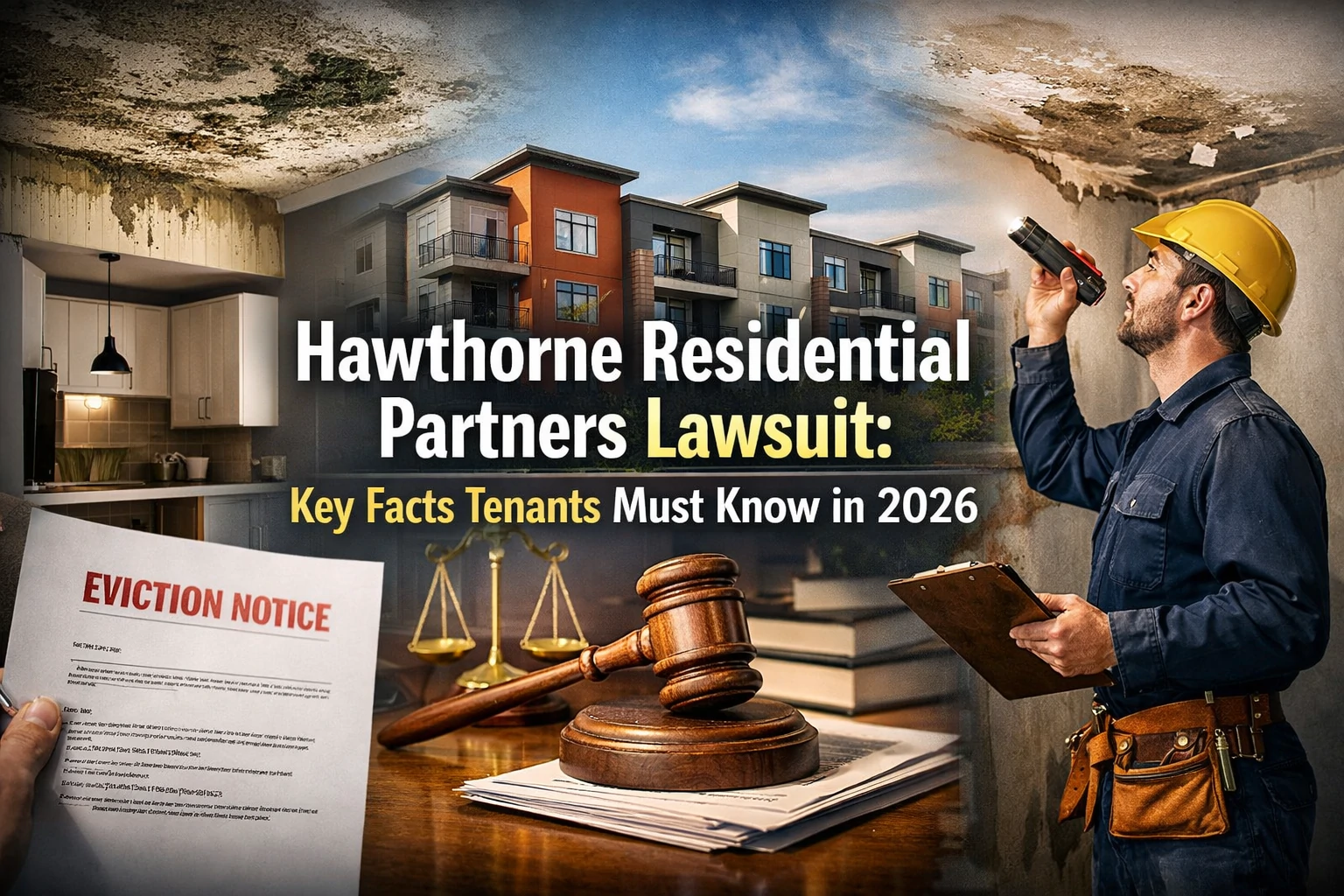
A tenant in Dallas opened a closet and found black mold spread across the wall. She had sent repair requests for months. No one fixed the leak. Soon after, she filed a complaint. That complaint helped spark what is now known as the Hawthorne Residential Partners lawsuit.
In late 2025, a class action case moved forward in federal court. The lawsuit focuses on habitability issues, rent practices, and repair failures. More than 1,200 tenants joined the case as of February 2026. This article explains how the case began, what tenants claim, how the company responded, and what renters can do next.
How the Case Began
Tenant complaints began in 2024. Residents in several Texas properties reported roof leaks, mold, pest problems, and broken air systems. Many said management delayed repairs for weeks or months. Some claimed work orders closed without fixes.
A single mother in a Dallas complex became the lead plaintiff. She said her child developed breathing issues after mold spread in their unit. She also stated that management ignored repeated emails and written repair notices. Her case helped bring other renters together.
The lawsuit was filed in the U.S. District Court for the Northern District of Texas. Plaintiffs argue that the company failed to maintain safe living conditions. They also claim rent increases and added fees made the situation worse.
Company Overview
Hawthorne Residential Partners manages more than 15,000 apartment units across Texas. The company expanded fast between 2023 and 2024. During that time, it acquired five new apartment complexes in major cities.
Growth brought more tenants and higher revenue. At the same time, some properties faced inspection issues. In 2022, local authorities fined the company about $500,000 for code violations at certain locations. Those fines related to safety and repair standards. The lawsuit claims rapid expansion led to poor maintenance oversight. Plaintiffs argue that staffing levels did not match property growth. Company leaders deny that claim.
Core Allegations

Habitability Failures
The main claim centers on unsafe living conditions. Independent inspections reported mold in about 40 percent of units reviewed. Tenants also reported broken air systems during extreme summer heat. Texas summers often reach 100°F or more. Residents say roof leaks caused flooding in some apartments. Water damage led to warped floors and stained ceilings. Some tenants claim pest infestations lasted for months without treatment. Others reported no heat during winter cold snaps.
The complaint outlines these claims:
- Leaky roofs that caused interior flooding
- Long-term pest infestations
- No heat in certain winter units
Plaintiffs argue that these issues break basic housing standards under Texas law. Landlords must provide safe and livable homes. Failure to repair major hazards may violate lease agreements.
Rent and Fee Practices
Tenants also challenge rent increases. Some say their rent rose by an average of 12 percent in 2025. They claim the increases exceeded local market trends. Several renters report new monthly charges labeled as “administrative fees.” The lawsuit alleges that some tenants paid a $50 monthly fee without clear explanation. Plaintiffs argue that these charges added financial stress to families already dealing with unsafe housing. One attorney involved in the case stated, “They profit from neglect.”
Lawyers for the tenants claim rent hikes occurred even after repair complaints. That timing raised concerns about retaliation. Texas law protects renters from landlord retaliation after lawful complaints about health or safety issues.
Evidence and Tenant Impacts
Court filings include internal repair logs and inspection reports. Plaintiffs claim the company resolved only 78 percent of complaints within a reasonable time frame. Industry averages often sit near 90 percent. That gap forms part of the legal argument.
Medical records also appear in the case. Around 150 emergency room visits allegedly link to mold exposure. Families reported breathing trouble, skin irritation, and headaches. Some tenants say they paid for medical care out of pocket.
Financial losses add another layer. Plaintiffs estimate tenants paid about $2 million combined in extra damages. These costs include temporary relocation, property damage, and medical bills. The lawsuit seeks compensation for those expenses.
Real Tenant Stories
Maria G. reported mold in her bathroom ceiling. She claims management delayed action for months. After she withheld part of her rent under Texas repair law, she faced eviction. Her story appears in the complaint as an example of alleged retaliation.
John D. says he lost his security deposit after he moved out due to unsafe conditions. He states that management blamed him for water damage tied to roof leaks. He disputes that claim and joined the class action. Tenants share one common lesson. Document everything. Keep copies of repair requests, emails, and photos. Save receipts for medical visits and repairs. Clear records strengthen a legal case.
Company Response and Expert Views

Official Statements
Hawthorne Residential Partners denies the main allegations. Company representatives say most issues were isolated and fixed promptly. They argue that rapid growth did not reduce service quality. The company reportedly offered about $1.2 million to early claimants in preliminary settlement talks. Those talks did not resolve the full class action. Mediation discussions remain ongoing.
In January 2026, the company launched a new maintenance tracking app. Leaders claim the app improves communication between tenants and staff. They state that digital tracking will reduce delays and boost accountability.
Expert Insights
Housing lawyers who follow the case expect class certification by summer 2026. One attorney commented that large class actions often settle before trial. Investors also reacted to the lawsuit. Analysts reported an 8 percent stock dip after news of the filing. Experts suggest tenants take practical steps now:
- Review lease clauses related to repairs and fees
- Check Texas tenant protection laws
- Consider joining the lawsuit if eligible
Legal experts stress that each renter’s situation may differ. Individual facts matter in court.
Path Forward for Renters

Current Status
Mediation sessions are scheduled for March 2026. Both sides may reach a settlement. If talks fail, the case could proceed toward trial. Many class actions resolve before a jury hears evidence.
Possible outcomes include rent refunds, repair orders, or monetary damages. Courts may also require policy changes. Statistics show that about 65 percent of class actions end in settlement. Final results depend on evidence and negotiation strength.
Tenants should monitor official court updates. Reliable information comes from court records or licensed attorneys. Rumors on social media may not reflect real case progress.
Steps to Take
Renters who believe they face similar issues can act now. Start with a careful review of your lease. Check sections about maintenance duties and notice procedures. Texas law outlines steps tenants must follow before legal action. Consider these actions:
- Gather all repair requests and written complaints
- File reports with the local housing authority if needed
- Track any health symptoms tied to housing conditions
Free legal consultations may help clarify rights. Legal aid groups often assist low-income tenants. Prompt action protects your position if disputes arise later.
What Tenants Should Know
The Hawthorne Residential Partners lawsuit highlights serious concerns about apartment safety and rent practices. Plaintiffs argue that mold, broken systems, and added fees harmed many families. Company leaders deny broad wrongdoing and say they addressed issues as they arose. This case shows the risk renters face when repair requests go unanswered. Clear documentation and knowledge of tenant rights matter. Experts note that rent increases may continue without oversight, which can raise housing costs by as much as 30 percent in some markets.
Tenants should stay informed and review their lease terms. Legal options exist when housing conditions fall below safe standards. Court decisions or settlements may bring relief to affected families. Many renters hope the case leads to stronger repair practices and fair treatment across all managed properties.
Common Questions
Who owns Hawthorne Residential Partners?
Hawthorne Residential Partners is a private real estate firm. Its ownership includes investment groups and company founders, not public shareholders.
Who gets paid the most in a class action lawsuit?
Lead attorneys usually get the largest share of the award. They work on the case long term and take the biggest fee.
Who is the CEO of Hawthorne Capital?
The CEO of Hawthorne Capital is a senior executive chosen by the company owners. (Exact name may vary over time.)
Who is the largest senior living company?
The largest senior living company in the U.S. is one with thousands of care communities and high revenue. (This may change as companies grow or merge.)
Is $25,000 a good settlement?
A $25,000 settlement can be good if it covers your loss and costs. Its value depends on your case details and harm suffered.