
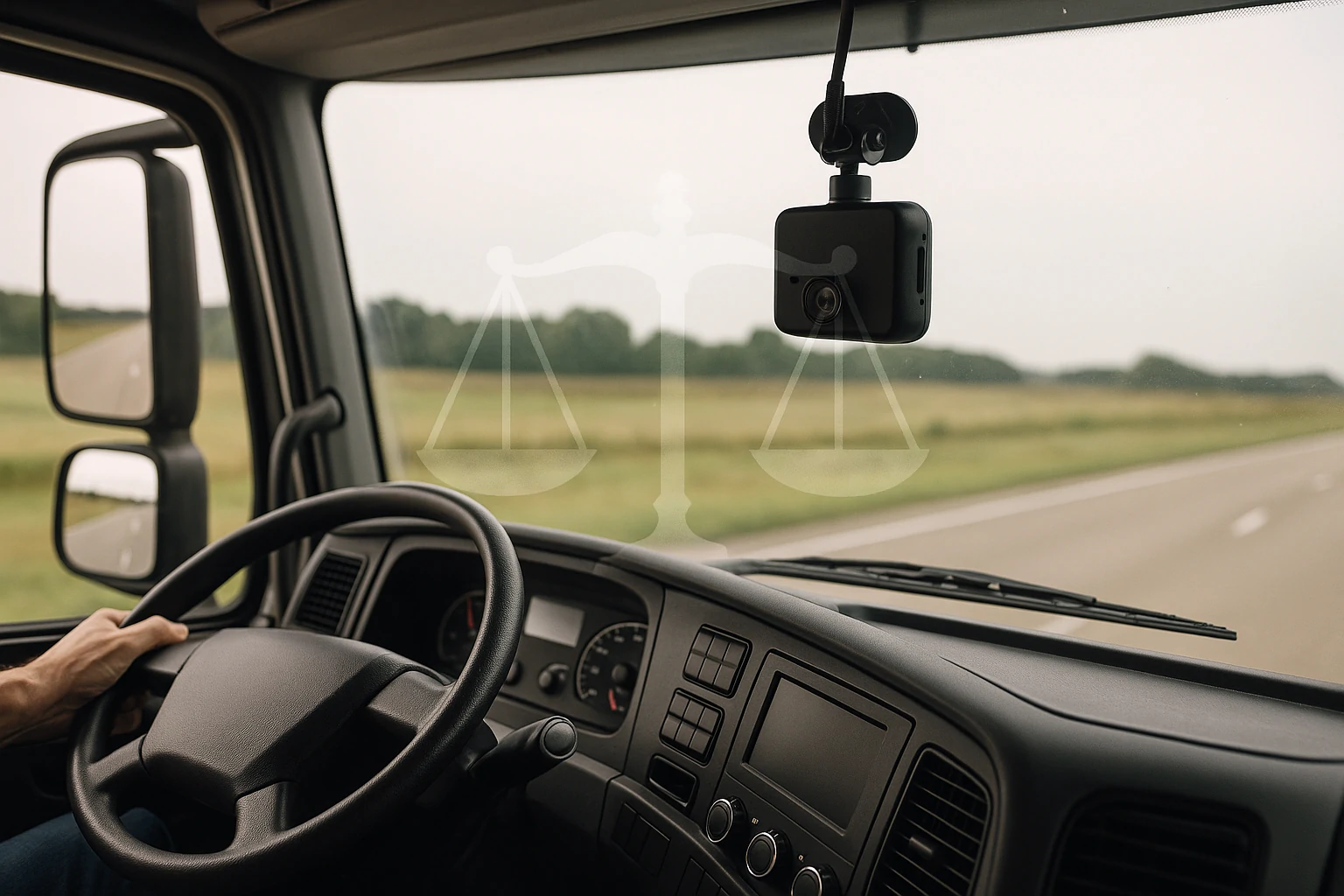
Truckers across the country have started asking tough questions. Why did Lytx face a lawsuit over face scans? What is this settlement about? How much money could drivers receive? These are not just legal details. These are real issues that affect real people who spend hours behind the wheel every day.
The Lytx trucker face scan lawsuit raised concerns about privacy. Drivers claimed that cameras inside their trucks scanned their faces without proper consent.
This led to a class-action lawsuit that ended with a large financial settlement. Thousands of drivers became part of this case, and the outcome could shape how tech companies handle biometric data.
The lawsuit focused on Lytx’s in-cab camera system. The system used artificial intelligence and machine vision. Drivers said it captured face geometry without telling them.
Under Illinois law, that kind of scan may break rules unless workers agree in writing. This sparked the lawsuit that moved forward for years. In 2025, a judge approved a major payout. Drivers began looking for their share. Many wanted to understand their rights, their timeline, and how to join.
What Triggered the Lawsuit Against Lytx?
The story began with a driver named Joshua Lewis. He worked for Maverick Transportation. In 2021, he filed a complaint in Illinois federal court.
He said Lytx installed DriveCam recorders inside trucks. These cameras faced drivers and captured facial data. Lewis claimed he never gave written permission. He said Lytx and Maverick broke the Illinois Biometric Information Privacy Act.
That law protects people from unwanted face or fingerprint scans. It says companies must explain what data they collect and get consent first.

If they don’t, they could face lawsuits. Lewis’s case was not alone. Other drivers filed similar complaints. Some worked for different carriers. Their cases later merged into one large lawsuit.
The lawsuit claimed that Lytx scanned face geometry. It used that data to monitor behavior and fatigue. The goal was to improve safety.
But the drivers argued that safety does not erase the need to follow privacy law. The system used machine learning, but the drivers said it still qualified as biometric scanning under BIPA.
Lytx denied all claims. The company said its cameras only monitored activity. It said the system did not collect biometric identifiers. Lytx claimed the technology tracked patterns, not identity. Still, the judge allowed the case to move forward. Both sides agreed to settle in 2025.
What Is the Lytx Trucker Face Scan Lawsuit Settlement Amount?
In July 2025, the court approved a $4.25 million settlement. This money came from Lytx to resolve the claims. The judge, Nancy J. Rosenstengel, signed the final order in the Southern District of Illinois.
That number may sound big, but it had to cover a lot of people. The settlement included both Illinois and non-Illinois drivers. Drivers who operated a vehicle with Lytx DriveCam between October 2016 and January 2025 qualified. Some reports said over 85,000 drivers were eligible.
About half the money went to Illinois drivers. The rest went to non-Illinois drivers. Lead plaintiffs received $10,000 each. Lawyers earned about $1.42 million in fees. Each individual payout depended on how many people filed claims.
Early reports showed that less than five percent of eligible drivers filed. This led to higher payouts per person than expected. Many Illinois drivers received around $631. Non-Illinois drivers got about $845 each. These numbers came from official court records.
Timeline of the Lytx Trucker Face Scan Lawsuit
Here’s a quick look at how the lawsuit developed over the years:
- October 2016: Start of the class period for eligible drivers
- November 2021: Joshua Lewis files the initial lawsuit in Illinois federal court
- 2022–2024: Cases consolidate as other drivers join; legal motions filed
- March 2025: Lytx announces it will add geofencing to its AI systems
- July 25, 2025: Judge Nancy J. Rosenstengel grants final settlement approval
- August–September 2025: Settlement forms processed by the administrator
- Fall 2025: Payouts begin via check and direct deposit
This timeline helps drivers understand what happened, when it happened, and how long the legal process took from start to finish.
When Was the Lytx Lawsuit Filed and Settled?
The original lawsuit began in November 2021. That’s why many sources refer to it as the Lytx trucker face scan lawsuit settlement 2021. That date marks the start of legal action. However, the settlement took several years to reach final court approval.
The final approval came on July 25, 2025. That’s the key lytx trucker face scan lawsuit settlement date. At that time, the court closed the matter with prejudice. That means the claims are considered resolved forever. No one can bring the same lawsuit again.

The four-year span shows how long it takes to resolve class-action cases. Lawyers on both sides gathered documents, argued the law, and presented facts. The court reviewed everything. In the end, the case closed without a trial. The parties settled, and the court approved the outcome.
What Does the Settlement Form Include?
If you wanted to claim your share, you had to submit a form. This is what people searched as the lytx trucker face scan lawsuit settlement form. The form asked for basic information:
- Full name and current address
- Proof of work with Lytx-equipped trucks
- Employment dates between 2016 and 2025
- Signature to confirm the truth of the claim
Some drivers received forms by mail. Others downloaded them from the settlement website. The deadline to file passed shortly after the judge approved the settlement. Anyone who missed that date could no longer claim funds.
The form was processed by the lytx settlement administrator. This third-party group handled all paperwork and communication. It made sure no one received more than they deserved. It also helped drivers correct mistakes and submit more evidence if needed.
Who Is the Lytx Settlement Administrator?
The lytx settlement administrator managed the flow of claims. This company acted as a neutral helper. It did not work for Lytx or the drivers. Its job was to follow court orders and help people receive what they were owed.
Drivers could contact the administrator with questions. Some needed help uploading files. Others asked how long their claim would take. The administrator also helped resolve identity mismatches. If a driver moved or changed their name, they could still collect a payment.
After all claims were reviewed, the administrator sent out checks or direct deposits. They kept track of every payout. They also protected driver data. No personal information was shared with anyone else.
Lytx Class Action Lawsuit Sign-Up Details
Drivers had to sign up to be included. The case was not automatic. Even if a driver qualified, they still had to submit a claim. The lytx class action lawsuit sign up process was simple, but it had to be done on time.
Drivers mailed or uploaded their forms. Some employers gave forms to their staff. Other drivers received postcards or email reminders. Once a claim was filed, the administrator reviewed the information.
Some drivers no longer worked for the same company. That did not matter. What mattered was whether they drove a truck with a Lytx DriveCam system during the class period. Pay stubs, logs, or company emails helped prove that.
The lawyers running the case did not charge drivers. It was a class action, so fees came from the settlement amount. Drivers with questions could still speak to their own attorney if they wanted more advice.
How to File Claims in Biometric Privacy Lawsuits
If you believe a company has collected your biometric data without permission, you may have legal rights. Class action lawsuits like the Lytx case show how these rights can lead to real payouts. Here’s what you should know if another case appears in the future.
First, stay informed. Look for official class action notices by mail, email, or online. Some notices appear in newspapers or public legal databases. They include case details, eligibility rules, and deadlines.

Second, gather your records. If you worked for a company using face, eye, or fingerprint scanning, collect proof. Pay stubs, work schedules, truck logs, or emails can help. Save any communication that shows the equipment or systems used during your employment.
Next, fill out the official claim form. This may be mailed to you or found on a dedicated website. Include your full name, contact details, employment dates, and proof of your work. Double-check your information before submitting.
Always meet deadlines. Most claims have a strict cutoff date. Late forms are often rejected with no second chance. Set reminders or ask for help early.
Finally, track your claim. Use contact information listed on the claim notice to check status updates. You can also contact the settlement administrator if needed. If your claim is denied, ask for reasons and respond with any missing documents.
Filing may seem stressful, but it often takes less than an hour. In cases like Lytx, that one hour could lead to hundreds of dollars. More important, it shows that your privacy matters and your voice counts.
Lytx Lawsuit Payout Date and Process
The court approved the settlement in July 2025. Payments started a few months later. This is what people searched as the lytx lawsuit payout date. Some checks went out in September. Others followed in October and November.
The timeline varied. Drivers who submitted full information early got paid first. Others had to wait while the administrator resolved issues. If a form had missing details, it caused delays.
The settlement was not taxed at the source. However, some drivers may need to report it on their taxes. It depended on their total income and state laws. Some people asked tax professionals for guidance.
Once a driver received their payment, the process ended. Their claim was closed. The administrator marked them as complete. No further action was required unless a problem occurred with the check or deposit.
Lytx Lawsuit Update: Privacy Lessons for the Future
The case sent a strong message. Technology does not erase human rights. Even advanced tools must follow the law. If a system captures biometric data, it must follow state privacy rules.
After the settlement, Lytx added a feature to help avoid future issues. The DriveCam system now shuts off inside Illinois. This geofencing tool makes sure no face scans happen in the state. It shows that the company wants to respect the law.
Other tech firms should take note. More states now have laws like BIPA. Companies must tell people what they record. They must ask for consent. They must protect what they collect. Failure to do so can lead to major lawsuits.
Drivers also learned something. They have power. They do not need to accept silent tracking. If they feel something is wrong, they can speak up. This case proved that even large companies can be held accountable.
How Lytx Changed Its Terms of Use or Consent Forms
After the lawsuit, Lytx made quiet but serious changes. They stopped using facial scans in some areas. They also added stronger “consent-required” language to avoid future legal problems.
One key change was geofencing. The system now blocks biometric tracking in states with strict laws. If a truck enters Illinois or Texas, the system turns off facial recognition. Lytx also began giving users more access to opt-out options in certain cases.
Drivers started getting updated forms. These forms included clear warnings about what Lytx collects. Many trucking companies updated their contracts too. The changes aim to reduce risk, not just for Lytx but also for their clients.
Though not all documents are public, several drivers shared the new versions online. They show more legal disclaimers, location-specific rules, and tighter control over how data is stored and used. These shifts came only after heavy legal pressure.
How the Settlement Affects Other Trucking Companies
The Lytx lawsuit did not just change one company’s behavior. It sent a clear warning across the entire trucking and logistics industry. Any company that uses in-cab cameras, face recognition software, or biometric trackers must now rethink how it collects data.
Fleets across the country started reviewing their systems. Some paused the use of driver-facing cameras until legal teams confirmed they were compliant. Others began updating privacy policies to add consent forms. Many trucking firms reached out to drivers to explain how data is stored or used.
Vendors that sell these tools also took notice. Tech companies started adding privacy features, like alerts before scans or auto-deletion settings. Some built geofencing options like Lytx did, shutting down sensitive features inside high-risk states.
This lawsuit opened a new chapter in trucking technology. It made companies think about more than safety. It forced them to consider trust, law, and human rights in every piece of data they record.
Biometric Privacy Laws Beyond Illinois
Illinois may have started the trend with its Biometric Information Privacy Act (BIPA), but it is no longer the only state watching how companies use face, eye, or fingerprint data. Many states are now creating or enforcing similar laws. These changes mean companies must pay attention beyond state borders.
Texas has its own biometric privacy law. It blocks companies from collecting biometric identifiers unless they inform people and get written consent. The law allows penalties for each violation, and the Texas attorney general can sue if companies break the rules.

California follows the California Consumer Privacy Act (CCPA) and its update, the CPRA. These laws give people the right to know what data is collected about them. This includes face scans, voiceprints, and other biometric records. Consumers can request deletion of their biometric data.
Washington passed a biometric privacy law that limits how companies collect, use, and share biometric identifiers. The law requires informed notice and consent before use. More states like New York and Maryland are now considering similar bills.
The rules may vary, but the message is clear. Companies must tell people what data they collect. They must ask permission. They must store the data safely. And they must delete it when no longer needed. As more laws take shape, lawsuits like the one against Lytx could appear in other states too.
Public Reaction: Drivers, Lawyers, and Advocates
The Lytx settlement caught attention across the country. Many truck drivers expressed a mix of relief and frustration. Some felt validated. Others wished the company had been held accountable sooner. On driver forums, some users said they had no idea cameras were scanning their faces. Others shared stories of feeling watched or judged without notice.
Legal experts saw the case as a turning point. Attorneys who follow privacy law called it a clear sign that biometric lawsuits will keep growing. They warned companies that even well-meant technology must follow written consent rules. Law firms praised the outcome and noted that Illinois’ BIPA law was finally showing real enforcement power.
Privacy groups also commented. Some advocates said this case was only the beginning. Groups that fight for digital rights urged lawmakers to pass stronger protections in other states. They also encouraged workers to speak up if they felt their data was collected unfairly.
Even trucking unions took notice. Some issued statements supporting the drivers. They called on employers to adopt clearer policies and involve drivers in tech decisions. Many unions reminded members that cameras should serve safety, not violate trust.
The reactions show that this was not just a legal case. It was a moment where workers, courts, and companies were forced to rethink how technology fits inside a moving truck.
What’s Next for AI and In-Cab Cameras?
The Lytx case may be closed, but questions about in-cab camera systems are just beginning. Trucking companies now face a tough balance. They want safety tools that help prevent crashes, but they must also respect driver privacy.
AI will not go away. Systems like DriveCam are already being used to spot fatigue, phone use, or sudden braking. These features help reduce accidents and insurance costs. Still, companies must now rethink how those systems work.

In the future, many cameras may work differently. Instead of scanning faces or eyes, they may use behavior-only detection. Some developers are working on systems that measure steering wheel pressure, brake patterns, or cabin sounds without using biometric data. Others may build alerts that require driver consent before tracking starts.
Geofencing may also expand. Lytx already turns off its AI camera inside Illinois. More companies may add this feature for other states with strict laws. Some fleets may even let drivers toggle camera settings manually, offering more control over when the system is active.
As technology grows smarter, so must company policies. Every new tool must now pass both a safety test and a privacy test. The future of AI in trucks depends on earning driver trust, not just recording their every move.
Future Lawsuits to Watch (Based on Industry Trends)
The Lytx case opened the door for more lawsuits in the trucking world. Experts say the biometric fight is far from over. Many companies still use dashcams, GPS logs, and facial ID tools without clear consent.
Trucking giants with fleet management systems may face lawsuits next. Any company that stores face scans or eye-tracking data without notice is at risk. Even “fatigue alerts” that scan your eyes could trigger legal action.
Other states may follow Illinois. Lawmakers in California, New York, and Florida are reviewing similar privacy laws. If passed, they could spark new class actions.
Watch for lawsuits in fields like school buses, rideshare fleets, and delivery trucks. These groups often use third-party software with little oversight. If those tools scan faces, users may sue just like in the Lytx case.
Conclusion
The Lytx trucker face scan lawsuit settlement gave drivers something rare: justice without a trial. The court approved a fair deal. Money went to those affected. Technology companies saw the result.
If you missed this case, you still learned a valuable lesson. Always ask questions about privacy. Read the fine print. Understand what your employer uses to track you. Protect your rights.
Privacy laws continue to grow. More lawsuits like this one may follow. Drivers should stay alert. They are not just workers. They are people with rights.
Frequently Asked Questions
Who qualified for the Lytx trucker face scan lawsuit settlement?
Drivers who operated a vehicle equipped with a Lytx DriveCam system between October 2016 and January 2025 were eligible. This included both Illinois residents and drivers from other states who used trucks with the system.
How much money did drivers receive from the settlement?
Most payouts ranged between $631 and $845 depending on location and the number of claims submitted. Illinois drivers typically received less because there were more of them. Fewer non-Illinois claims meant slightly higher individual payouts.
Is the lawsuit still open to new claims?
The deadline to file a claim passed shortly after the final court approval on July 25, 2025. Drivers who did not submit the claim form by that date are no longer able to join the settlement or receive money from it.
What was the lawsuit about?
The case involved claims that Lytx used in-cab cameras to scan drivers’ facial features without getting written consent. This action may have violated Illinois biometric privacy laws, especially under BIPA, which protects personal data like face geometry.
Did Lytx admit to breaking the law?
Lytx denied any wrongdoing. The company said its systems did not collect biometric identifiers. It claimed the technology only tracked patterns to improve safety, not to identify or store faces. The case ended through a settlement, not a court ruling on guilt.
Can other states file lawsuits like this?
Other states now have or are working on biometric privacy laws. Places like Texas, California, and Washington already have rules in place. Similar lawsuits may happen if companies fail to follow state laws or ask for proper consent before collecting personal data.
Disclaimer: This article offers general information, not legal advice. Contact a licensed attorney for help with your own case or concerns.