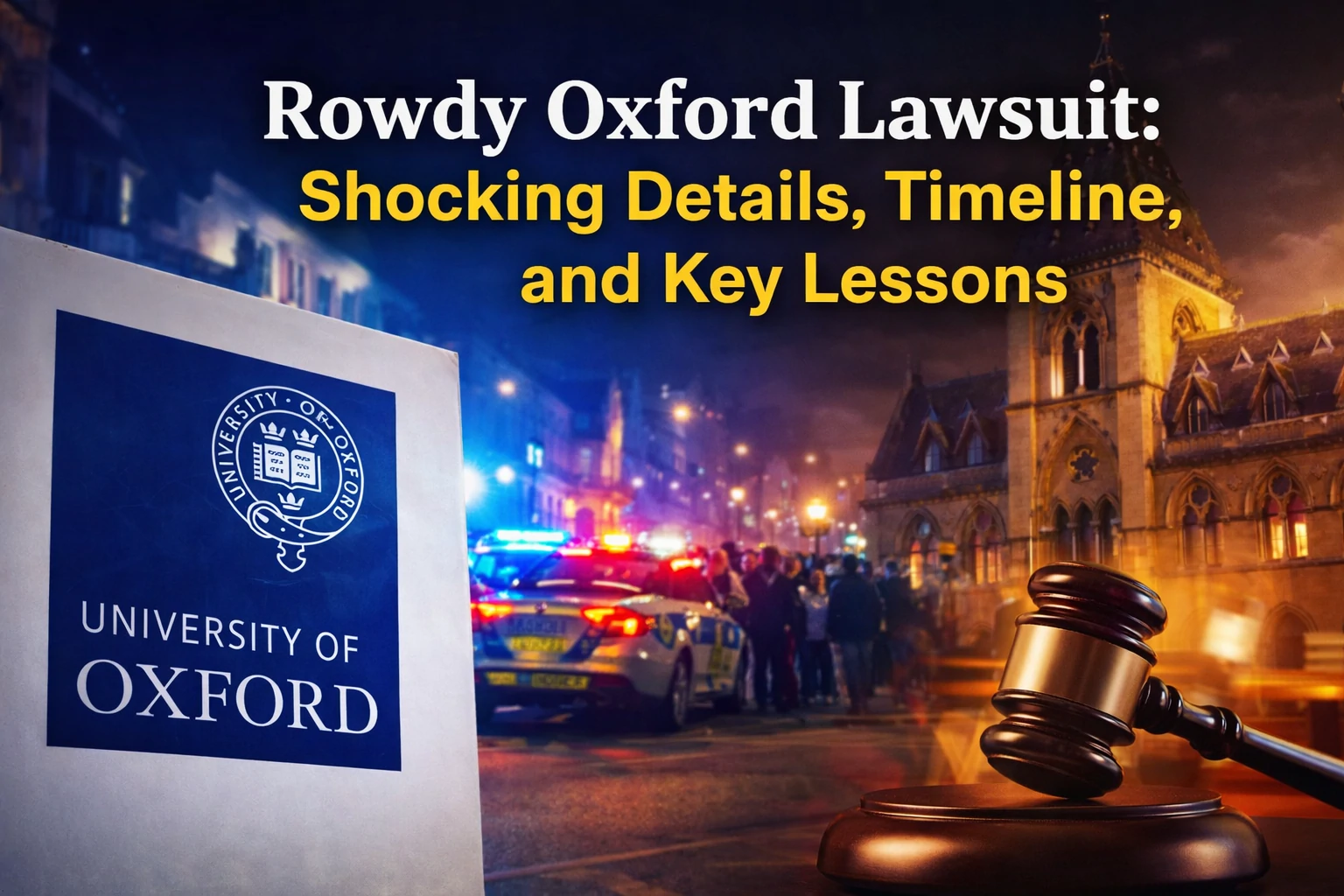
A loud night in Oxford led to more than angry calls and broken sleep. It led to court. What many first saw as a student party issue later turned into what people now call the rowdy Oxford lawsuit. Residents claimed that repeated events caused damage, fear, and loss of peace in their area. Organizers said they had the right to host social gatherings.
Background of the Rowdy Oxford Lawsuit
Community events linked to student culture have grown in Oxford over recent years. Early events started small. Local reports say the first gatherings in 2023 had fewer than 100 people. Organizers promoted them as social nights near university housing.
Attendance grew fast. By late 2024, some events drew thousands. Streets became crowded. Music played past midnight. Residents filed early complaints. Local officials sent warnings. No full ban followed at that time.
The growth created tension. Many residents felt ignored. Event hosts believed they followed basic permit rules. That gap in views laid the ground for future conflict.
Rise in Complaints
Noise reports increased in 2024. Local records showed over 150 formal complaints tied to event nights. People reported blocked roads, public mess, and late-night shouting.
Homeowners shared stories of children who could not sleep. Small business owners said customers avoided the area after large events. A local council member stated that repeated disturbances harmed community trust.
Warnings went out more than once. Letters from city officials reminded organizers about sound limits and safety rules. Organizers promised better crowd control. Complaints still rose.
Legal Groundwork
Local noise ordinances set clear decibel limits after certain hours. Public safety rules require permits for large gatherings. These rules exist to protect residents and guests alike.
City officials sent pre-lawsuit notices in late 2024. Those notices warned of fines and legal steps if violations continued. Organizers disputed parts of those claims.
They argued that enforcement lacked fairness and that other events received softer treatment. Tension built for months. One major event in early 2025 pushed the dispute into court.
What Sparked the Big Lawsuit
In February 2025, a large event drew heavy crowds. Reports describe packed streets, loud music, and limited security presence. Some windows broke. Trash covered nearby lawns. Police responded to multiple calls that night.
Residents documented damage with photos. Several families claimed property harm. Others cited fear and stress due to crowd behavior. That night changed the tone. Complaints turned into organized legal action.
Filing the Suit
A group of 75 homeowners filed a civil lawsuit against event organizers. The complaint asked for financial compensation and a court order to stop large gatherings in residential zones.
The group claimed over $1.2 million in combined damages. Claims included property harm, loss of quiet enjoyment, and reduced home value. Below is a simple summary of the main claims:
| Claim Type | Description |
|---|---|
| Property Damage | Broken windows, fence damage |
| Public Nuisance | Ongoing loud events past limits |
| Safety Risk | Overcrowding and blocked streets |
Organizers denied major wrongdoing. They argued that isolated acts by attendees should not result in total event bans.
Initial Reactions
Media coverage spread fast. Social platforms shared videos from the February event. News outlets reported on both sides of the dispute. Organizers issued a public statement. They said they valued community ties and planned improved security. Residents responded that promises had already failed before. Public debate grew sharp. Some supported student freedom. Others stressed the right to peace and safety.
Key Players and Their Roles
The lead plaintiff owned a home near the event zone. He stated that repeated disturbances harmed his family’s daily life. He worked with neighbors to collect evidence and file formal complaints.
The group raised funds to support legal fees. Reports showed over £20,000 raised through community support. That financial backing helped sustain the case.
Groups that file similar lawsuits often rely on clear records. Police reports, video evidence, and prior warnings strengthen claims. This case followed that pattern.
Defendants: Organizers and University Links
Event organizers faced direct legal action. Some events had informal links to student circles. The university itself denied official sponsorship of disruptive gatherings. Defense lawyers argued that city oversight failed to provide clear guidance. They claimed the plaintiffs overstated damages. Legal experts noted that free expression rights can conflict with local nuisance law. Courts must balance both interests.
Judges and Experts Involved
A civil court judge oversaw the early hearings. Noise experts reviewed sound data from event nights. Safety officers testified about crowd size and response times. Expert witnesses played a major role. Sound level charts and permit records formed key evidence. Each side presented data to support its view.
Court Battle and Final Ruling
The case moved through three major hearings between mid-2025 and early 2026. During the first hearing, the judge reviewed the complaint records and initial evidence. The court ordered temporary limits on future events.
In the second hearing, expert witnesses testified. Sound data and police logs received close review. The final hearing focused on damages and possible restrictions. Lawyers debated whether full bans would violate rights.
Verdict Details
The court issued a partial win for the plaintiffs. Judges awarded financial compensation of $750,000 to the homeowner group. The ruling did not impose a total event ban. Instead, it required stricter permits, capped crowd sizes, and clear sound limits.
The court found that repeated violations created a public nuisance. At the same time, it recognized the right to host lawful events under proper controls. Appeal discussions began soon after. As of early 2026, no final appeal outcome had been confirmed.
Aftermath Effects
Event organizers adjusted policies. They hired more security and reduced capacity. City officials introduced tighter monitoring of large gatherings. Complaint rates reportedly fell in the months after the ruling. Residents expressed cautious relief. Organizers stated they aimed to rebuild trust.
Impacts and Broader Lessons
Local shops near event areas saw mixed effects. Some businesses gained revenue from large crowds. Others reported damage or lost customers due to the disruption.
Tourism data suggested a short decline after media coverage. Over time, improved control measures helped restore normal patterns. Community trust takes time to repair. The lawsuit highlighted how fast tension can rise when communication fails.
Changes for Event Planners
Event planners can draw clear lessons from this dispute:
- Secure permits well in advance.
- Respect noise limits.
- Cap crowd numbers.
- Maintain a strong security presence.
Careful planning reduces legal risk. Good neighbor relations protect long-term success. One planner later stated that strict compliance protects both fun and safety. That view reflects a shift toward more responsible hosting.
Future Prevention Tips
Residents can protect their rights through early reporting. Clear records help if disputes grow serious. Universities and city councils may adopt clearer policies to prevent gray areas. Transparent rules reduce conflict.
Reports suggest that complaint rates dropped nearly 40% after stricter oversight. That outcome shows that legal action can drive reform when dialogue fails.
Avoid Your Own Rowdy Oxford Lawsuit
The rowdy Oxford lawsuit shows how repeated noise and safety issues can escalate into a major legal conflict. Residents fought for peace and compensation. Organizers defended their right to host events. The court chose a middle path that balanced both sides.
Clear rules, respect for neighbors, and honest communication reduce risk. Legal disputes cost money and damage trust. Smart planning keeps community life active without harm.
Lawsuits tied to public nuisance have increased in recent years. Communities that act early often avoid court battles. Responsible hosting and strong local oversight help protect both freedom and order.