
A tenant is a person who rents a home, apartment, room, or property from a landlord. That simple word carries real legal weight. A tenant may pay rent, follow a lease, and care for the rental home, but a tenant also has rights that a landlord must respect.
In the U.S., tenant rights can cover safe housing, repairs, privacy, rent rules, security deposits, eviction notices, and fair treatment. These rules do not work the same way in every state. A tenant in California, Texas, Florida, New York, Georgia, or Ohio may face different laws, notice periods, and court steps.
This guide explains what a tenant is, what tenants usually have the right to expect, what duties they must follow, and when a renter should seek help from a housing agency, legal aid group, or landlord-tenant lawyer.
At TenantLawGuide, we focus on rental guides that help U.S. tenants understand common housing problems before they become court issues.
Simple Answer for Tenants
A tenant is a person who rents a home, apartment, room, or property from a landlord. In the U.S., tenants usually have legal rights related to safe housing, privacy, repairs, fair treatment, security deposits, and eviction notices. The exact rules depend on the state, city, lease terms, and type of housing.
Tenant Meaning in Simple Words
A tenant is someone who has permission to live in or use a rental property. That permission usually comes from a lease, rental agreement, or landlord approval.
The rental property may be:
- An apartment
- A house
- A room
- A condo
- A mobile home lot
- A commercial space
- Land used under a rental agreement
Most people use the word tenant for a person who rents a place to live. The word can also apply to business rentals, but this guide focuses mainly on residential tenants in the U.S.
A tenant does not own the property. The landlord keeps ownership. The tenant gets the right to use and occupy the rental under the terms of the lease and the law.
Cornell’s Legal Information Institute explains that landlord-tenant law governs lease terms, termination, tenant screening, repairs, subleasing, and eviction procedures.
Tenant and Renter Difference
In everyday language, tenant and renter often mean the same thing. A renter is a common word people use in normal conversation. A tenant is the word often used in leases, statutes, court papers, and legal notices.
Example:
A person may say, “I am a renter.”
A lease may say, “The tenant must pay rent on the first day of each month.”
Both usually describe the person who rents the home.
The word “tenant” becomes important when a dispute starts. A lease violation, eviction notice, repair request, or security deposit claim may depend on whether the person has legal tenant status.
Main Types of Tenants
Not every tenant has the same rental setup. The legal rules may change based on the type of agreement.
Lease Tenant
A lease tenant has a written lease for a set period. This may be six months, one year, or another fixed term. The lease usually states the rent amount, due date, rules, fees, and end date.
Month-to-Month Tenant
A month-to-month tenant rents without a long fixed term. The rental continues each month until the landlord or tenant ends it with proper notice.
Room Tenant
A room tenant rents one room in a house or shared unit. The tenant may share the kitchen, bathroom, or common areas with others.
Subtenant
A subtenant rents from another tenant instead of directly from the landlord. Some leases ban subleasing unless the landlord gives written approval.
Holdover Tenant
A holdover tenant stays after the lease ends. Some landlords accept rent and allow the person to stay. Others may start legal steps to remove the person.
At-Will Tenant
A tenant at will may live in the property with permission, but without a fixed lease term. State law usually controls how much notice is needed to end the arrangement.
Why Tenant Status Matters
Tenant status matters because it affects legal rights. A legal tenant may have rights related to:
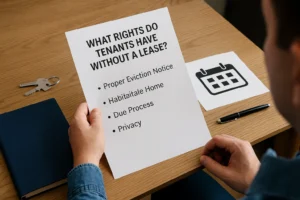
- Proper notice before eviction
- Safe and livable housing
- Privacy
- Return of a security deposit
- Fair housing protection
- Court process before removal
- Written notice before certain landlord actions
A person who is only a guest may not have the same rights. This is why landlords and renters often disagree over whether someone is a tenant, guest, occupant, roommate, or unauthorized resident.
A written lease makes the answer easier. Text messages, rent receipts, mail, utility bills, and proof of payment can also matter if a dispute reaches court.
Basic Tenant Rights in the U.S.
Tenant rights vary by state and city, but many U.S. renters share several core protections. A tenant may have the right to:
- A safe and livable home
- Basic repairs
- Heat, water, electricity, or other required services
- Reasonable privacy
- Fair treatment
- Proper eviction notice
- Court process before removal
- A return of the security deposit, minus lawful deductions
- Freedom from illegal housing discrimination
- Freedom from landlord retaliation in many cases
These rights may come from state statutes, local housing codes, court decisions, lease terms, and federal laws. Cornell notes that landlord-tenant rules may come from state laws, local ordinances, common law, and federal law in some cases.
A Tenant Has the Right to Safe Housing
Most residential tenants have some level of protection for safe and livable housing. This idea is often called the warranty of habitability. The exact rule depends on the state. In general, a rental home may need:
- Working plumbing
- Safe electrical systems
- Heat where required
- Clean water
- Safe stairs and floors
- Working locks where required
- No serious pest problem caused by building conditions
- No dangerous mold, leaks, or structural hazards
- Compliance with local housing codes
A landlord may not have to fix every small issue at once. A cracked tile or old paint may not always create a legal problem. A broken heater in winter, sewage backup, unsafe wiring, or serious water leak may be different. Tenants should report repair problems in writing. A written record helps prove when the landlord knew about the issue.
Repairs and Maintenance
Repair disputes are one of the most common tenant problems. Many renters wait too long or only call the landlord. That can make the issue harder to prove later.
A tenant should take these steps:
- Take photos or videos of the problem.
- Send a written repair request.
- Keep a copy of the message.
- Give the landlord reasonable time to respond.
- Follow up in writing.
- Contact a local housing inspector if the issue affects safety.
- Get legal help before withholding rent or breaking the lease.
Some states allow repair-and-deduct, rent withholding, or lease termination when a landlord fails to fix serious problems. Other states limit those options. A tenant should not assume one state’s rule applies everywhere.
Tenant Privacy Rights
A tenant usually has the right to use the rental home without constant landlord interference. A landlord may need to enter for repairs, inspections, emergencies, showings, or legal reasons. Many states require advance notice before entry, except during emergencies.
A lease may also explain entry rules. Common entry issues include:
- Landlord enters without warning
- Landlord shows the unit too often
- Maintenance workers arrive without notice
- Landlord uses entry to harass the tenant
- Landlord enters when the tenant is not home
A tenant should check the lease and state law. If the problem continues, the tenant should send a clear written request that asks the landlord to follow proper notice rules.
Tenant Duties and Responsibilities
Tenant rights matter, but tenants also have duties. A tenant who ignores the lease can lose legal protection or face eviction.
Most tenants must:
- Pay rent on time
- Follow the lease
- Keep the unit reasonably clean
- Avoid property damage
- Use the rental for lawful purposes
- Avoid disturbing neighbors
- Report serious repair issues
- Follow occupancy rules
- Give proper notice before moving out
- Return keys and leave the unit in fair condition
A tenant does not usually have to pay for normal wear and tear. A landlord may charge for damage beyond normal use.
Example:
Faded paint from age may be normal wear. A broken door, large wall holes, or pet damage may count as tenant damage.
Lease Rules Tenants Should Read Carefully
A lease is not just a form. It controls many parts of the rental relationship. A tenant should read these lease sections before signing:
- Rent amount
- Rent due date
- Late fees
- Grace period
- Lease start and end date
- Security deposit amount
- Pet rules
- Guest rules
- Parking rules
- Utility duties
- Repair request process
- Notice address
- Early move-out rules
- Renewal terms
- Sublease rules
- Attorney fee clause
- Move-out inspection rules
A tenant should never rely only on a spoken promise. If the landlord says something important, ask for it in writing.
Example:
If the landlord says, “You can keep your dog,” the lease should also allow the dog. If the lease says “no pets,” the written lease may control later.
Rent Payments and Late Fees
Rent is the tenant’s main duty. A tenant should know the exact due date, payment method, and late fee rule. A landlord may charge late fees if state law and the lease allow them. Some states limit late fees. Some require a grace period. And some require the fee to be reasonable.
Tenants should keep proof of every rent payment. Good records include:
- Receipts
- Bank records
- Money order copies
- Online payment confirmation
- Text or email confirmation
- Ledger from the landlord
Cash rent can create proof problems. If a tenant pays cash, the tenant should ask for a signed receipt every time.
Security Deposits
A security deposit is money the landlord holds to cover certain losses. It may cover unpaid rent, damage, cleaning costs, or other lawful charges depending on the lease and state law.
Security deposit rules vary a lot by state. A tenant should document the property at move-in and move-out.
Important steps:
- Take photos before moving in.
- Fill out a move-in checklist.
- Report damage in writing.
- Keep all repair and deposit messages.
- Take move-out photos.
- Return keys properly.
- Give the landlord a forwarding address.
- Ask for an itemized list of deductions if money is kept.
A landlord usually cannot keep a deposit just because the tenant moved out. The landlord must have a lawful reason under the lease and state law.
Eviction Notices and Court Process
Eviction is a legal process. In most cases, a landlord cannot simply lock a tenant out, remove belongings, or shut off utilities to force the tenant to leave.
Common eviction reasons include:
- Nonpayment of rent
- Lease violation
- Illegal activity
- Staying after the lease ends
- Unauthorized occupants
- Serious property damage
The process often starts with a written notice. The type and time period depend on state law. Common notice types include:
- Pay or quit notice
- Cure or quit notice
- Unconditional quit notice
- Notice of nonrenewal
- Notice to vacate
A notice is not always the same as a court order. A tenant may still have time to respond, pay, fix the issue, move, or defend the case in court.
Tenants should not ignore eviction papers. A missed court date can lead to a default judgment. That judgment may affect housing records, rental applications, and future housing options.
Illegal Lockouts and Utility Shutoffs
Many states ban “self-help eviction.” This means a landlord cannot remove a tenant without using the legal process. Illegal landlord actions may include:
- Changing locks
- Removing doors
- Taking the tenant’s belongings
- Shutting off water
- Shutting off electricity
- Blocking entry
- Threatening the tenant into leaving
A tenant facing a lockout should act fast. Local courts, police non-emergency lines, tenant hotlines, or legal aid groups may help depending on the state and city.
Fair Housing Rights
Tenants have federal protection against housing discrimination. The Fair Housing Act protects people from discrimination when they rent or buy a home, seek housing assistance, get a mortgage, or take part in other housing-related activity.
Fair housing issues may involve discrimination based on protected traits. Federal law covers several protected classes, and some states or cities add more protections.
Possible signs of discrimination include:
- A landlord refuses to rent after learning about a protected trait.
- A landlord applies different rules to different tenants.
- A tenant faces harassment tied to a protected class.
- A landlord refuses a reasonable accommodation request.
- A landlord makes discriminatory statements in ads or messages.
- A property manager treats families with children differently in an unlawful way.
A tenant who believes their fair housing rights were violated can report housing discrimination to HUD. HUD says people should report as soon as possible because filing time limits may apply.
The U.S. Department of Justice also explains that people who believe they faced an illegal housing practice may file a HUD complaint or file their own lawsuit in federal or state court.
Reasonable Accommodation and Disability Rights
A tenant with a disability may ask for a reasonable accommodation or reasonable modification when needed to use and enjoy the housing. Examples may include:
- Permission for an assistance animal
- Reserved parking closer to the unit
- More time to move because of a disability-related need
- A ramp or grab bars where allowed
- Communication in an accessible format
The request should be clear and written. The tenant does not need to share every private medical detail. The landlord may request limited information when the disability or need is not obvious.
A landlord should not charge a pet fee for a valid assistance animal request. These cases can be fact-specific, so tenants may need fair housing help if the landlord denies the request.
Retaliation Against Tenants
Many states protect tenants from landlord retaliation. Retaliation may happen when a landlord punishes a tenant for using a legal right.
Examples may include:
- Tenant reports code violations.
- Tenant requests needed repairs.
- Tenant joins a tenant group.
- Tenant complains to a housing agency.
- Tenant uses a legal right under the lease or state law.
Possible retaliation may include sudden rent increases, threats, false eviction notices, reduced services, or harassment. State law controls what counts as retaliation and how long the protection lasts. A tenant should keep records. Dates matter in retaliation claims.
Tenant Harassment
Tenant harassment is different from a normal landlord dispute. It can involve repeated conduct that pressures a tenant to leave or give up rights.
Examples may include:
- Repeated threats
- Constant entry without notice
- Cutting services
- Refusing urgent repairs
- Removing property
- Verbal abuse
- False accusations
- Intimidation after complaints
Some cities have strong tenant harassment laws. Others rely on general landlord-tenant rules. A tenant should document every incident and seek help before the situation gets worse.
Guests, Roommates, and Unauthorized Occupants
Guest rules often cause rental disputes. A lease may limit how long a guest can stay. A landlord may claim a long-term guest has become an unauthorized occupant.
This can create eviction risk for the tenant who signed the lease. Tenants should check the lease before allowing someone to move in.
Important questions:
- How many days can a guest stay?
- Does the landlord need to approve new occupants?
- Can a roommate be added to the lease?
- Does rent increase if another person moves in?
- Are background checks required?
A tenant should get written approval before adding a roommate when the lease requires it.
Pets and Assistance Animals
Pet rules depend on the lease. A landlord may allow pets, ban pets, limit breeds, limit size, or charge pet fees where allowed.
Assistance animals are different from normal pets. A tenant with a disability may have rights under fair housing laws if the animal helps with a disability-related need.
A landlord should treat a valid assistance animal request under fair housing rules, not only under the pet section of the lease.
Tenants should not fake assistance animal requests. False claims can damage credibility and may violate lease or state rules.
Rent Increases
Rent increase rules depend on the lease, state law, and local law. A landlord usually cannot raise rent during a fixed lease unless the lease allows it. For month-to-month tenants, the landlord may need to give written notice before a rent increase.
Some cities or states have rent control or rent stabilization rules. Others do not.
A tenant should check:
- Lease term
- Notice period
- Local rent control rules
- State limits on rent increases
- Whether the increase is retaliatory or discriminatory
A rent increase is not always illegal just because it feels unfair. The legal question depends on the lease and the law.
Moving Out the Right Way
A tenant should leave the rental with a clear record. Move-out mistakes can cost money.
Before moving out, a tenant should:
- Check the lease notice rule.
- Send written notice on time.
- Clean the unit.
- Repair tenant-caused damage if allowed.
- Take photos and videos.
- Request a walk-through if state law allows it.
- Return all keys, remotes, and access cards.
- Give a forwarding address.
- Keep copies of all messages.
A tenant should not assume the lease ends just because they leave. Some leases renew automatically. Some require written notice even if the lease end date is near.
When a Tenant Should Get Legal Help
A tenant should seek legal help fast when the problem may affect housing, money, safety, or court records.
Legal help may be important if:
- The tenant receives eviction papers.
- The landlord changes locks.
- The landlord shuts off utilities.
- The rental has serious safety problems.
- The landlord keeps the security deposit without a clear reason.
- The tenant faces discrimination.
- The tenant needs a disability accommodation.
- The landlord threatens the tenant.
- The tenant wants to break the lease.
- The tenant gets sued for rent or damages.
USAGov has tenant resources and explains where renters can look for help when they cannot resolve a disagreement with a landlord or management company.
USAGov also lists free and low-cost legal help options and notes that people can search for help by state, ZIP code, or address.
The Legal Services Corporation says it funds 130 independent nonprofit legal aid organizations in every state, the District of Columbia, and U.S. territories.
What Tenants Should Keep in Writing
Good records can change the outcome of a dispute. A tenant should create a simple rental file.
Keep copies of:
- Lease
- Renewal papers
- Rent receipts
- Deposit receipt
- Move-in checklist
- Photos and videos
- Repair requests
- Landlord replies
- Notices
- Inspection reports
- Court papers
- Utility bills
- Text messages
- Emails
- Police or code reports, if any
A phone call can help solve a problem, but a written follow-up creates proof.
Example:
“Thank you for speaking with me today. I am writing to confirm that I reported the kitchen sink leak on May 19, 2026. Please let me know when maintenance will come.” This type of message is simple and useful.
Tenant Checklist
Use this checklist before a rental problem grows.
| Issue | What the Tenant Should Do |
|---|---|
| Repair problem | Send written notice and take photos |
| Late rent | Check lease, grace period, and notice rules |
| Deposit issue | Ask for itemized deductions |
| Eviction notice | Read the deadline and seek help fast |
| Discrimination | Save proof and contact HUD or fair housing help |
| Lockout | Contact local help immediately |
| Lease confusion | Read the signed lease first |
| Move-out | Take photos and give forwarding address |
| Rent increase | Check lease, state law, and local rules |
| Harassment | Keep a dated incident log |
Common Tenant Mistakes
Many tenants hurt their own case without meaning to.
Avoid these mistakes:
- Paying rent in cash without a receipt
- Ignoring written notices
- Missing court dates
- Withholding rent without legal advice
- Moving out without proper notice
- Letting someone move in without lease approval
- Relying only on phone calls
- Throwing away lease papers
- Posting threats online
- Changing locks without permission
- Assuming laws are the same in every state
A calm record works better than anger. Courts, agencies, and lawyers need facts, dates, documents, and proof.
Tenant Laws Change by State
There is no single U.S. tenant law that controls every rental problem. Federal law may apply to fair housing, discrimination, and some subsidized housing issues. State and local laws usually control leases, deposits, repairs, notices, rent rules, and eviction process.
This means a tenant should always check local rules. A good legal answer often depends on:
- State
- City or county
- Lease language
- Type of housing
- Type of notice
- Reason for landlord action
- Payment history
- Repair history
- Court status
A tenant in New York City may have different rights than a tenant in rural Texas. A tenant in Los Angeles may face different rent rules than a tenant in most parts of Florida.
Repair Problem Example
Here is a simple example. A tenant has a serious leak under the bathroom sink. The water spreads to the floor and creates a safety risk. The tenant should:
- Take photos and video.
- Send a written repair request.
- Save the message.
- Ask for a repair date.
- Avoid causing more damage.
- Follow up if no one responds.
- Contact local code enforcement if the issue becomes unsafe.
- Get legal help before withholding rent or ending the lease.
This approach creates proof and protects the tenant from claims that they never reported the issue.
Security Deposit Example
A tenant moves out after a one-year lease. The unit is clean. The landlord keeps the full deposit and gives no explanation.
The tenant should:
- Check the state deposit deadline.
- Send a written request for the deposit or itemized deductions.
- Attach move-out photos if helpful.
- Keep all messages.
- Contact local tenant help if the landlord does not respond.
- Consider small claims court if state law allows it.
The tenant should focus on proof. Photos, receipts, and written messages matter.
Eviction Notice Example
A tenant receives a notice for unpaid rent. The notice gives a short deadline.
The tenant should:
- Read the notice carefully.
- Check the deadline.
- Check the rent ledger.
- Save proof of payments.
- Contact the landlord in writing if the amount is wrong.
- Seek legal aid or court help fast.
- Attend every court date if a case is filed.
A notice can move quickly. A tenant should not wait until the last day.
Helpful External Resources for Tenants
Tenants can use these official or reliable resources to learn more about housing rights, discrimination complaints, landlord issues, and legal help.
- HUD fair housing complaint page — for housing discrimination issues.
- USAGov tenant rights and landlord complaint guidance — for state tenant resources and landlord complaint help.
- USAGov legal aid page — for free or low-cost legal help.
- Legal Services Corporation legal aid locator — to find civil legal aid near you.
- Cornell Legal Information Institute landlord-tenant law overview — for general legal definitions and landlord-tenant law concepts.
FAQs About Tenants
What does tenant mean?
A tenant is a person who rents a home, apartment, room, building, or land from a landlord. The tenant usually pays rent and follows a lease or rental agreement.
Is a tenant the same as a renter?
In most housing situations, yes. “Renter” is the everyday word. “Tenant” is the legal word often used in leases, notices, and court papers.
What rights does a tenant have?
A tenant may have rights to safe housing, privacy, fair treatment, repairs, proper eviction notice, and return of a security deposit. Exact rights depend on state and local law.
What are tenant responsibilities?
A tenant usually must pay rent on time, follow the lease, keep the unit clean, avoid damage, respect neighbors, and give proper notice before moving out.
Can a landlord enter a tenant’s home anytime?
Usually no. Many states require advance notice before landlord entry, except during emergencies. The lease and state law may explain the exact rule.
Can a landlord evict a tenant without court?
In most cases, a landlord must follow the legal eviction process. Lockouts, utility shutoffs, and forced removal may be illegal without a court order.
Can a tenant withhold rent for repairs?
Some states allow rent withholding in serious repair cases, but the rules are strict. A tenant should get local legal help before withholding rent.
Can a landlord keep the security deposit?
A landlord may keep part or all of the deposit only for lawful reasons, such as unpaid rent or damage beyond normal wear and tear. State law controls deadlines and notice rules.
Where can tenants get legal help?
Tenants can contact local legal aid groups, tenant unions, housing agencies, court self-help centers, or a landlord-tenant lawyer.
Do tenant laws differ by state?
Tenant laws vary by state, city, lease terms, and housing type. A tenant should check local law before taking legal action.
Final Note for Tenants
A tenant has more than a place to sleep. A tenant has legal rights, daily duties, and a rental record that can affect future housing. The safest path is simple: read the lease, pay with proof, report problems in writing, keep records, and act fast when notices or court papers arrive.
Tenant law can protect renters, but the rules depend on location. A tenant with a serious repair issue, eviction notice, discrimination claim, deposit dispute, or lockout problem should seek local help as soon as possible.
Legal note: This article gives general information for U.S. renters. It is not legal advice. Tenant laws change by state, city, lease, housing type, and court rules. A tenant should contact a local legal aid office, housing agency, or licensed attorney for advice about a specific case.
How We Reviewed This Guide
This TenantLawGuide article was prepared for general U.S. renters using plain-English legal research, public housing resources, and common landlord-tenant law concepts. It is designed to help tenants understand common rental issues before they contact a local housing agency, legal aid office, or attorney.
Legal note: This guide is general information only. Tenant laws vary by state, city, lease terms, housing type, and court rules.