
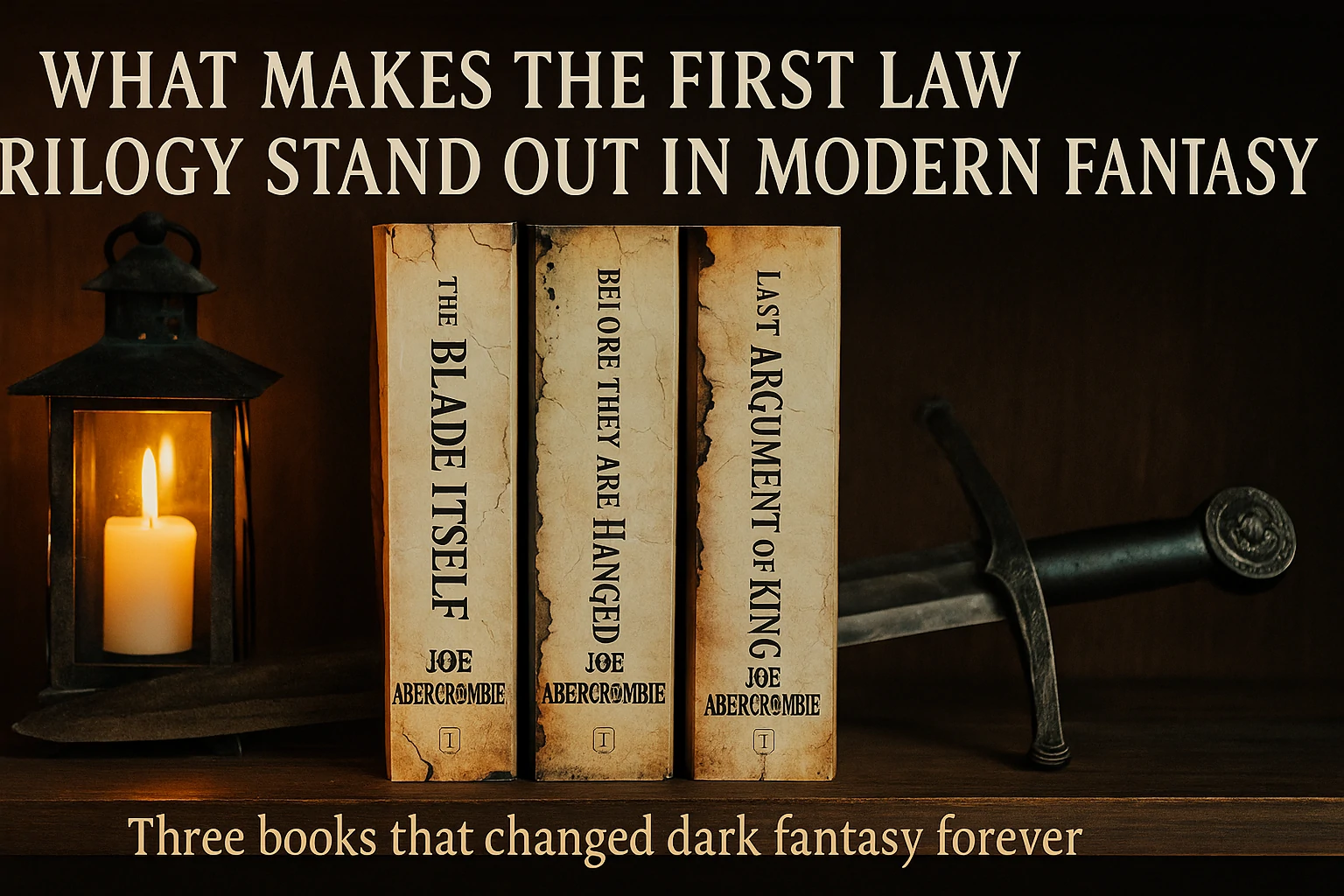
Joe Abercrombie’s The First Law trilogy brings readers into a harsh, vivid world of war, magic, and moral gray zones.
The trilogy began with The Blade Itself and ended with Last Argument of Kings. These books offer tough characters who face hard choices and often endure harsher consequences.
This trilogy introduced readers to a gritty but heartfelt fantasy. It shows how people fight, think, and sometimes fail when they must act.
This article will explain the setting, the main characters, the stories, and why the trilogy still matters to readers today.
A World Full of Conflict
The world in The First Law trilogy feels broken from the start. The Union, a wealthy and powerful kingdom, sits at the center. It faces attacks from the North and a growing threat from the Gurkish Empire in the South.
Tension rises with each page. Nothing feels safe. Even peace hides danger.
Magic flows through this land, but under strict rules. Long ago, a man named Euz created the First Law: “Do not touch the Other Side.”
The Other Side refers to a magical realm beyond human control. Euz drove away the demons and warned others not to cross that line. Many ignore his warning.
This law shapes every conflict. Power-seekers try to break it. Others fight to hold it. As armies clash and cities burn, the First Law looms behind every decision. It is not just magic. It is the thread that ties the story together.
Characters Who Feel Real
Each character in the trilogy feels like someone you might meet if your world burned around you. Logen Ninefingers is a feared warrior with a dark past.
He tries to walk away from violence but often gets pulled back. His journey shows how hard it is to change when blood stains your name.
Sand dan Glokta is a crippled torturer. Once a proud soldier, he now works in the shadows. His body broke, but his mind stayed sharp. He uses it to survive a political system that eats its own. Readers often pity him, fear him, and cheer for him.
Jezal dan Luthar begins as a vain and selfish noble. He trains for a fencing contest and cares only for praise. The story pushes him toward kingship, love, and doubt. His growth feels real. He learns how shallow he once was.
Bayaz, a wizard, holds secrets and old grudges. He guides the group on a quest, but his motives stay unclear. Ferro, a wild fighter from the South, seeks revenge more than peace. Collem West, a soldier, tries to stay honest. His path shows how war can change even the best people.
The Blade Itself
The first book sets the world stage. It brings the six main characters together. Each one has a personal mission. Some want glory. Others want answers. A few just want to survive. Their lives begin to cross, thanks to Bayaz.
Logen flees the North and meets Bayaz. Glokta investigates corruption inside the Union. Jezal trains for a fencing contest and dreams of fame. Ferro runs from slave hunters.
West serves the Union army. Bayaz gathers them all for a journey west to find an ancient object.
The plot moves with both action and tension. Battles happen, but so do quiet moments. Readers learn the rules of the world and the costs of power.
The group begins to see that Bayaz may not tell the whole truth. Seeds of doubt grow.
Each character starts to change. Jezal begins to see beyond his ego. Glokta sees how deep corruption goes. Logen faces parts of himself that he hates. Their journey marks the beginning of larger shifts in the world.
Before They Are Hanged
In the second book, the pace rises. The Union fights on two fronts. In the North, Bethod wages war. In the South, the Gurkish Empire sends its armies.
Inside the Union, politics rot at the core. Glokta gets caught in these schemes.
Bayaz leads Jezal, Logen, and Ferro west. Their goal is a magical seed tied to Euz and the First Law. The journey is hard.
The group faces harsh lands, old monsters, and inner demons. Bonds form and break. Trust fades.
Ferro struggles to control her rage. Logen earns respect. Jezal suffers and grows. West fights to lead soldiers in a doomed war.
Glokta plays a deadly game in Dagoska. He uncovers betrayal but must protect himself.
This book shows the world breaking apart. Cities fall. Heroes fail. No one gets a clean win. The lines between right and wrong blur more with every page. Readers see that every victory costs more than it gives.
Last Argument of Kings
Last Argument of Kings: The final book hits with full force. The Union crowns Jezal as king. But he learns the crown weighs heavily. Bayaz controls much from the shadows. Glokta climbs higher, gaining power as he loses pieces of himself.
Logen returns to North. He faces Bethod and his past. He becomes king of the Northmen but feels empty. Ferro walks alone, still hunting for revenge. West fights on, even as the war swallows him.
Bayaz uses the magical seed. Its power destroys much. It ends one war but sparks new ones. The price proves too high. Trust shatters. Friends betray. The final twists leave readers stunned.
The book ends not with peace, but with new fear. Leaders rise who may be worse than those before. The world does not heal. It adjusts. The cost of change weighs on all.
Grit, Truth, and Deeper Themes
Abercrombie does not write fairy tales. His world feels sharp and cold. Heroes make bad choices. Villains sometimes help. People suffer. Yet readers care deeply. The pain makes the triumphs feel real.
This trilogy talks about power, pain, and change. It asks what people will trade for safety. It shows how war shapes the mind. It does not offer clear answers. It offers real questions.
The books show that every action cuts. Even silence leaves a mark. Characters feel the cost of their choices. The world breaks people, but some rise anyway.
Stories Beyond the Trilogy
Abercrombie kept writing. He gave readers three standalone books set in the same world. Best Served Cold, The Heroes, and Red Country build on the trilogy. They show what happens next. They follow new faces and old ones.
These books deepen the world. They explore new lands, new wars, and new pains. They connect back to the trilogy without repeating it. Fans get more of the grit and depth they love.
Abercrombie also wrote short stories. He later returned to this world with a new trilogy. These newer books show the long reach of old choices. The world does not forget. Nor do readers.
Real Praise from Readers
Fans praise the trilogy for its honesty. It does not pretend. It does not protect. One reader said the series punches you in the gut but makes you thank it. Many call it a top fantasy of all time.
Reviewers highlight the mix of strong action and deep thought. The writing flows fast but stays rich. The characters stick with you. Even after you close the book, they linger.
Readers say the ending hurts but makes sense. No one gets what they want. Everyone gets what they earn. That truth sets the trilogy apart.
Why It Still Matters
The First Law trilogy gave fantasy a new voice. It stripped away polish. It showed blood, fear, and hard choices. It reminded readers that magic can fail. That hope can hurt. That people matter most.
These books feel fresh even now. They do not age. They speak to how people fall, stand, and try again. They speak to how leaders lie, and how truth cuts deeper than swords.
This story stands because it dares to tell the truth. Readers see themselves in these pages. Not as kings or heroes. But as flawed, real people trying to find a way.
Conclusion
The First Law trilogy tells a tale of war, pain, and choice. It offers no perfect end. It gives readers the truth. That makes it stand tall. It pulls you into a harsh world and leaves you changed.
Abercrombie’s work matters. It teaches without preaching. It cuts without wasting words. It stays honest. That makes it great.
Readers who enter this world do not forget it. Nor do they want to.
Common Questions
What is The First Law Trilogy about?
It tells a dark fantasy story filled with war, power, betrayal, and broken heroes.
Who wrote The First Law Trilogy?
Joe Abercrombie is the author of the series.
How many books are in The First Law Trilogy?
There are three main books in the series.
Is The First Law Trilogy good for new fantasy readers?
Yes, the writing is bold and easy to follow, even for beginners.
What order should I read The First Law Trilogy?
Start with The Blade Itself, then Before They Are Hanged, and then Last Argument of Kings.
Disclaimer:
This article is for review and information only. It does not include affiliate links or paid promotion. All book rights belong to the original publisher and author.
