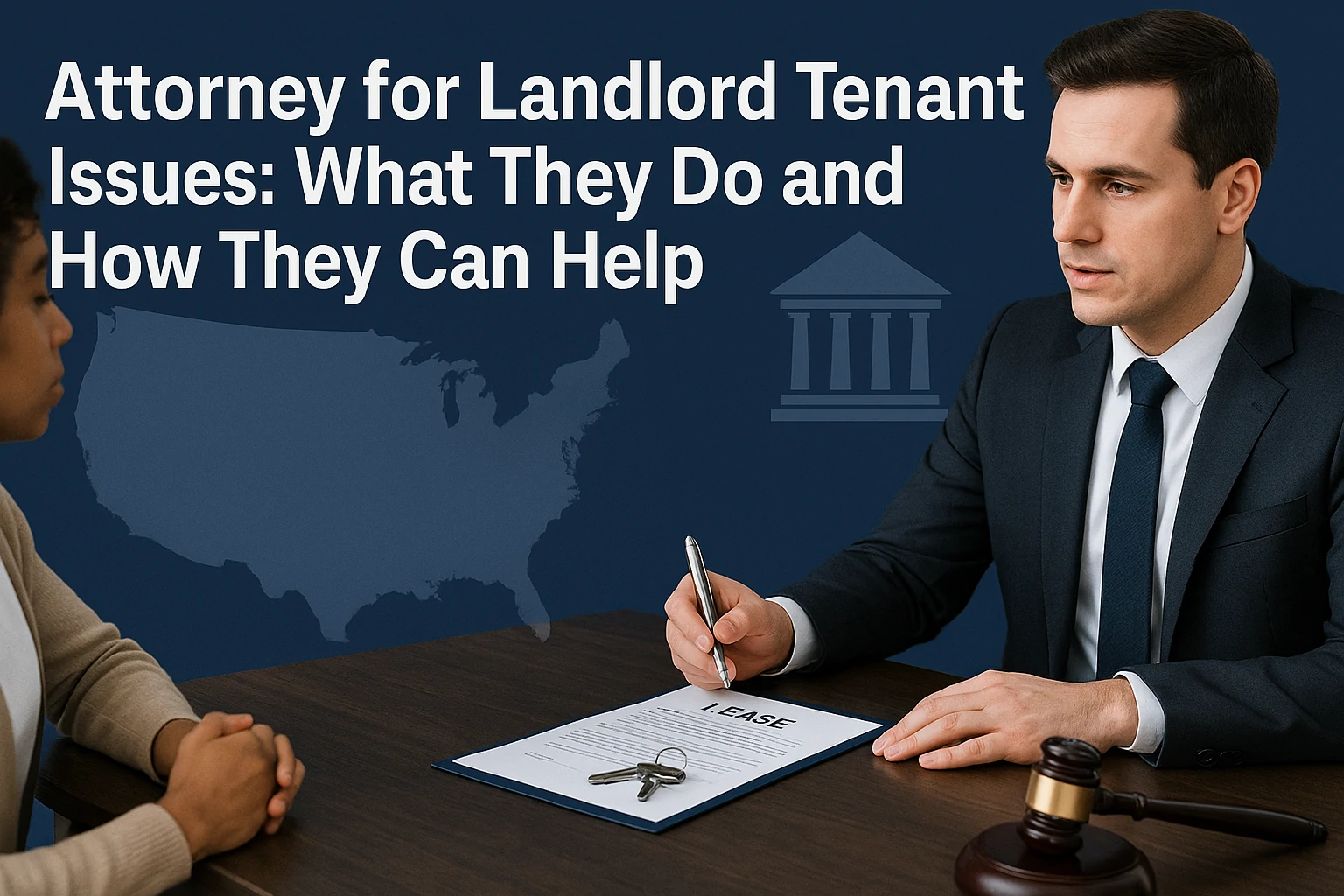
A landlord-tenant attorney helps resolve disputes about rent, leases, repairs, deposits, eviction, discrimination, and property damage. The lawyer may represent either the property owner or the tenant. Legal help can protect important rights and prevent a small dispute from becoming an expensive court case.
Rental laws differ across the United States. State statutes, city rules, housing codes, and lease terms may all apply. A step that is lawful in one state may violate the law in another. This makes local legal knowledge important.
What Does a Landlord-Tenant Attorney Do?
A landlord-tenant attorney reviews the facts, explains the applicable law, and identifies the best lawful response. The lawyer may examine the lease, payment records, notices, inspection reports, photographs, emails, and repair requests.
The attorney can also draft legal notices, negotiate a settlement, file a court claim, or defend an eviction case. Some disputes only require a letter from a lawyer. Others need a hearing or full trial.
Legal representation does not always mean that the parties must go to court. An attorney may help them agree on unpaid rent, a move-out date, repairs, lease termination, or the return of a deposit. A written settlement often costs less than a contested lawsuit.
Which Laws Control Rental Disputes?
State law controls most residential rental disputes. It usually sets rules for leases, deposits, rent demands, entry into a unit, repairs, and eviction procedures. County and city codes may add further duties.
Several states have adopted all or part of the Uniform Residential Landlord and Tenant Act. This model law aims to create fair rules for rental homes. It does not apply automatically in every state. Each legislature must adopt its own version.
The lease also creates legal duties. It may state the rent amount, due date, lease period, guest policy, repair process, and rules about pets. A lease clause cannot normally remove a right that a statute makes mandatory.
Federal law applies in certain situations. The Fair Housing Act prohibits housing discrimination based on race, color, religion, sex, national origin, familial status, and disability. State law may protect additional groups. HUD also states that federal fair housing protection applies to most private and publicly supported housing.
The Servicemembers Civil Relief Act gives eligible military members specific housing protections. These may include protection from some evictions and a right to end a residential lease after qualifying military orders.
When Should a Tenant Contact an Attorney?
A tenant should consider legal help when the dispute could affect the right to remain in the home, cause a large financial loss, or create a record of eviction. Urgent help may be useful after the tenant receives a notice to quit, summons, complaint, or hearing date.
An attorney may also help when a landlord refuses to correct serious health or safety defects. Common examples include a lack of heat, unsafe electrical systems, major water leaks, sewage problems, or severe pest infestations.
Other reasons to seek help include:
- An unlawful lockout or utility shutoff
- A deposit that was not returned
- Suspected housing discrimination
- Retaliation after a repair complaint
- False damage charges
- Repeated entry without proper notice
- A lease clause that appears unlawful
- Pressure to leave without a court order
A tenant should act promptly. Eviction cases often move faster than standard civil lawsuits. A missed response date can result in a default judgment. That means the court may rule without hearing the tenant’s full defence.
When Does a Landlord Need an Attorney?
A landlord may need a lawyer when a tenant fails to pay rent, causes serious damage, violates the lease, refuses to leave, or creates a safety risk. Legal guidance is also useful when a property owner plans to change lease terms or end a tenancy.
Eviction notices must meet local requirements. A mistake in the notice period, amount owed, delivery method, or stated reason may delay the case. The court may dismiss the claim and require the landlord to start again.
An attorney can also help a property owner comply with fair housing rules. The lawyer may review rental advertisements, screening standards, disability accommodation requests, and lease policies. Consistent procedures can reduce the risk of unequal treatment claims.
How Does the Eviction Process Work?
A landlord cannot usually remove a tenant merely because the tenant broke the lease. The landlord must follow the process set by state law.
The first step is often a written notice. Its form and deadline depend on the reason for eviction. A rent notice may give the tenant time to pay. A notice based on another lease breach may allow time to correct the violation. Some serious conduct may support a shorter process.
The landlord may file an eviction claim if the tenant does not comply. The tenant then receives court papers and has a chance to respond. A judge decides whether the landlord has proved a lawful right to possession.
The landlord must normally obtain a judgment before an authorized officer can carry out the eviction. Most states restrict or prohibit self-help acts such as changing locks, removing possessions, or shutting off essential services to force a tenant out.
A lawyer can check each stage. The attorney may question defective notice, incorrect rent figures, poor service of court papers, retaliation, discrimination, or the landlord’s failure to meet a legal duty.
What Rights Apply to Repairs and Unsafe Conditions?
Residential landlords generally have a duty to provide a home that meets basic health and safety standards. Lawyers often call this the “implied warranty of habitability.” It exists even when the lease does not use that phrase.
The decision in Javins v First National Realty Corp helped establish the modern principle that a residential lease includes duties linked to housing-code standards. State courts and legislatures have since developed their own rules.
A tenant should report defects in writing and retain proof. The notice should identify the problem, when it began, and how it affects the home. Photographs, inspection reports, repair invoices, and messages may support the claim.
A tenant should not stop rent payments without checking local law. Some states allow rent withholding, repair-and-deduct remedies, or a court-controlled rent account. Strict conditions may apply. An incorrect deduction can expose the tenant to eviction.
Can an Attorney Help Recover a Security Deposit?
An attorney can assess whether a landlord lawfully kept a security deposit. State statutes often control the deadline for its return, permitted deductions, account requirements, and itemized statements.
A landlord may usually deduct unpaid rent or the cost of damage beyond normal wear. Normal wear refers to decline caused by ordinary use, such as minor carpet wear or faded paint. A large wall hole or broken fixture may qualify as chargeable damage.
Move-in and move-out photographs can provide strong evidence. Inspection forms, receipts, invoices, and repair estimates also help. Some states allow extra damages or attorney fees when a landlord wrongfully retains a deposit.
How Do Discrimination and Retaliation Claims Arise?
Housing discrimination can occur at any stage of a tenancy. It may involve an advertisement, application decision, rent term, repair response, rule enforcement, accommodation request, or eviction.
A landlord may also have to provide a reasonable accommodation to a tenant with a disability. An accommodation is a change to a rule or procedure that allows equal use of the home. One example is an exception to a no-pet rule for a qualified assistance animal.
Retaliation is a separate concern. State law may protect a tenant who reports code violations, requests lawful repairs, joins a tenant group, or exercises another protected right. A sudden rent increase or termination notice after a complaint may require close review. Timing alone does not prove retaliation, but it can form part of the evidence.
How Does the Law Apply to Real Situations?
Unpaid Rent After a Job Loss
A tenant misses two payments and receives a notice. The tenant offers a payment plan, but the landlord files an eviction claim. An attorney would check the notice, rent ledger, filing date, payment history, and local eviction rules. The lawyer may negotiate a repayment agreement or defend the case if the landlord did not follow the required process.
Serious Mold and Water Damage
A roof leak causes damp walls and mold. The tenant sends several emails, but no effective repair occurs. Legal review would focus on the housing code, the landlord’s notice of the defect, the seriousness of the condition, and available state remedies. Medical records may also become relevant if the tenant claims physical harm. The tenant should avoid making a medical or causation claim without reliable evidence.
Lease Ends During Military Service
A servicemember receives qualifying orders and needs to leave before the lease expires. The landlord demands all rent due for the remaining term. An attorney could assess whether the SCRA permits early termination. The result may depend on the orders, type of service, notice, and documents supplied to the landlord.
What Evidence Should a Client Give the Attorney?
A clear file can save time and legal costs. The client should collect:
- The signed lease and all amendments
- Rent receipts and account statements
- Notices from the other party
- Court papers and hearing details
- Emails, letters, and text messages
- Dated photographs or videos
- Inspection and repair records
- Names of possible witnesses
- A short timeline of key events
Records should remain complete and unaltered. A person should not delete messages, edit photographs, create false receipts, or post misleading claims online. Poor records can weaken an otherwise valid position.
How Much Does Legal Help Cost?
The cost depends on the location, urgency, dispute value, and type of service. A lawyer may charge an hourly rate, a fixed fee, or a limited fee for one task. Some statutes and leases allow the successful party to recover attorney fees, but recovery is never automatic.
Tenants with limited income may qualify for legal aid, a housing clinic, or a court assistance program. Local bar associations may offer referral services. Property owners may have access to legal support through an insurer or professional housing association.
The client should ask what the fee covers, which costs are separate, and whether court action is likely. A written fee agreement should explain these points.
Practical Steps Before Legal Action
Read the lease and identify the clause linked to the dispute. Check the relevant state and city rules. Place important requests and responses in writing. Keep communication calm and factual. State the problem, desired solution, and reasonable response date. Avoid threats or personal attacks.
Do not ignore a formal notice or court document. Record every deadline and seek local help as soon as possible. A late response may remove options that were once available.
Consider negotiation when it can protect the main goal. A payment plan, repair schedule, deposit agreement, or planned move-out date may resolve the dispute without trial. Any agreement should use clear written terms.
Questions and Answers
What Is Considered Landlord Negligence?
Landlord negligence occurs when a landlord fails to fix a known safety hazard. Examples include broken stairs, unsafe wiring, gas leaks, or severe water damage. The tenant must usually show that this failure caused injury or financial loss.
Who Do I Report My Landlord to in Pennsylvania?
Report unsafe housing to your local code enforcement or building inspection department. Report discrimination to the Pennsylvania Human Relations Commission. Unfair business conduct may be reported to the Pennsylvania Office of Attorney General.
What Type of Lawyer Is Needed to Sue a Landlord?
A landlord-tenant attorney usually handles claims against landlords. A personal injury lawyer may help if unsafe conditions caused an injury. A fair housing attorney may handle discrimination claims.
What Are Tenant Lawyers Called?
Tenant lawyers are often called landlord-tenant attorneys, housing attorneys, or tenant rights lawyers. A lawyer who handles eviction cases may also be called an eviction defense attorney.
Conclusion
An attorney for landlord-tenant issues can explain local rental laws, review the lease, protect legal rights, and identify a practical way forward. The lawyer may negotiate with the other party, prepare valid notices, respond to court papers, or provide representation at an eviction hearing.
Legal support becomes especially important when a dispute involves eviction, unpaid rent, unsafe conditions, discrimination, property damage, or a large security deposit. Early advice can help prevent missed deadlines, invalid notices, and other costly errors.
Both landlords and tenants should keep clear records, preserve important evidence, and follow the correct legal process. A timely legal review can reduce risk, support a fair resolution, and help each side make an informed decision.
Also Read: Landlord Tenant Lawyer: Protect Your Home and Rights