Government power should protect people. It should not harm them. Yet some officers, jail staff, school officials, or city workers step outside the law. When that happens, a person in Arizona can use a federal tool called Section 1983.
This law opens the door to sue a state or local official who violated a right under the U.S. Constitution. Many people hear about police brutality cases, jail death cases, or wrongful arrest cases and wonder how those lawsuits work. The answer in many of those claims is Section 1983.
This guide explains the process in simple words. It covers how the law works, who you can sue, why deadlines matter in Arizona, and how a plaintiff attorney builds the case.
It also shows where a Texas case fits in, what a complaint looks like, how settlements happen, and how to find a civil rights attorney in Phoenix or any other Arizona city. Every section uses short, clear sentences. The goal is to make a hard subject easy.
What Section 1983 Really Is
Section 1983 is a part of federal law. It says that a person may sue any person who, under state authority, takes away a federal right. That means if a police officer uses force without cause, or a guard ignores medical needs, or a school official punishes speech, a claim may exist. The wrong act must connect to government power. A private neighbor dispute will not fit. A state actor must be involved.
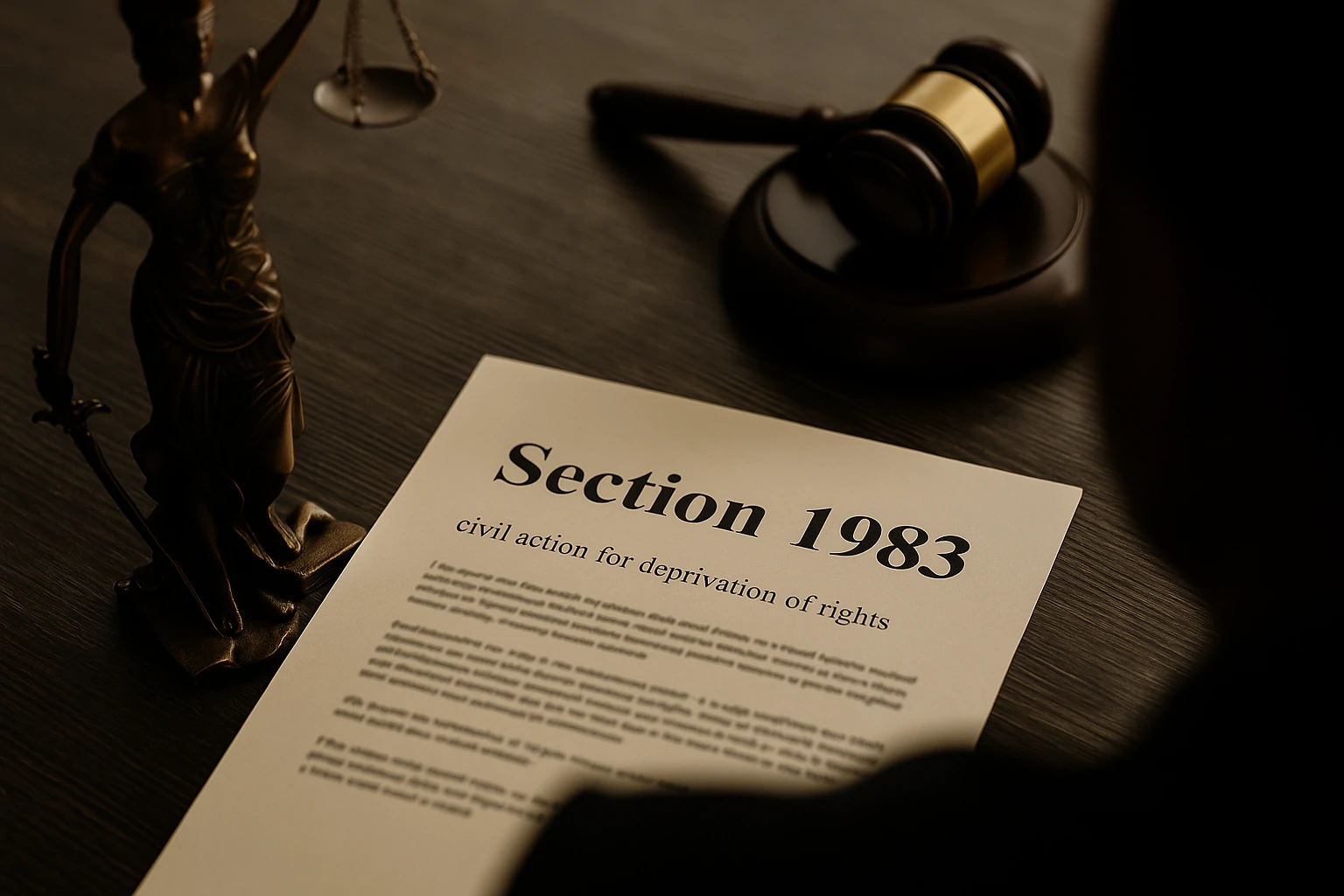
The law does not create rights on its own. It gives a way to enforce rights that already exist in the Constitution or in other federal laws. Think of it as a bridge. On one side is the right not to face excessive force. On the other side is the court. Section 1983 is the bridge that lets you walk from the violation to the court.
Arizona residents use this bridge often. Incidents on roads, in county jails, at protests, in schools, or in local agencies can all trigger claims. Each case turns on facts. Each case needs proof that the official used state power and crossed a clear line.
Federal Venue and Where to File in Arizona
Tell the reader that most Section 1983 civil rights lawsuits in Arizona are filed in the U.S. District Court for the District of Arizona. The division often depends on where the harm took place. An incident in Phoenix goes in one division. An incident in Tucson may go in another. A lawyer will pick the right place.
What Rights Are Most Commonly Violated Under Section 1983
Section 1983 does not cover every unfair act. It only covers violations of federal rights. Most civil rights lawsuits in Arizona under this law fall into a few clear groups. Adding this part will help readers match their story to the law.
State actors most often violate these rights:
Fourth Amendment (Force and Arrests)
This is the most common. The Fourth Amendment protects people from unreasonable searches and seizures. An officer must have a legal reason to stop, search, or arrest someone.
If the officer uses force that is not needed, that can become an excessive force claim. If the officer arrests a person with no warrant and no probable cause, that can become a false arrest claim.
First Amendment (Speech and Retaliation)
People have the right to speak, to record police in public, and to protest. A public official cannot punish a person just because that person spoke up. If an officer arrests someone only because that person filmed the stop, that can be a Section 1983 case.
Eighth and Fourteenth Amendments (Jail and Detention Care)
People in Arizona jails and county detention centers have the right to basic medical care and safety. Jail staff cannot ignore serious medical needs.
They cannot allow inmates to be attacked because of neglect. Pretrial detainees are often protected under the Fourteenth Amendment, and sentenced prisoners under the Eighth Amendment.
Equal Protection (Discrimination)
Government workers cannot treat one person worse than others because of race, national origin, or another protected reason. If a school, police unit, or city office applies rules in a way that targets one group, that can lead to a Section 1983 claim.
Who Can Sue Under Section 1983 in Arizona
Any person whose federal right was violated under color of state law can bring a claim. That can be an adult, a minor through a parent, or the estate of someone who died in custody. Immigrants may also sue if the harm came from a state actor. Citizenship does not shield a wrongful officer.
The key is the source of the harm. The officer, deputy, jail nurse, or city worker must act with authority from the state or local government. Off-duty conduct may still count if the person used a badge, weapon, uniform, or official power. Arizona courts and federal courts look at the whole scene to see if there was official action.
Family members sometimes sue on behalf of someone who died in jail or during an arrest. Those cases can be hard, but they are allowed. The family must show the link between the act and the death and must meet Arizona’s time limits.
Claims by Inmates and Pretrial Detainees in Arizona Jails
Arizona has many county jails. Maricopa, Pima, and others hold large inmate populations. People there can sue under Section 1983 if staff ignore serious medical needs, fail to protect them from known threats, or use force that serves no purpose.
Pretrial detainees, who have not been convicted, often have even stronger protection. They should not face punishment before trial. If they are denied basic care or housed in unsafe conditions, that can be a claim.
Wrongful Death Under Section 1983
Some of the hardest Arizona civil rights cases are death cases. A person dies in jail, or dies after force, or dies because staff ignored a heart problem. The family can bring a Section 1983 claim on behalf of the estate. They can seek damages for the loss of life and for the pain before death.
Add that Arizona wrongful death and survival statutes may also apply. That is another reason to watch the notice of claim deadlines. This section tells families who lost someone in custody that they are not left out.
Main Parts of a Section 1983 Case
A plaintiff attorney in Arizona will usually break the case into four parts.
First, the attorney must show the defendant was a state or local actor. Police officers and sheriff’s deputies are easy to prove. So are jail guards, probation officers, and many city staff.
Second, the attorney must show a federal right was taken away. That could be the Fourth Amendment right against unreasonable seizures. That could be the Eighth Amendment right to medical care in custody. That could be the First Amendment right to speak or record. The right must be clear and recognized.
Third, the attorney must show the act caused harm. Harm can be a broken arm, lost wages, fear, depression, or reputational damage. Courts need to see that the violation was real and that it hurt someone in real life.
Fourth, if the claim is against a city, county, or department, the attorney must show that a policy, custom, or failure to train led to the violation. That part comes from a Supreme Court case and often makes municipal claims harder. A single bad officer may lead to personal liability. A claim against the agency needs more.
Monell and Claims Against Cities, Counties, and Departments
Suing a single officer is one thing. Suing the city or county is another. You cannot sue an Arizona city under Section 1983 just because one employee made a mistake. You must show that the city itself caused the violation. This rule comes from a Supreme Court case called Monell. Readers will expect to see this name.
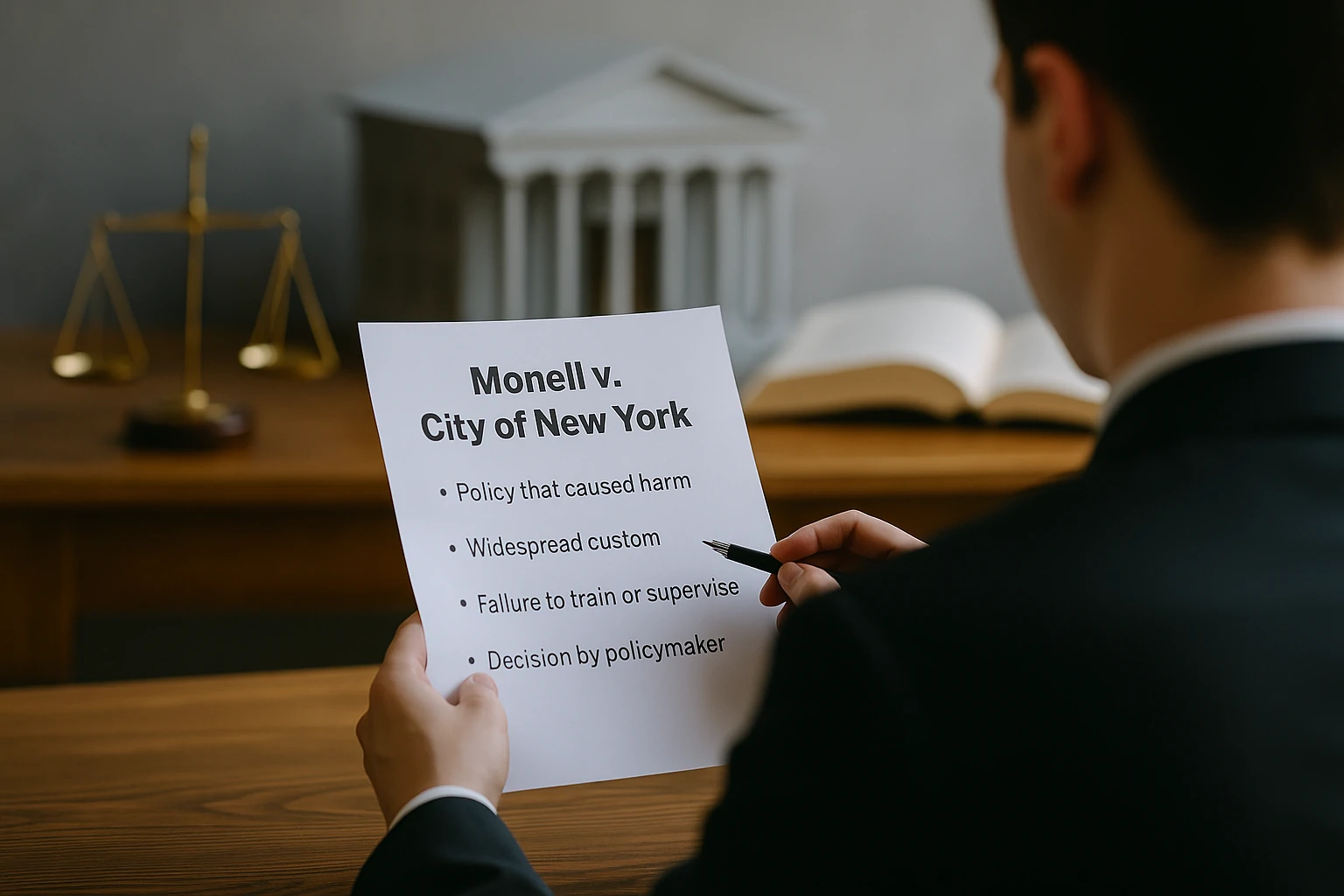
Under Monell, a city or county can be liable when:
- It had a policy that caused the harm.
- It had a widespread custom that allowed the harm.
- It failed to train or supervise employees, and that failure led to the harm.
- A final policymaker made the bad decision.
This matters in Arizona because many cases involve repeated force in the same unit, or repeated denial of care in the same jail. A Monell claim can lead to bigger change and sometimes bigger settlements. It also explains to the reader why their case is “harder” if they want to sue the department, not only the officer.
Why Arizona Deadlines Matter So Much
Arizona does not give unlimited time to bring a Section 1983 action. Federal law borrows the Arizona statute of limitations for personal injury, which is often two years. The clock usually starts on the day of the injury or the day the plaintiff knew about the injury.
Arizona has another trap. Claims against public entities and public employees often require a notice of claim. That notice may be due in 180 days from the date of the injury. Missing that step can destroy the case. Many self-represented people lose their claims because they did not send the notice on time or did not include a specific dollar amount.
A plaintiff attorney in Arizona almost always checks dates in the first meeting. That is not paperwork for lawyers only. That is survival for the case. A strong case filed too late becomes a weak case. A weak claim filed on time can become strong through investigation.
Statute Tolling for Minors or People Who Could Not File
Some people cannot file right away. A child hurt by a school officer. A person in a mental health crisis. In some situations, Arizona or federal law may pause the clock.
This is called tolling. It does not happen in every case, so the person still needs a lawyer fast. But adding this shows you know the deadline rules are not always rigid.
State Law Claims Filed Together With Section 1983
Many Arizona civil rights cases do not use only Section 1983. Lawyers often add state law claims. These can include assault, battery, negligence, wrongful death, or even intentional infliction of emotional distress. State claims can increase the value of the case.
The problem is that Arizona has strict rules for claims against public entities. The 180-day notice of claim rule can apply to those state claims. So a person may still be on time under Section 1983 but already late under Arizona law.
Role of the Plaintiff Attorney in a Civil Rights Lawsuit
A civil rights lawsuit under Section 1983 in Arizona is not the same as a car crash case. It needs more law, more research, and more planning. A plaintiff attorney does several things early.
The attorney gathers facts. That means police reports, jail logs, medical notes, 911 audio, body cam video, and witness names. Arizona agencies do not always hand over records fast. A lawyer knows how to demand them.
The attorney identifies the specific right. Saying “my rights were violated” is not enough. The lawyer will write, for example, that the officer used excessive force on a non-threatening person. Or that a pre-trial detainee did not receive needed medical care. Clear claims survive motions to dismiss.
The attorney fights qualified immunity. Government defendants often say they cannot be sued because the law was not clearly established. A good lawyer finds cases from the Ninth Circuit or the Supreme Court that show the right was clear. That step keeps the case alive.
The attorney values the case. Some harms deserve higher damages. Some deserve punitive damages. Some deserve a push for policy changes. The lawyer presents the case in a way that shows the human cost.
Qualified Immunity in Arizona Section 1983 Cases
Qualified immunity is one of the hardest parts of a Section 1983 case. Many people do not know about it. They only know an officer hurt them.
t=”421″ data-end=”661″>Qualified immunity protects government workers from being sued unless they violated a right that was “clearly established” at the time. That means the law must have been clear enough that a reasonable officer would know, “I cannot do this.”
The test has two steps. First, did the officer violate a constitutional right? Second, was that right clearly established in that situation? If the court answers no to either step, the officer may be immune.
A plaintiff attorney in Arizona will try to show similar past cases from the Ninth Circuit or the U.S. Supreme Court. The attorney wants to prove that other officers were told not to use that kind of force or not to ignore that kind of medical need. That is how the lawyer keeps the case alive.
Evidence That Makes or Breaks the Case
Civil rights lawsuits depend on proof more than on emotion. Arizona juries and judges want to see what happened. A plaintiff attorney will look for every source.
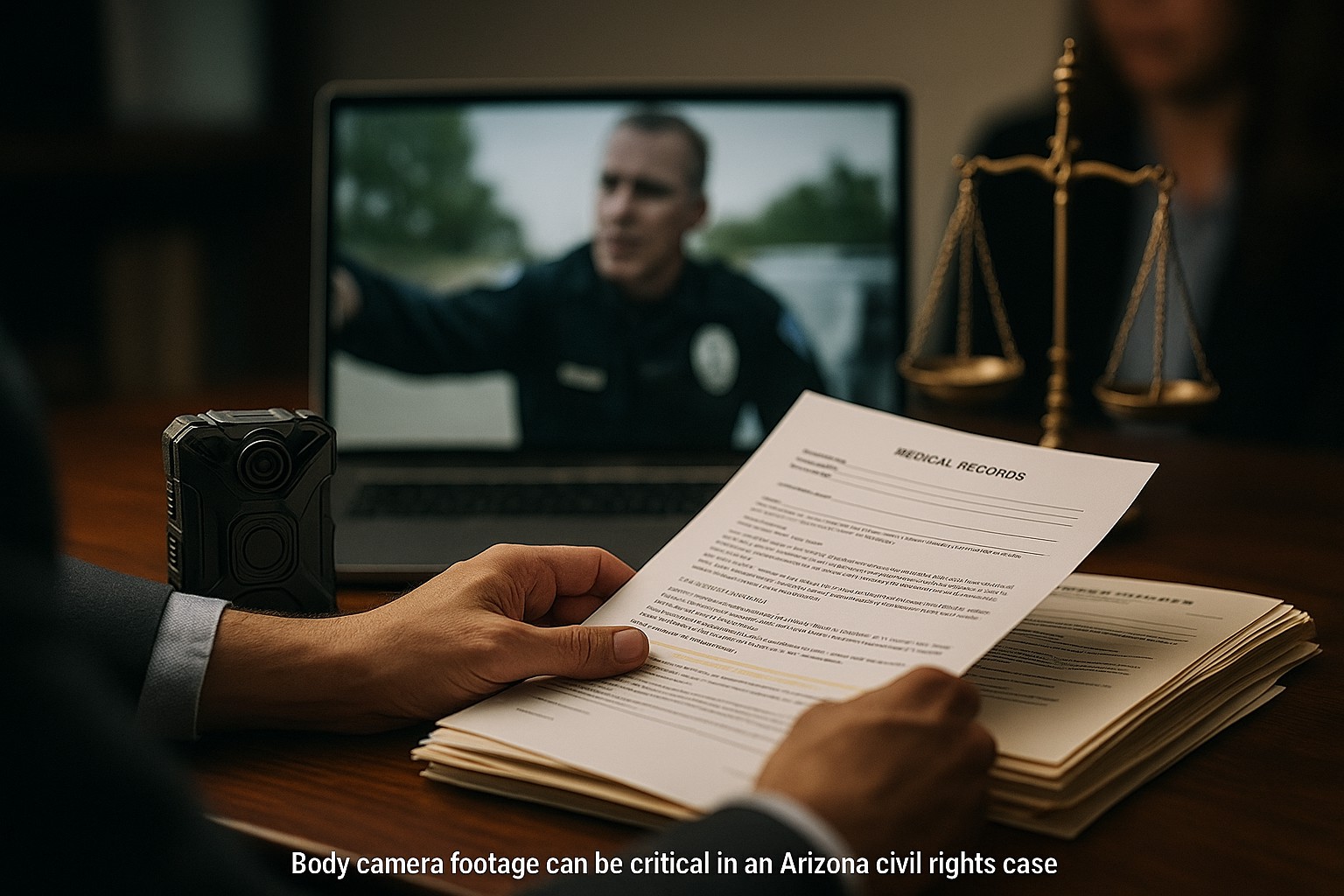
Body camera video tells the story better than words. Many Arizona police departments use body cams. In a force case, that video can prove or disprove the officer’s version. A lawyer will send a preservation letter to keep that video from being deleted.
Medical records prove injury. Emergency room notes, x-rays, and mental health assessments show the harm was real. Jail medical charts show whether the staff ignored real symptoms.
Witnesses help. Bystanders at a traffic stop, cellmates in a jail pod, neighbors during a raid, or staff at a school can support the plaintiff’s side. A lawyer may take sworn statements to lock in their memory.
Internal policies also matter. If a department had a rule but an officer ignored it, that helps the plaintiff. If the department had no rule where it should have, that helps the claim against the agency.
Discovery in a Section 1983 Case
You already talked about what evidence matters. Now tell readers how lawyers get the evidence.
Discovery is the phase where both sides exchange information. In a Section 1983 case, the plaintiff’s attorney can send written questions. The lawyer can demand body cam files, internal affairs files, use-of-force reviews, jail medical logs, and training manuals. The lawyer can also take depositions. That is when the officer or jail nurse must answer questions under oath.
Agencies sometimes resist. They claim privilege or security issues. A good civil rights lawyer in Arizona will file motions to compel. That is how they unlock records that show a pattern.
Section 1983 Settlements in Real Life
Most people never see a Section 1983 trial. Many cases end in settlement. A settlement is an agreement to pay money and close the case. Cities and counties often prefer this route to avoid public trials.
Settlement amounts do not follow one fixed chart. A minor excessive force case with no major injury may settle for a modest amount. A case with permanent injury, lost career, or a death in custody may reach a very high amount. A case that exposes misconduct in an entire unit may also lead to a higher number.
Agencies sometimes settle to stop the flow of legal fees. Section 1983 allows the court to award attorney’s fees to the winning plaintiff. That means the city may pay not only damages but also the lawyer’s hours. Cities often choose to settle earlier to reduce that risk.
Injunctive and Policy Relief, Not Only Money
Most people think about money when they think about lawsuits. Section 1983 can do more. A plaintiff can ask the court to order a jail to change a practice. A plaintiff can ask that a police unit adopt better training. A plaintiff can ask that a city stop punishing people for recording officers.
Courts do not grant this in every case. They look at whether the bad conduct may happen again. But adding this section shows your article is not only about payout. It shows it is about fixing government behavior in Arizona.
<h2 data-start=”3765″ data-end=”3803″>Attorney’s Fees Under 42 U.S.C. § 1988</h2>
Section 1983 works together with another law, Section 1988. That law says that if the plaintiff wins, the court may order the defendant to pay the plaintiff’s attorney’s fees. This is important. It is one reason civil rights lawyers can take these cases. It is also one reason cities settle. Fees can grow large during discovery and motions.
Possible Outcomes in Section 1983 Cases in Arizona
| Outcome Type | What It Means | When It Happens |
|---|---|---|
| Early Settlement | Case ends with payment and no trial | Strong facts, agency wants quiet resolution |
| Late Settlement | Payment after discovery or before trial | Evidence is bad for defendant |
| Trial Verdict | Judge or jury decides amount | No agreement reached |
| Dismissal | Case ends with no payment | Deadlines missed or law not met |
Jury Trial vs. Settlement in Arizona Federal Court
Some readers want to know who decides their case. Tell them that many Section 1983 plaintiffs can ask for a jury trial. A jury will then listen to the plaintiff, the officer, the doctors, and any experts. Juries often like clear video, medical proof, and honest witnesses.
Still, many cases settle before trial. Trials cost time and money. Settlements bring faster closure. A lawyer will advise which way is better in each case.
Best Civil Rights Attorney in Arizona: What to Look For
Many people search “best civil rights attorney in Arizona” and get long lists. Not every lawyer on those lists will fit your case. A good civil rights lawyer in Arizona should have experience in federal court, not just state court. Section 1983 cases often go to the U.S. District Court in Arizona. Your attorney should feel at home there.
Look at the practice areas on the lawyer’s site. If the firm lists police misconduct, jail death, inmate medical care, protest arrests, or First Amendment claims, that is a good sign. If the site only lists car crashes and slip and fall, move with care.
Ask if the lawyer has handled qualified immunity issues. Ask if they have sued a city, county, or police department. Ask how many civil rights cases they settle and how many they try. A lawyer who has pushed a case to trial earns more respect from defendants.
Civil Rights Attorney Phoenix: Local Advantage
Phoenix has a large metro area, heavy policing, and more jails than many rural counties. That means more civil rights cases start there. A civil rights attorney in Phoenix has dealt with Phoenix PD reports, Maricopa County Sheriff’s Office records, and county jail medical vendors. That local knowledge saves time.
A Phoenix lawyer also knows the federal judges in the district. They know how those judges view force cases, inmate cases, and First Amendment issues. That insight helps shape the complaint and the motions.
People outside Phoenix can still hire a Phoenix lawyer. Many attorneys handle cases across Arizona. Rural residents near Yuma, Flagstaff, or Casa Grande often call lawyers in Phoenix because those lawyers see more civil rights work.
Civil Rights Attorney Free Consultation
Money should not block justice. Many Arizona civil rights lawyers offer a free consultation. That does not mean the case is free. It means the first talk is free. You tell the story. The lawyer tells you if the facts fit Section 1983. You learn the deadlines. You hear about fees.
Most civil rights cases use a contingency fee. You do not pay hourly. The lawyer takes a share from the recovery. If you win, the lawyer gets paid. If you lose, you usually owe nothing for the fee. Costs may be separate, so ask about that.
A free consultation is also a test. The lawyer checks your case. You check the lawyer. If you do not feel heard, call another firm.
What to Bring to Your First Meeting With a Civil Rights Attorney
Readers like action steps. Tell them to bring:
- Dates and times of the incident
- Names or badge numbers if known
- Photos of injuries
- Medical records or bills
- Any internal complaints filed
- Any video, even phone video
- Contact info for witnesses
42 U.S.C. 1983 Complaint Example (Explained, Not Copied)
A complaint is the paper that starts the lawsuit. It does not have to be fancy, but it must cover certain parts. Here is how a Section 1983 complaint from an Arizona plaintiff often looks in structure:
The first part names the parties. It says who is suing and who is being sued. It will list the officer, the city, the sheriff, or the jail medical staff.
The second part explains the court’s power. It will say the case is under 42 U.S.C. § 1983 and the court has federal question jurisdiction.
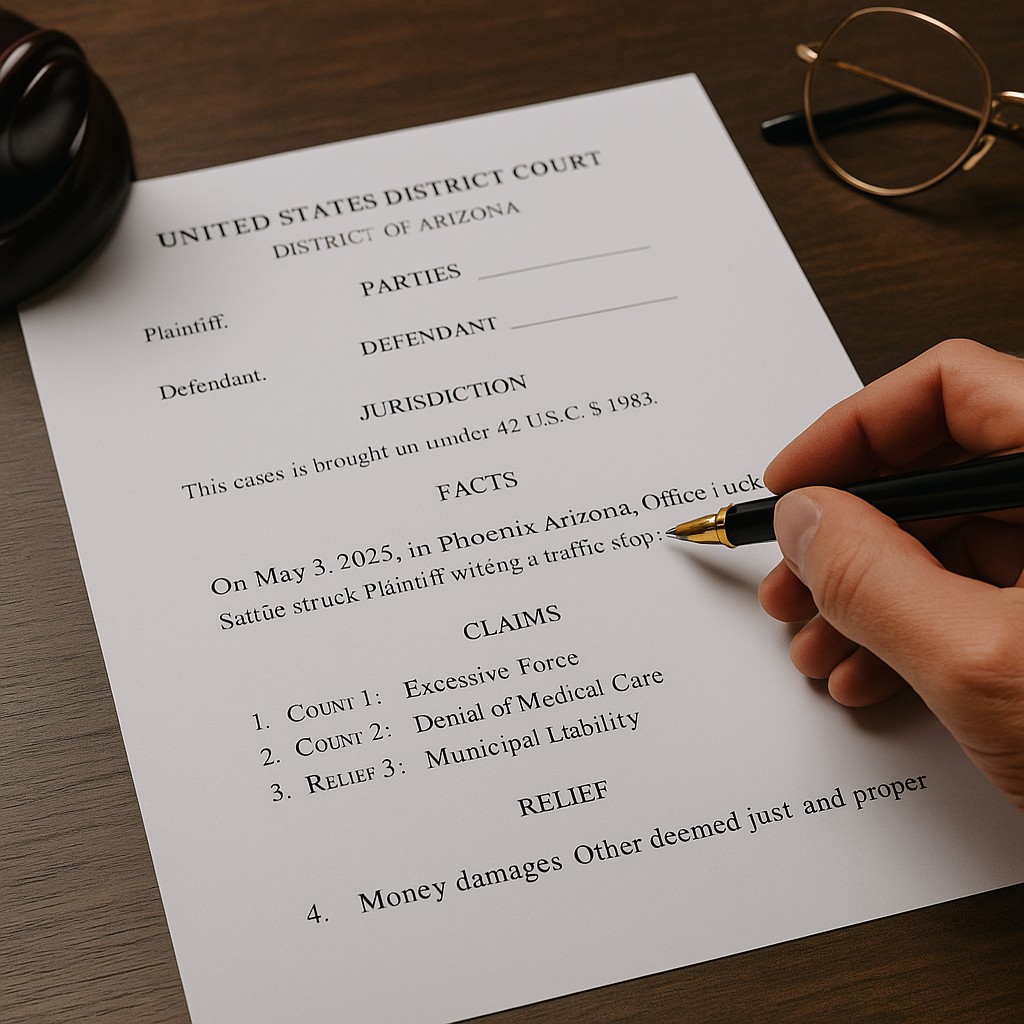
The third part tells the facts. It sets out the date, time, place, and actions. It will say, for example, that on May 3, 2025, in Phoenix, Officer X struck the plaintiff without cause during a traffic stop.
The fourth part lists the legal claims. It may have a count for excessive force, a count for denial of medical care, or a count for municipal liability.
The last part asks for relief. That means money damages, costs, and any other orders the court should make.
A lawyer writes all this in formal language. The facts come from you. Clean facts and clear dates make a judge trust the claim.
Civil Rights Lawyers Against Police
Many Section 1983 cases center on police conduct. Some officers use force too fast. Some make arrests with no probable cause. Some retaliate when a person records them. Civil rights lawyers against police focus on those wrongs.
These lawyers know how police try to defend a case. They know officers say “I feared for my safety.” They know departments claim “the suspect resisted.” A good lawyer does not accept those lines without proof. They compare video, radio calls, GPS, and use-of-force reports. If the story does not match, they point that out.
Cases against police also matter to the public. A win can force new training. A win can push body cams in a department that did not use them. A win can protect people who speak up during a stop.
1983 Civil Rights Attorney in Texas: Why It Matters Here
This article is about Arizona, but Section 1983 is a federal law. Texas lawyers use it too. Mentioning Texas helps readers see that the rules are similar across states.
A 1983 lawsuit attorney in Texas handles many of the same claims as an Arizona lawyer. Both deal with excessive force. Both deal with jail deaths. Both fight qualified immunity. Both file in federal court.
The main difference is local rules and deadlines. Texas also borrows a personal injury deadline, but notice rules and state defenses can differ. If your harm took place in Texas, you must use a Texas lawyer. If it happened in Arizona, you should use an Arizona lawyer. The law is federal, but the place of the wrong controls.
Arizona vs. Texas Section 1983 Basics
| Feature | Arizona | Texas |
|---|---|---|
| Typical Deadline | 2 years (with 180-day notice in some cases) | Often 2 years (check local rules) |
| Notice of Claim | Often required against public entity | Varies by entity |
| Federal Court | U.S. District Court for District of Arizona | U.S. District Courts in Texas |
| Common Cases | Police force, jail medical, protest arrests | Police force, jail deaths, traffic stops |
Mistakes That Hurt Section 1983 Plaintiffs
Some mistakes appear again and again. A person waits too long to call a lawyer. A person posts about the case on social media. A person throws away medical bills. A person talks to the agency without counsel. Each of these can weaken a claim.
One common mistake is naming the wrong defendant. Some people sue the police department as if it were a person. Some departments cannot be sued that way. A lawyer knows whether to sue the city, the county, the sheriff in an official capacity, or the officer as an individual.
Another mistake is asking for the wrong type of damages. Section 1983 allows pain and suffering, medical costs, lost wages, and sometimes punitive damages. A poorly drafted complaint may miss some of these. A careful attorney will list them all.
A third mistake is thinking a criminal case must end first. A civil rights case may move even if a criminal case is pending. Timing is delicate, so a lawyer will plan it.
Common Defenses Arizona Cities Use
You showed what plaintiffs do wrong. Now show what defendants do on purpose.
Cities, counties, and police departments in Arizona often raise these defenses:
- Notice of claim was late or missing
- Qualified immunity protects the officer
- The city had no policy that caused the harm (no Monell liability)
- The officer did not personally take part
- The force was reasonable
- The inmate did not complain in time through the jail system
How Arizona Cases Differ From Cases Against Federal Officers (Bivens)
Your whole article talks about state and local actors: police, county jails, city staff. Some readers will ask, “What if it was a federal agent?” Tell them that claims against federal officers often use a different path called a Bivens action. The rules are stricter and courts limit those cases. That is why your article focuses on Arizona officials who act under state or local authority.
Conclusion
No one should lose a right because a public worker abused power. Section 1983 gives Arizona residents a real way to push back. It lets them go to federal court. It lets them seek money, policy changes, and a public record of what happened.
A plaintiff attorney makes that path easier. The lawyer knows the deadlines, the defenses, the courts, and the way to prove a right was clearly established. A person who suffered in a jail, at a traffic stop, in a school, or in any state-controlled setting should not guess on their own. A short call to a civil rights lawyer in Arizona or Phoenix can confirm if the case is strong.
Justice often starts with one document: the complaint. After that comes discovery, settlement talks, or trial. Each step is possible when the case is timely and the facts are clear.
If the harm happened in Arizona, talk to an Arizona lawyer. If it happened in Texas, talk to a Texas 1983 lawyer. Keep records. Keep medical bills. Keep photos. Do not miss the notice of claim. Do not let an unlawful act stay hidden.
Rights mean little if people cannot enforce them. Section 1983 is the tool that turns a right into action. Use it.
People Also Asked Questions
Can I file a Section 1983 lawsuit without a lawyer?
You can, but it’s risky. These lawsuits need legal skill and deep research.
What if I missed the 180-day notice deadline in Arizona?
You may lose your state claims. Federal claims might still work. Ask a lawyer.
How long do Section 1983 cases take in Arizona?
Some settle in months. Others take a year or longer if they go to trial.
Can I sue jail staff under Section 1983?
You can sue if staff ignored your medical needs or safety in jail.
Will I get money if I win my Section 1983 case?
If you win, you may get money for harm, legal fees, or court-ordered policy changes.
Disclaimer: This article is for general legal information only. It does not give legal advice. Contact a licensed Arizona attorney to discuss your case.