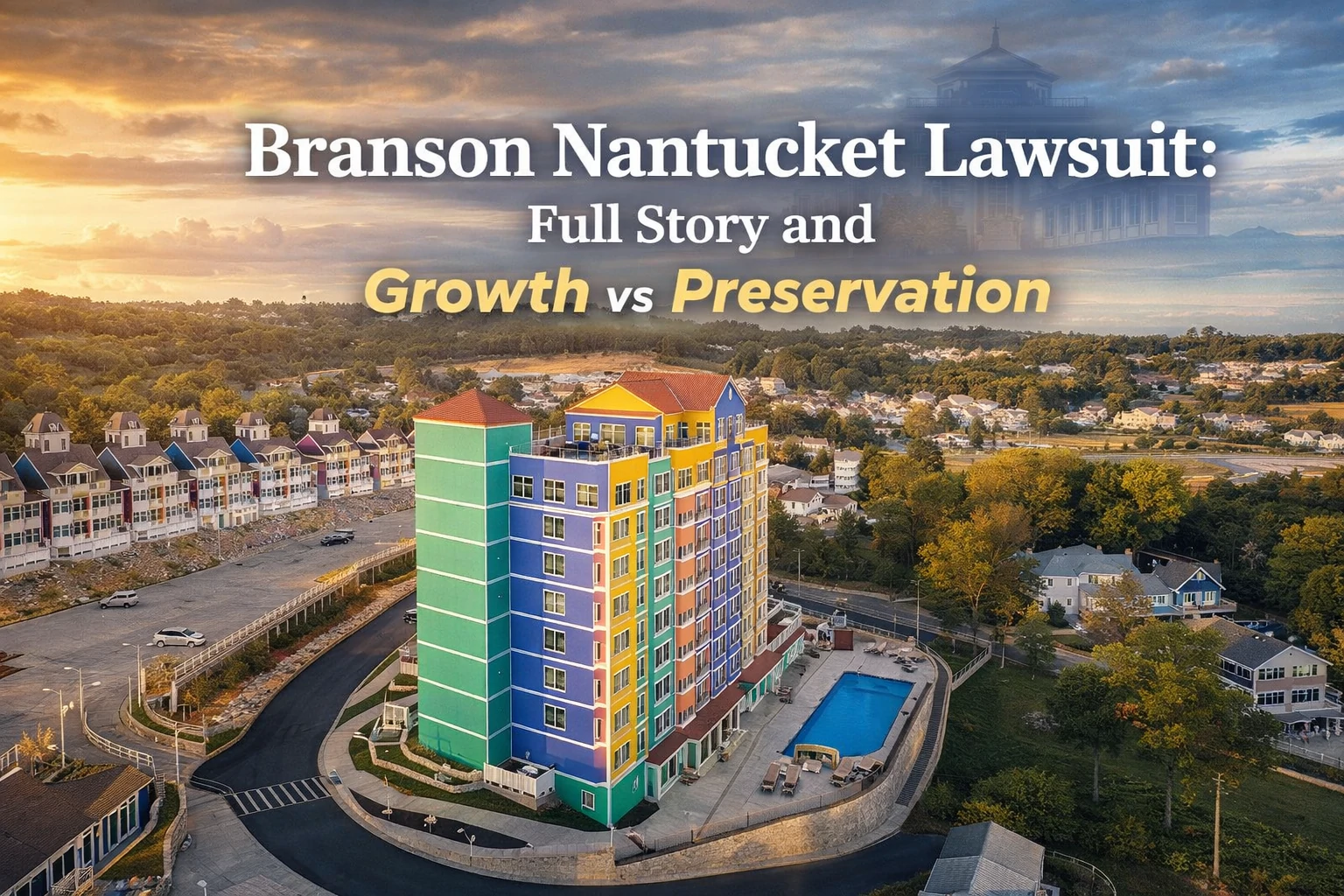
A proposed luxury resort tied to Richard Branson sparked one of the most talked-about legal fights in Nantucket’s recent history. Reports in 2025 placed the financial stakes at nearly $50 million. That figure alone drew national media attention and deep local concern.
Nantucket is not just another vacation island. It protects strict zoning rules, historic districts, and fragile coastal land. Residents guard those rules with pride. When news broke that a major hospitality project could reshape part of the shoreline, many felt the island stood at a crossroads.
The Branson Nantucket lawsuit now reflects a wider debate. Can luxury growth fit inside a small historic community without harm? Or does large investment risk change the very character that draws visitors in the first place? This article explains the background, timeline, legal arguments, economic impact, and possible outcomes in clear and simple terms.
Background of the Legal Dispute
The Branson Nantucket lawsuit began after a proposed luxury resort plan triggered a strong local reaction. A preservation group claimed the project could exceed zoning limits and harm the island’s historic character. Developers tied to Richard Branson’s hospitality brand argued that the proposal met legal standards and would support the local economy. The dispute moved from public meetings to court once formal objections failed to resolve concerns.
The Proposed Resort Plan
In 2024, reports surfaced that a hospitality brand connected to Richard Branson sought to acquire a high-value beachfront site in Nantucket, Massachusetts. The deal centered on a luxury resort concept designed to attract high-end travelers. Local planning boards began early review discussions soon after.
Community members quickly voiced concern. Nantucket enforces strict building limits to protect open land and historic streets. Residents feared that a large resort could exceed those limits or pressure future rule changes. Local leaders also questioned whether the project fit long-term planning goals.
Tourism already plays a strong role in the island’s economy. Seasonal population numbers rise sharply in summer months. Some projections suggested that a new resort could increase peak occupancy by close to 20 percent. Opponents argued that roads, water systems, and public services may struggle under that increase.
The debate moved beyond public hearings when a preservation group filed suit in early 2025. That action formally began what many now call the Branson Nantucket lawsuit.
Who Filed the Lawsuit
The primary plaintiff is a Nantucket preservation organization with thousands of members. The group states that its mission centers on heritage, environmental care, and responsible development. Leaders said they did not oppose tourism but objected to what they viewed as overreach.
The defendants include development entities tied to Virgin Limited Edition, the luxury hospitality arm associated with Branson’s global business network. Company representatives stated that the proposal followed legal standards and respected environmental safeguards.
Local attorneys on both sides entered the courtroom soon after filing. Media coverage increased as the case gained attention beyond Massachusetts. The dispute shifted from town meetings to formal legal arguments under state law.
Public opinion is divided across the island. Some residents praised the lawsuit as a defense of local values. Others worried that long court battles could harm Nantucket’s reputation as a welcoming destination.
Timeline of Events
Property interest reports first surfaced in 2023, with negotiations continuing through 2024. Public hearings drew large crowds and sharp debate. In early 2025, a preservation organization filed suit to block permit approvals. Court hearings followed throughout 2025, and a judge later issued a partial stay that delayed construction but did not cancel the project entirely.
Early Property Interest and Planning
Initial reports of property interest surfaced in 2023. Negotiations over the beachfront site reportedly involved offers near $40 million. Planning discussions continued into 2024 as architects reviewed possible designs that aimed to match Nantucket’s coastal style.
Public sessions during late 2024 drew large crowds. Residents raised questions about traffic, shoreline impact, and visual scale. Developers responded with statements about sustainability and job creation. Tension grew as details emerged.
January 2025 marked the official start of the lawsuit. The preservation group asked the court to halt permit approvals and review environmental studies in greater depth. That filing paused parts of the approval process.
Court calendars filled quickly. Judges scheduled multiple hearings through the first half of 2025. Legal fees rose as both sides prepared detailed briefs and expert testimony.
Court Orders and Ongoing Review
In mid-2025, a judge issued a partial stay. The order delayed construction but did not cancel the project outright. Limited planning work could continue under supervision. Each side claimed the ruling supported its position.
Plaintiffs viewed the stay as proof that concerns held merit. Developers argued that the court allowed the project to remain alive. Neither side achieved full victory.
Legal analysts noted that such disputes often stretch across months or even years. Appeals can follow any major decision. Observers predicted that the case could extend into 2026 or beyond if no settlement emerges.
Community meetings continued outside the courtroom. Residents debated economic growth versus preservation at public forums and in local newspapers.
Legal Arguments Presented in Court
Plaintiffs focused on zoning compliance, environmental impact, and infrastructure strain. They argued that the resort could increase noise, traffic, and water use beyond safe limits. Developers responded with economic data, sustainability plans, and expert reports that supported their compliance claims. The court must now weigh land-use law, environmental safeguards, and property rights before issuing a final ruling.
Claims Raised by the Preservation Group
The preservation organization focused on zoning law and environmental protection. Attorneys argued that the resort exceeded allowable development limits. They claimed the project could increase noise levels and strain public utilities.
Water supply formed a central concern. Nantucket relies on limited freshwater sources. Plaintiffs stated that large hospitality operations demand heavy daily use. They asked the court to require a deeper review of projected consumption.
Traffic and seasonal crowd pressure also appeared in filings. Lawyers argued that narrow roads and limited parking cannot absorb large visitor increases without impact. Residents testified about past summer congestion as evidence.
The plaintiffs framed the case as a defense of long-standing land-use policy. They stressed that rules apply equally to all developers, regardless of fame or financial power.
Defense Strategy and Economic Claims
Developers countered with economic projections. Company representatives stated that the resort would create roughly 200 jobs, both direct and indirect. They estimated that the project could inject around $15 million per year into the local economy.
The defense also presented sustainability plans. Architects described energy-efficient systems, water conservation measures, and design features that echo traditional island style. Lawyers argued that the project complied with local code requirements.
Supporters of the development highlighted broader tax benefits. Increased tourism revenue could strengthen public schools, emergency services, and infrastructure maintenance. Business owners who rely on seasonal visitors voiced support in public statements.
Richard Branson addressed the matter in public remarks during early 2026. He stated that his companies seek to respect local communities and build projects that match environmental standards. His comments aimed to calm concerns and reinforce trust.
Economic and Social Impact on Nantucket
Effect on Tourism and Local Business
The lawsuit itself influenced island activity. Visitor numbers in 2025 reportedly dipped around 5 percent compared to prior years. Analysts linked that decline to uncertainty surrounding the proposed development and negative media attention.
Some businesses saw fewer reservations during peak debate periods. Others experienced steady demand from travelers curious about the controversy. Economic impact varied across sectors.
Real estate experts warned that long disputes can slow investor confidence. At the same time, preservation supporters argued that strong enforcement of zoning rules protects long-term property values. The case created both risk and reassurance.
Public surveys suggested that a majority of residents favored strict review of the project. That support gave the preservation group political backing as court proceedings continued.
Broader Impact on Branson’s Brand
National headlines followed the story because of Richard Branson’s global profile. Market analysts observed a short-term dip of about 3 percent in shares linked to Virgin enterprises after the initial filing. Such movement often reflects investor caution rather than permanent damage.
Public relations experts noted that high-profile development disputes can shape brand image. Supporters of the resort praised its luxury and job potential. Critics questioned consistency between sustainability promises and expansion goals.
Corporate leaders faced a clear choice. They could continue litigation to final judgment or negotiate compromise. Each path carries financial and reputational stakes.
The outcome may influence how future Virgin projects approach small historic communities. Developers often adjust outreach strategies after facing strong local opposition.
Legal Outlook and Possible Outcomes
Settlement remains a realistic option. Legal observers estimate that more than half of large land-use disputes resolve before full trial. Negotiated agreements often include project scale reductions or stricter environmental safeguards.
A full trial could extend well into 2027 if appeals arise. Courts must interpret zoning language and weigh environmental data carefully. Each side must present clear evidence to support its claims.
Judicial precedent may also emerge from the case. A final ruling could clarify how Nantucket applies its zoning codes to luxury hospitality projects. That guidance would affect future development proposals.
Public interest remains high. The next scheduled hearing in early 2026 may signal whether talks advance or litigation deepens. Residents and investors alike watch closely.
Practical Lessons from the Dispute
The Branson Nantucket lawsuit update highlights the tension between economic expansion and historic preservation. Developers must review local zoning codes in depth before major announcements. Early dialogue with community groups can reduce conflict. Independent environmental audits add credibility to project claims.
Community organizations also gain insight from this case. Clear data strengthens arguments in court. Transparent communication builds public trust. Emotional appeals rarely outweigh detailed legal analysis.
Small coastal towns often face similar growth debates. Careful planning and steady negotiation may prevent disputes from reaching court. When talks fail, judges serve as neutral decision makers who balance property rights with public interest.
The Nantucket case reflects a broader national pattern. Coastal communities protect limited land resources. Investors seek opportunity in desirable locations. Conflict can arise when visions differ.
Key Points to Remember
The fight on Nantucket places economic expansion against heritage protection. Strong local support has fueled the preservation society’s stance. Developers continue to argue that responsible investment can benefit the island.
Final resolution remains uncertain. The next court session may determine whether settlement talks succeed or the trial proceeds. Readers who follow land-use law or coastal development may watch this case as it unfolds. Public opinion and judicial reasoning together will shape the island’s future path.